Jewish Virginians in the American Civil War
On the eve of the American Civil War, Jews were a distinct minority in the United States, with approximately 125,000 in the North and 25,000 in the South, comprising less than half a percent of the total population. Nevertheless, they played a prominent role in business and civic life, particularly in the South, where they had long enjoyed broader religious liberties. Roughly 2,000 Jewish Americans lived in Virginia in 1861, and like their neighbors, most sided with the state they called home, while a few chose to fight for the Union.[1]
Shortly after the American Revolutionary War, the 1786 Virginia Act for Establishing Religious Freedom opened the door to Jewish immigration to the Old Dominion. Most settled in cities such as Richmond, Petersburg, and Alexandria. Merchants Jacob Cohen and Isaiah Isaacs are believed to have been Richmond’s first Jewish residents. The city’s Jewish population steadily grew after 1786, and by the eve of the American Civil War, it supported three Orthodox congregations.[2]
A tolerant attitude toward Jews prevailed in the antebellum South, though instances of prejudice and discrimination still occurred. South Carolina’s colonial charter guaranteed religious freedom and allowed Jews to own property, leading a large Jewish population to settle in Charleston. Louisianian Judah P. Benjamin (1811-1884) became the first Jewish person to hold a Cabinet position in North America as Jefferson Davis’ Secretary of War in September 1861. He resided in Richmond throughout the war.[3]
Since most Virginians approved of secession following the bombardment and surrender of Fort Sumter, it’s no surprise members of this religious faith did as well. Most Jewish residents of Richmond belonged to upper-middle-class families, and many owned slaves, most commonly as household servants. According to the Encyclopedia of Southern Jewish Communities, over one hundred Richmond Jews fought for the Confederacy in units such as the Richmond Grays and the Light Infantry Blues.[4]
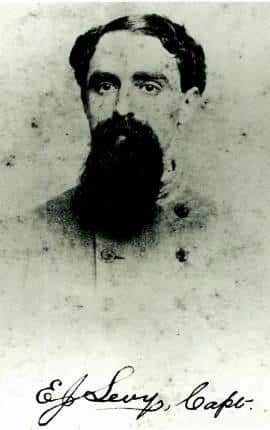
In late 1864, Ezekiel “Zeke” J. Levy, who had enlisted as a fourth sergeant and risen through the ranks, took command of the Richmond Light Infantry Blues (then Company A, 46th Virginia Infantry), Virginia’s oldest and most prestigious military company. While he was the most prominent Jewish Virginian in this storied unit, he was not the only one; fifteen of its original members were Jewish. Isaac J. Levy, Ezekiel’s brother, enlisted as a private and served until his death in the trenches around Petersburg in 1864.[5]
Emma Mordecai, a diarist from a Jewish slaveholding family in Richmond, praised Isaac as “A true Israelite without guile–a soldier of the Lord & a soldier of the South,” echoing Jesus’ description of Nathanael in John 1:47 (high praise indeed).[6]
According to Robert N. Rosen, author of The Jewish Confederates (2000), the Levy brothers attempted to keep kosher and observe their religious traditions during the war. Rosen notes this “did not affect Levy’s standing with the men of his company.” After commanding the Blues as a lieutenant at various times, Ezekiel Levy (1833-1908) was promoted to captain in November 1864.[7]
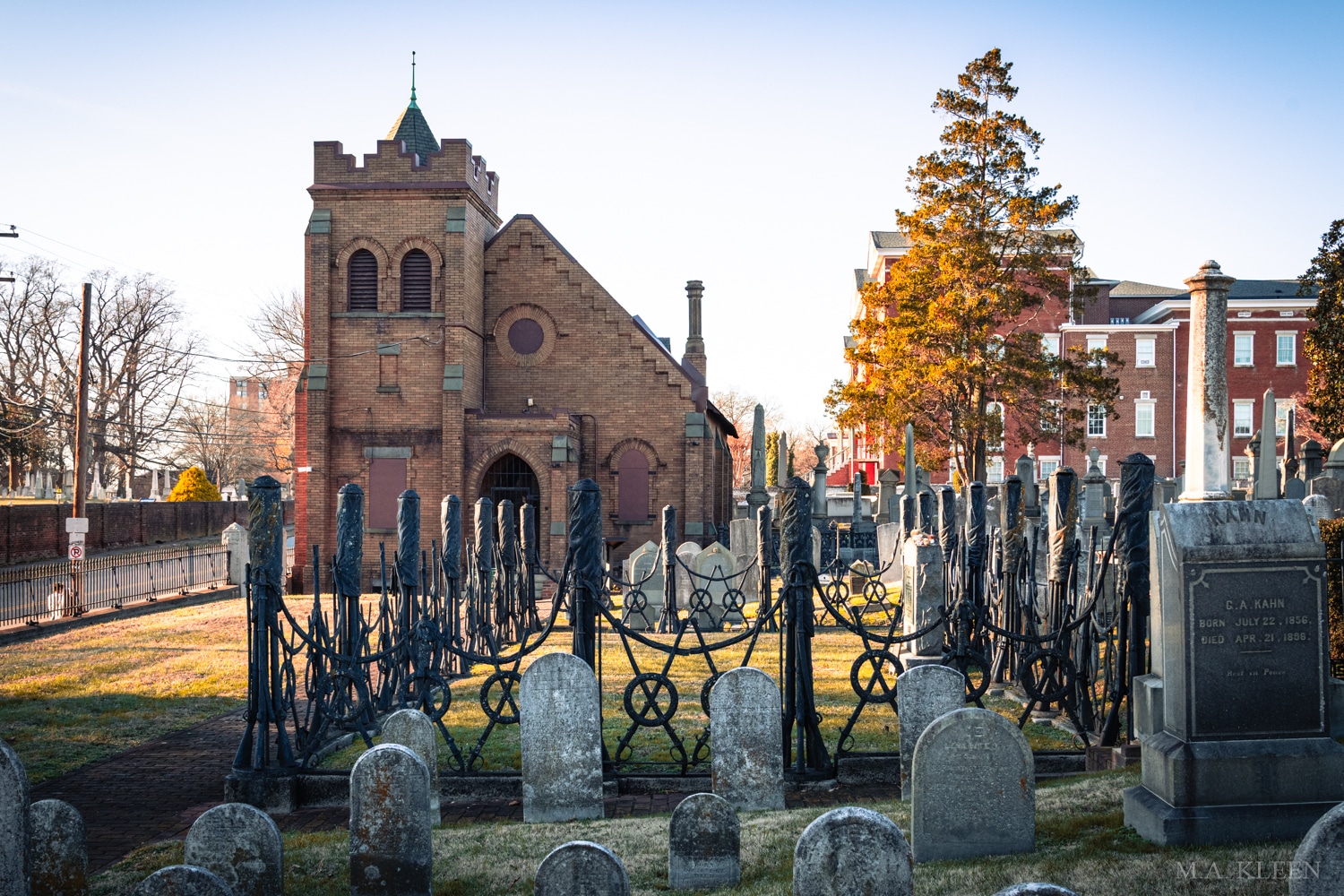
The Soldiers’ Section of Richmond’s Hebrew Cemetery, at North 4th and Hospital Streets, is the only Jewish military cemetery in the United States and holds the graves of 30 Confederate soldiers. Ezekiel and Isaac Levy are buried in the cemetery, though not in the Soldiers’ Section. Also buried elsewhere in the cemetery is Polish-born Philip Whitlock, a member of the Richmond Grays who was present at John Brown’s execution. Although he never saw combat, Whitlock worked in the quartermaster department and ran the blockade to New York to acquire goods to sell back home.[8]
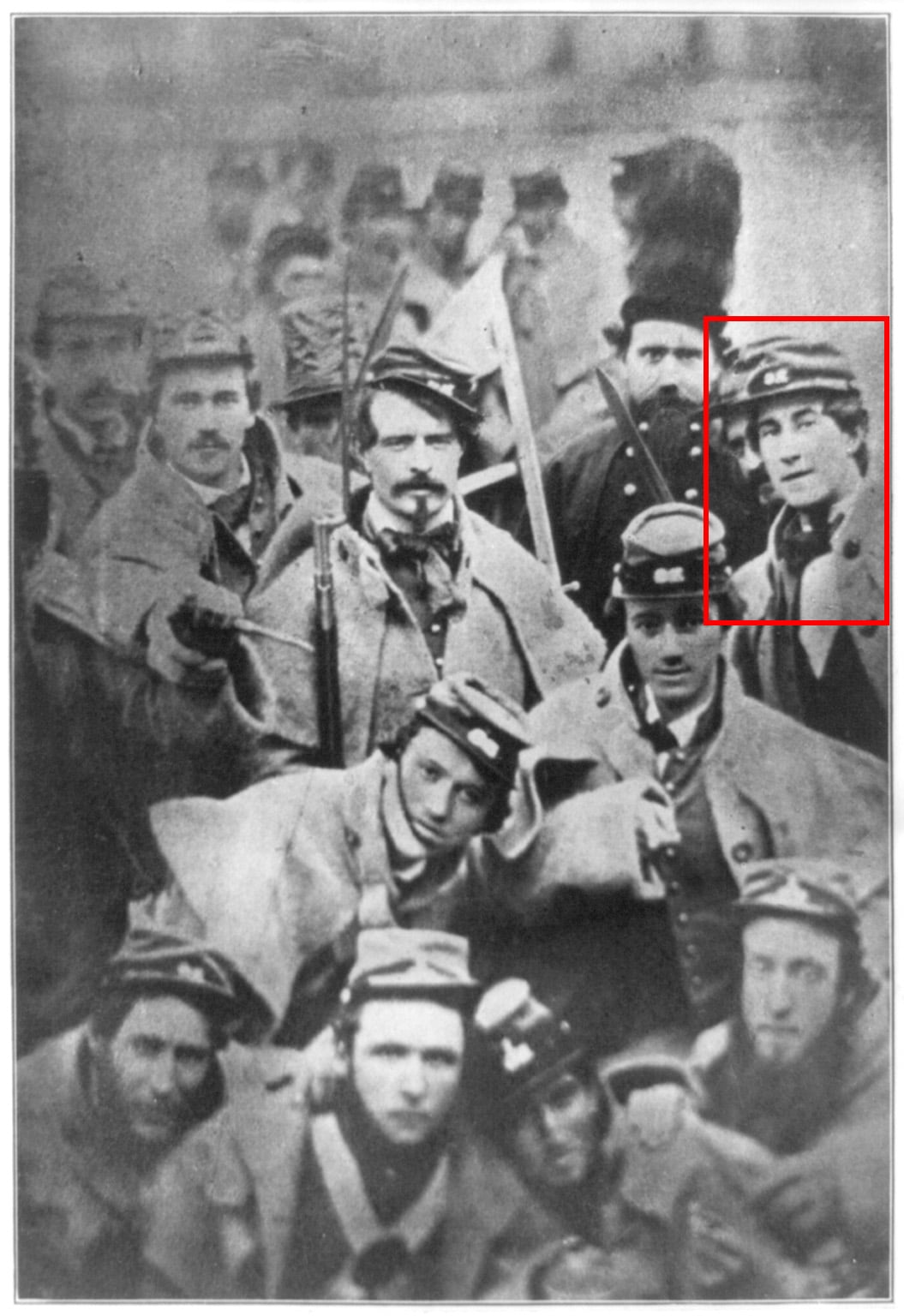
Privates Herman J. Myers, Marx Mitteldorfer, and brothers Leopold and Sampson Levy all served at various times with the Amelia Light Dragoons, Company G, 1st Virginia Cavalry. Leopold fought at First Bull Run and Williamsburg before being captured by George Stoneman’s forces in 1863. His health declined during captivity, and he joined the quartermaster department after being paroled.[9]
Sculptor Moses Jacob Ezekiel was likely the most famous Jewish Virginian to fight for the Confederacy. Born in Richmond to a mercantile family who were members of Congregation Beth Shalome, he enrolled at the Virginia Military Institute (VMI) in Lexington at age 16, becoming the first Jewish person to do so. Ezekiel served as Corporal of the Guard for the coffin of Thomas J. “Stonewall” Jackson, and (as a cadet) he also fought and was wounded at the battle of New Market in May 1864.[10]
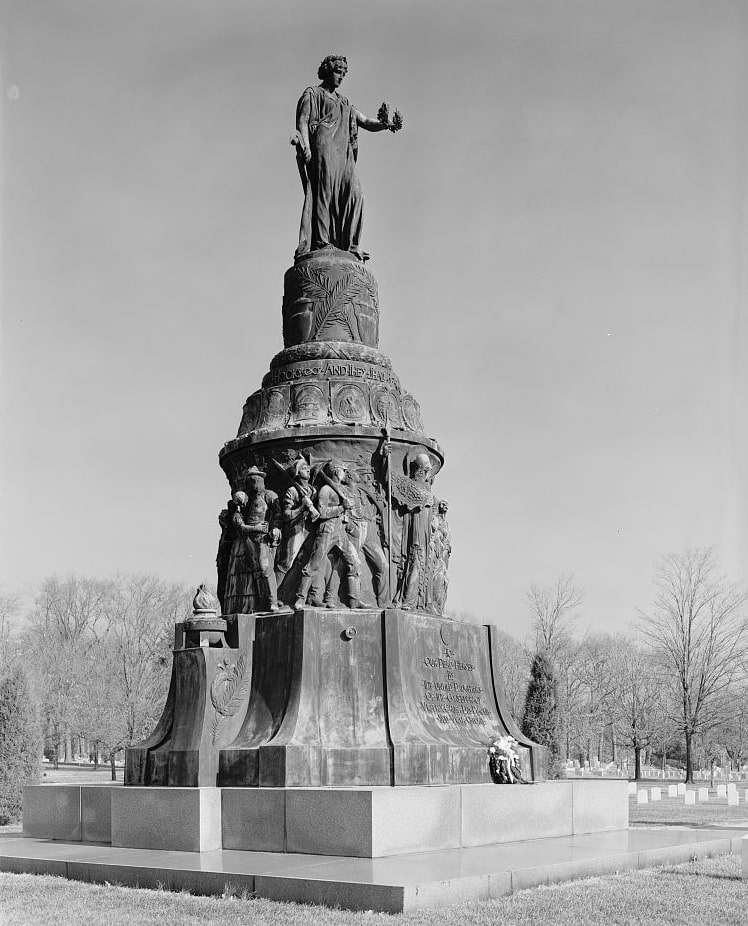
Ezekiel remained a staunch supporter of Southern independence until his death, hanging a Confederate battle flag in his studio in Rome, Italy. Although he sculpted many pieces, including a monument to Religious Liberty for the B’nai B’rith organization, his most well-known works are related to the Civil War. These include Virginia Mourning Her Dead (1903) at VMI and the Confederate Memorial that was formerly at Arlington National Cemetery.[11]
In June 1861, Rabbi Max J. Michelbacher of Richmond’s Beth Ahabah Congregation published a prayer for Confederate soldiers in the Richmond Dispatch. It read, in part, “Be unto the army of this Confederacy, as thou wert of old, unto us, thy chosen people! Inspire them with patriotism! Give them, when marching to meet, or overtake the enemy, the wings of the eagle … and in the battle, strike for them, O Almighty God of Israel, as thou didst strike for thy people on the plains of Canaan–guide them O Lord of Battles, into the paths of victory … O Lord, God, Father, be thou with us!”[12]
Several times during the war, Michelbacher appealed to Gen. Robert E. Lee for a blanket furlough to allow Jewish soldiers to observe the High Holy Days. Lee respectfully declined, citing military necessity and a desire not to favor one group of soldiers over another. However, he permitted individual soldiers to petition their commanders for religious furloughs, which would be considered on a case-by-case basis.[13]
When one captain rejected a Jewish soldier’s application to attend synagogue in Richmond, stating that “If such applications were granted, the whole army would turn Jews or shaking Quakers,” Lee overturned the decision, advising the officer that he “should always respect the religious views and feelings of others.”[14]
Not all of Virginia’s Jews supported the South. Major David Mendes Cohen was born in Norfolk in 1827 and enjoyed a long, if tumultuous, career in the U.S. Marine Corps, earning a promotion to captain in 1862. While stationed in New York City, he helped suppress a riot by volunteers of the Empire Brigade. En route to join the Pacific Squadron, he was captured and paroled by Confederate raiders, then court-martialed for challenging Capt. Thomas O. Selfridge’s son to a duel. He is buried in Beth Olom Cemetery in Queens, New York.[15]
At least one prominent Jewish family found itself divided by the conflict. Born in the Kingdom of Württemberg, brothers Isaac and Simon Leterman settled in Charlottesville, Virginia, where they opened a retail business in the early 1850s. Isaac, the elder brother, remained a unionist, while Simon and his wife supported the Confederacy. After the war, the brothers reconciled and resumed their business together.[16]
The wartime experiences of Virginia’s Jewish citizens mirrored those of many of their Christian neighbors while also reflecting concerns unique to a religious minority. Men like Moses Ezekiel who donned the Southern gray were probably sincere when they said they did not fight for slavery. Individual soldiers often described their motivations in terms of defending home, family, or state. Many Jewish families owned slaves and profited from the cotton and textile industries, but they were not driven solely by economic interests. Through patriotism and military service, they sought to dispel longstanding accusations of statelessness and disloyalty, demonstrating their loyalty to the Commonwealth they called home.[17]
[1] Charles Irons, “Religion during the Civil War,” Encyclopedia Virginia, December 7, 2020. https://web.archive.org/web/20260716211616/https://encyclopediavirginia.org/entries/religion-during-the-civil-war/
[2] A. M. Hofmann, “Virginia” in The Jewish Encyclopedia, Vol. 12, edited by Cyrus Adler, et al. (Funk and Wagnalls Company, 1912), 440-41; John A. Ragosta, “Virginia Statute for Religious Freedom,” Thomas Jefferson Encyclopedia, February 21, 2018. https://www.monticello.org/encyclopedia/virginia-statute-religious-freedom
[3] Bertram Wallace Korn, “Jews and Negro Slavery in the Old South 1789-1865” in Jews and the Civil War: A Reader, ed. Jonathan D. Sarna and Adam Mendelsohn (New York University Press, 2010), 87-120; Eli N. Evans, Judah P. Benjamin: The Jewish Confederate (The Free Press, 1988), 115-136, 159-183.
[4] Goldring/Woldenberg Institute of Southern Jewish Life, “Richmond, Virginia,” Encyclopedia of Southern Jewish Communities. https://web.archive.org/web/20260124080247/https://www.isjl.org/virginia-richmond-encyclopedia.html
[5] Robert N. Rosen, The Jewish Confederates (University of South Carolina Press, 2000), 169.
[6] Dianne Ashton, ed., The Civil War Diary of Emma Mordecai (New York University Press, 2024); Rosen, The Jewish Confederates, 199.
[7] Rosen, The Jewish Confederates, 96-97.
[8] John Horn, The Petersburg Regiment in the Civil War: A History of the 12th Virginia Infantry from John Brown’s Hanging to Appomattox, 1859–1865 (Savas Beatie, 2019), chap. 2, Kindle; Philip Whitlock, “The Life of Philip Whitlock, Written by Himself,” Beth Ahabah Museum and Archives Trust, Richmond, VA. https://web.archive.org/web/20260207020428/https://www.jewish-history.com/civilwar/philip_whitlock.html
[9] Rosen, The Jewish Confederates, 203; Robert J. Driver, Jr. 1st Virginia Cavalry (H.E. Howard, Inc., 1991), 189, 208, 211.
[10] Samantha Baskind, Moses Jacob Ezekiel: Jewish, Confederate, Expatriate Sculptor (Pennsylvania University Press, 2025).
[11] Keith E. Gibson, “Moses Jacob Ezekiel (1844–1917),” Encyclopedia Virginia, December 7, 2020. https://web.archive.org/web/20260716101053/https://encyclopediavirginia.org/entries/ezekiel-moses-jacob-1844-1917/
[12] Richmond Dispatch, June 13, 1861.
[13] Robert E. Lee to Max J. Michelbacher, August 29, 1861. https://www.shapell.org/manuscript/robert-lee-furloughs-jewish-soldiers/; Robert E. Lee to Max J. Michelbacher, Sept. 20, 1864. https://www.jewish-history.com/civilwar/lee.htm
[14] John Shepard, Jr. “Religion in the Army of Northern Virginia,” The North Carolina Historical Review 25 (July 1948): 343-44.
[15] Robert Marcus and Jim Quinlan, “David Mendes Cohen, Beleaguered Marine,” Southern Jewish History 4 (2001): 71-91; New York Tribune, May 31, 1891.
[16] Jeffrey Hantman and Phyllis Leffler, “Establishing a Community,” To Seek the Peace of the City: Jewish Life in Charlottesville, University of Virginia Library, 2001, 2013. https://web.archive.org/web/20250903004146/https://explore.lib.virginia.edu/exhibits/show/seek/establishing. I was unable to find any evidence Isaac or Simon actively fought for either side, as mentioned in some articles.
[17] Moses Jacob Ezekiel, Memoirs from the Baths of Diocletian (Wayne State University Press, 1975), 272; Rosen, The Jewish Confederates, xi-xiii.


Fascinating and especially well-researched.
Another interesting fact about Judah Benjamin. President Millard Fillmore offered him a seat on the U.S. Supreme Court (subject of course to Senate confirmation), but Benjamin declined.
Ty! I did not know that about Benjamin, very interesting. It takes some humility to decline an offer as prestigious as that.
Another fascinating little tidbit concerning Judah Benjamin worth mentioning. Many years ago, back before I became a “recovering” (retired) lawyer, I met a fellow evening train commuter. Somehow we lapsed into a Civil War discussion (I might have been reading a Civil War magazine). He said that he had a Confederate ancestor who he knew little about, but recalled that his name was Judah Benjamin. I remember strongly recommending that he look into his ancestor’s life, as he was quite remarkable. Never saw the man again, but I hope he took me up on the suggestion.
Jews fighting to preserve slavery reminds me of Illinois Nazi’s. In 1865, Emma Mordecai and her sisters, members of a prominent, slaveholding Jewish family who lived at Spring Farm, told their slaves they were free. They were surprised when the slaves actually left the farm and then the sisters had to do the labor of keeping the farm up.
That’s a very ugly thing to say. Jews in the ACW have nothing to do with Illinoisans cosplaying as Nazis in the late twentieth century. But, yes, Southern slaveholders shouldn’t have been surprised when freedmen decided to enjoy the fruits of their own labor, but human beings can delude themselves into believing all kinds of things.
To correct you, your thinking is illogical because your original premise is incorrect. The war was not about slavery – only 7% of Southerners in the 11 seceding states owned slaves; only 2% of Northerners identified as Abolitionists; only 0.5% of Northerners actually joined Abolitionist groups; 5 slave states remained in the Union during the war, and a 6th was added after the issuance of the Emancipation Proclamation – which actually protected slavery in states and areas that were not in rebellion against the Federal Government – hardly an example of strident Abolitionist ideology; and James McPherson, after deep research – something you’ve never performed – concluded that less than 10% of the officers and men on both sides were fighting over slavery. Thus your view of the war is as delusional as the original Henry Fleming.
I am certain, as well, that you’d prefer to keep quiet the most egregious act of violence and persecution committed against Jews in the history of the United States: Ulysses Grant’s infamous General Order 11, issued December 17, 1862, in order to round up Jews in his military district, abuse them, deport them, and steal their wealth – all part of the greater corruption that was occurring amongst Grant’s officer corps in his area of control – and which he did nothing to eliminate. Hundreds of Jews, including children, suffered terrible persecution in scenes just like those perpetrated by Hitler’s National Socialist SS across Europe 80 years later; in fact, the order itself reads chillingly just like the orders Hitler issued prior to World War II as German Jews’ rights were stripped from them.
And who came to the rescue? President Lincoln kicked Grant’s ass and made him rescind the order, though the damage was already done. This was, by the way, the fourth or fifth egregious action of Grant’s that should have gotten him cashiered from the army. Also, Confederate Major General Earl Van Dorn sent in his troops to protect Jews from being abused or deported by Grant’s Federal troops.
As ever, you have much reading to do.
Mr Schafer, I would hate for you to forget this quote for your book that you keep telling us about….
“The new constitution has put at rest, forever, all the agitating questions relating to our peculiar institution, African slavery as it exists amongst us – the proper status of the negro in our form of civilization. This was the immediate cause of the late rupture and present revolution…
The prevailing ideas entertained by [Thomas Jefferson] and most of the leading statesmen at the time of the formation of the old constitution, were that the enslavement of the African was in violation of the laws of nature; that it was wrong in principle, socially, morally, and politically. It was an evil they knew not well how to deal with, but the general opinion of the men of that day was that, somehow or other in the order of Providence, the institution would be evanescent and pass away. This idea, though not incorporated in the constitution, was the prevailing idea at that time…
Our new government is founded upon exactly the opposite idea; its foundations are laid, its corner-stone rests, upon the great truth that the negro is not equal to the white man; that slavery subordination to the superior race is his natural and normal condition. This, our new government, is the first, in the history of the world, based upon this great physical, philosophical, and moral truth…”
Confederate Vice President Alexander Stephens (1861)
Not a very accurate comparison. We know from McPherson’s book that most soldiers on both sides were mostly motivated by a sense of patriotism. Too, many slaves indeed stayed with their former owners after freedom came. Indeed, many former slaves looked back on their former owners with some degree of fondness.
Tom
Wonderful article, and what a beautiful photo of the Hebrew Confederate Soldier’s Cemetery in Richmond.
Thank you!
My pleasure. I forwarded the piece to my friend who lives in Tel Aviv, and has three children in the IDF. He’s fascinated by our history.
For Mark E: Well, if you want, I could post for you the US Constitution, wherein slavery is legalized and protected, and which remained unchanged throughout the war. As a result, although slavery ended in the South, because it had been conquered, in June 1865, it continued on, healthy as ever, in the North, for another six months. I could also show you Lincoln’s speeches, wherein he says he will happily protect slavery as long as the Union is preserved. Without question, as well, had the war ended in a Federal victory by December 1862, slavery would have continued in America…which means the Federal Government was conducting the war…to protect slavery. This is backed up by the fact that five slave states remained in the Union and maintained slavery throughout the war – and a sixth was added – five months after the issuance of the Emancipation Proclamation. So, this is not opinion, but fact – the war wasn’t about slavery. That would be like the Federal Government declaring that it will conduct a war on heroin and fentanyl at the border and throughout the country…but then saying, “Oh yeah – heroin and fentanyl will remain legal.”
Ok, I’ll lay this out for you once, and then I’m invoking Brandolini’s Law since we have wandered far from the article itself. We can agree that for most northerners, preserving the union and American democracy was the justification for the war, and ending slavery was added as a means to that end. But, for Confederates, all the evidence that we have from the time points directly to slavery being the cause of secession, and thus the war. The Confederates at the time were kind enough to leave us plenty of explanations in which they point again, and again to this. So, here are just a few pieces of evidence for you to consider:
1) The Declarations of Causes. Here is a sample from Mississippi, “Our position is thoroughly identified with the institution of slavery–the greatest material interest of the world.” Or, perhaps this one from Texas, in which she stated that “…that the servitude of the African race, as existing in these States, is mutually beneficial to both bond and free, and is abundantly authorized and justified by the experience of mankind, and the revealed will of the Almighty Creator, as recognized by all Christian nations; while the destruction of the existing relations between the two races, as advocated by our sectional enemies, would bring inevitable calamities upon both and desolation upon the fifteen slave-holding States.”
2) The words of Confederate leaders. I already gave you the “Cornerstone” speech of Confederate Vice President Alexander Stephens, which he gave in March of 1861, but he was only restating what Jeff Davis has said a few weeks before: “It has been a conviction of pressing necessity, it has been a belief that we are to be deprived in the Union of the rights which our fathers bequeathed to us, which has brought Mississippi into her present decision. She has heard proclaimed the theory that all men are created free and equal, and this made the basis of an attack upon her social institutions; and the sacred Declaration of Independence has been invoked to maintain the position of the equality of the races.”
3) The secession commissioners which were sent to the upper south from the Deep South states in the spring of 1861. They appealed to the legislatures of the Upper south to support their sister slave states by calling attention to their shared interest in slavery. Here is an example from a speech given to the Virginia secession convention from a Mississippi Commissioner, “Having thus placed the institution of slavery, upon which rests not only the whole wealth of the Southern people, but their very social and political existence, under the condemnation of a government established for the common benefit, it proposed in the future, to encourage immigration into the public Territory, by giving the public land to immigrant settlers, so as, within a brief time, to bring into the Union free States enough to enable it to abolish slavery within the States themselves.”
Sorry, but the evidence all points in one direction. Occasionally they made gestures to other minor points, but overwhelmingly, at the time of secession, the Confederates told anyone that would listen that they took the actions they did to preserve slavery and the institutions of white supremacy upon which it rested. Cheers, and let’s get back to the main point of the rather good article.
I believe there was a young Jewish officer in the New Orleans’ Washington Artillery who married a Richmond girl during the war and ended up residing in Richmond postbellum and eventually became the rabbi of one of main Temples in Richmond. More research needed.
Nice post. Also interesting is the 3rd Louisiana Regiment, from Shreveport. Robert Rosen says Samuel Myers Hyams helped raise the 3rd Louisiana Regiment from Shreveport. Lieut-Col Hyams was likely the highest ranked Jewish officer in the Confederacy.
Just one anecdote. When I lived in New Orleans, I became friends with a wonderful Jewish man who came from an old New Orleans family. He told me a story passed down from his ancestors. The Union soldiers, as most people know, were very unpopular in the Crescent City during the occupation. During the occupation, some Yankees rode up to his ancestor’s house. They asked the lady of the house for a drink of water. She gave them all a glass of water. As they handed the glasses back to the Jewish lady, she tossed them to the ground breaking all of them. With no words spoken, she indicated to them that the family would never use those glasses again.
Tom