“How Dare You Ask Me to Surrender:” Capt. Theodore Gregg Refuses Capture at the Crater
Desiring to maintain the offensive initiative that he had seized and held since the spring 1864 campaign began with the Battle of the Wilderness, Lt. Gen. Ulysses S. Grant’s modus operandi at Petersburg was to make pushes forward and capture enemy territory. Most often this strategy was in effort to target a road or a railroad supply route in order to prevent the Confederates from utilizing it.
After the Army of Northern Virginia finally became convinced that Petersburg was indeed Grant’s main focus and thus decided to move the majority of their force from near Richmond to the Cockade City’s defenses in mid-June 1864, Gen. Robert E. Lee began reacting to Grant’s offensives with counterattacks in attempt to regain the lost ground. This act and react type of combat that occurred throughout the 292-day Petersburg Campaign produced thousands of prisoners of war on both sides.
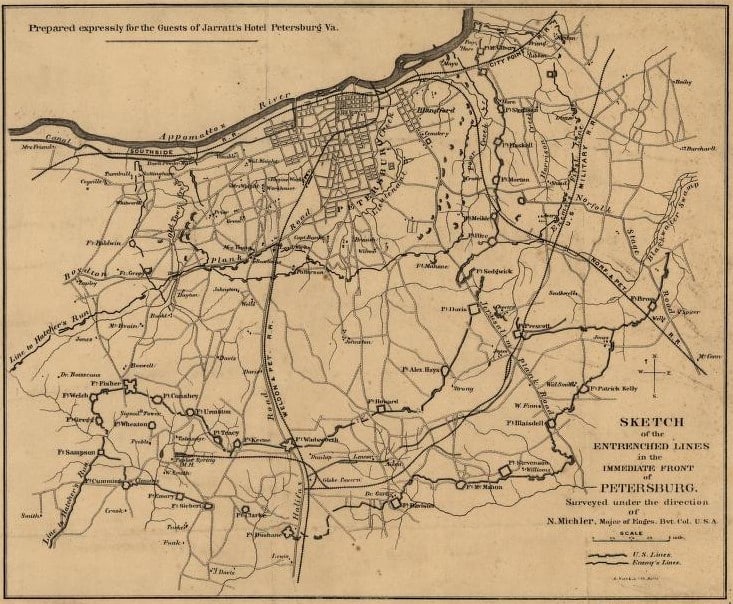
A counterattacking Confederate response that worked particularly well occurred on June 22 and 23, 1864, when Grant ordered the Army of the Potomac’s Second and Sixth Corps to attempt to capture the Weldon Railroad. This rail line ran south out of Petersburg. Just over the North Carolina state line it connected with another rail line that ran eventually to Wilmington, a major coastal blockade running port still operating quite well at this point in the war. Additionally, if all went well, Grant hoped the move would threaten the more distant Boydton Plank Road and Southside Railroad as well.[1]
On June 21, the Second Corps, then commanded by Maj. Gen. David Bell Birney, who stood in for the ailing Maj. Gen. Winfield Scott Hancock, crossed the Jerusalem Plank Road and pushed west toward the Weldon Railroad. Confederate cavalry stopped an advance by a division of the corps about a mile short of reaching the rail line and the Federals withdrew a distance. That evening, a division of the Sixth Corps also crossed Jerusalem Plank Road and moved into position on the left of the Second Corps. The following day, June 22, the other divisions of the Sixth Corps moved west, too, but a gap developed between the two Union corps. That afternoon a Confederate counterattack by Brig. Gen. William Mahone’s division of Virginians, Alabamians, and Georgians exploited the break between the Second and Sixth Corps. Mahone’s assault, which pushed the Second Corps back to the Jerusalem Plank Road, also netted over 1,700 Union prisoners. The following day, another Mahone attack nabbed almost 500 Sixth Corps prisoners along their picket line, most of them from the Vermont Brigade.[2]
This unsuccessful Federal offensive’s only true bright spot was the creation of a bridgehead on the north bank of the James River at Deep Bottom Landing that Grant would use in future offensives to threaten Richmond. By making threatening movements toward the capital city, it helped draw Confederate forces away from Petersburg to aid in Richmond’s defense, thus leaving Petersburg less defended and allowing Meade and Grant to make gains there.
By July 1864, the Federals had control of three of the Confederate supply lines coming into Petersburg. The short nine-mile section of the Southside Railroad that ran from Petersburg’s east side to City Point fell to the Army of the James in early May when they occupied City Point. They also claimed a portion of the Petersburg and Norfolk Railroad that ran southeast from the city, and governed the Jerusalem Plank Road, too. However, the Weldon Railroad remained open for Confederate traffic for the time being, as did the Boydton Plank Road and the Southside Railroad.
Grant’s next offensive, his third, focused on making a move north of the James River by the Second Corps and Maj. Gen. Philip Sheridan’s cavalry and using the Deep Bottom bridgehead established in June. This effort resulted in the battle of First Deep Bottom, which did indeed help draw some Confederate troops away from Petersburg’s defenses, but without much additional success.
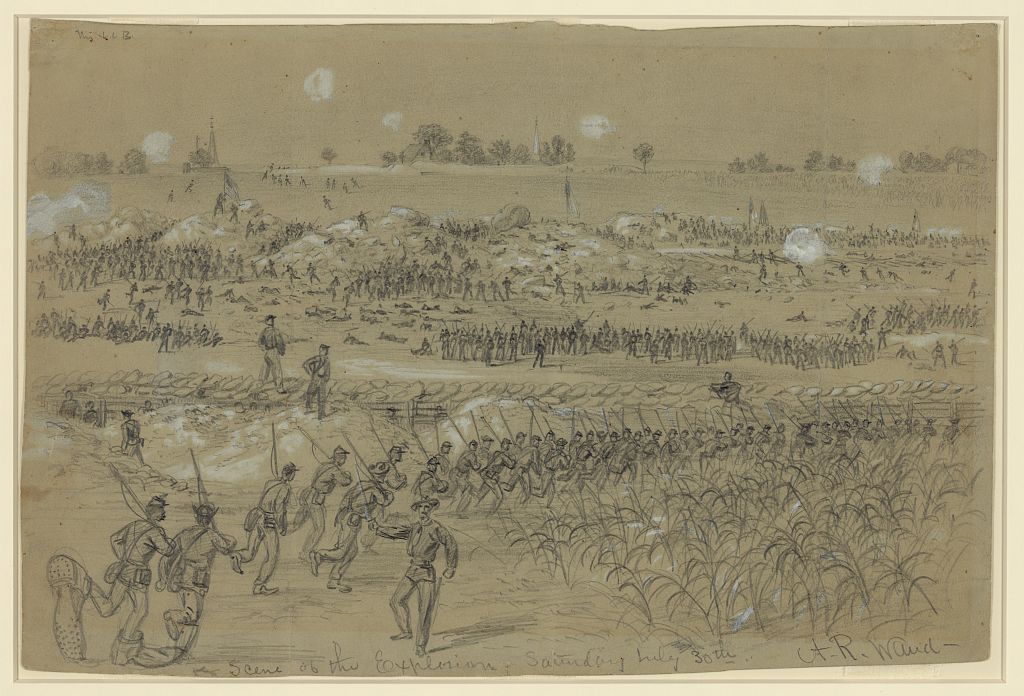
Meanwhile, at Petersburg, Maj. Gen. Ambrose Burnside’s Ninth Corps attempted a novel project of tunneling under the Confederate earthworks in attempt to explode a mine that would create a breach in line and lead to capture Petersburg. Fought on July 30, and known as the battle of the Crater, it is probably the most well-known engagement of the Petersburg Campaign.
The battle’s unconventional approach, its dramatic Union assault through the massive hole blown by the explosion, and the corresponding Confederate counterattack in a relatively confined space all helped ensure that an abundance of prisoners would result and that many of its participants—at least those who lived—would record their experiences.
Included in Vol. 40, Part I of the Official Records is the report provided by Capt. Theodore Gregg of Company F, 45th Pennsylvania Infantry. Gregg, who at the time commanded the regiment, wrote his report 10 days after the battle of the Crater. The 45th Pennsylvania was in the 1st Brigade, 2nd Division, of the Ninth Corps and was among the regiments who made it into the virtual earthen deathtrap.
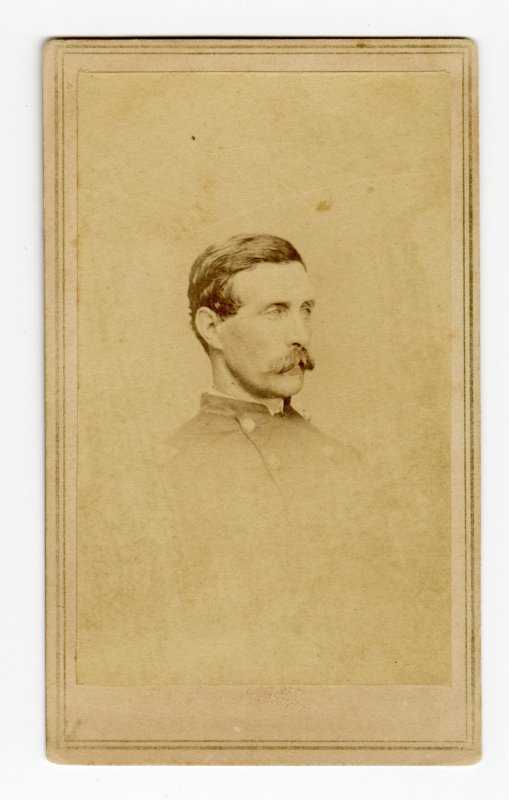
Gregg’s report, which in places reads more like a letter home or a journal entry, vividly explains his harrowing experience at the Crater. Gregg led 210 men during the battle. Leaving 100 men on the skirmish line, he took the remainder and prepared for the explosion and subsequent assault. After the blast, and following a covered way, they emerged at the front lines. “The whole space was literally swept with canister, grape, and musketry,” Gregg noted. Spying a battery on the other side of the Crater, he thought he would try to take it, but the hole from the explosion was too large, and “The crest of the crater and ruined slopes and parapets were covered with the dead, dying, and wounded of the First and Second Divisions of the Ninth Army Corps.”[3]
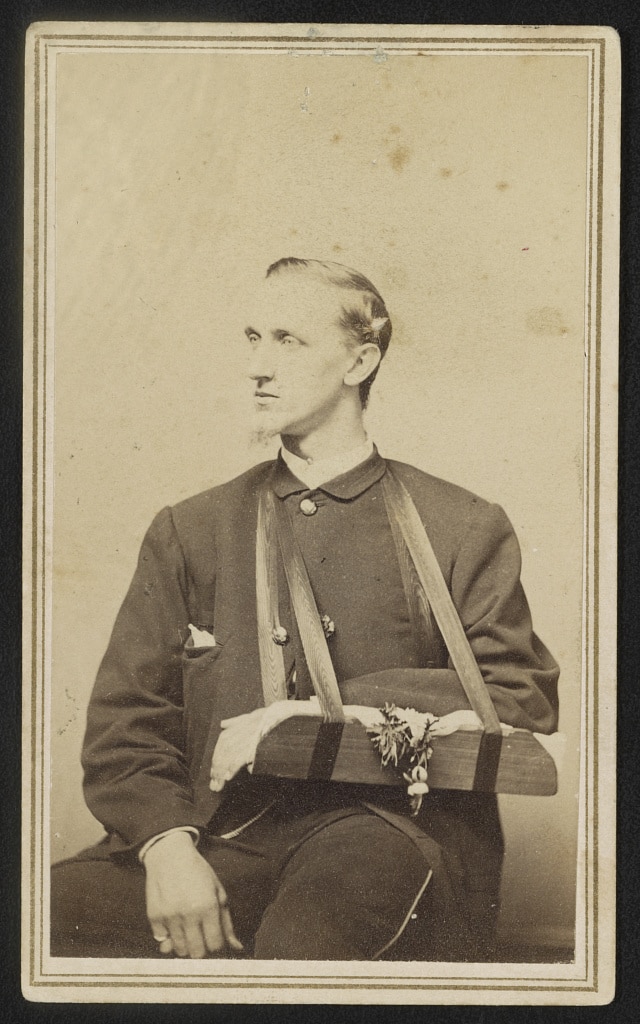
Brigadier General William F. Bartlett gave Gregg orders to charge another battery in his front, and Gregg attempted, but it was bedlam. “As we advanced, the enemy opened with batteries stationed at several different points on the right and left flanks and in front, accompanied by a heavy fire of musketry from the rifle-pits, and as the other troops in the front did not advance to our support we were compelled to fall back into the intrenchments,” Gregg wrote.[4]
Gregg tried to help Bartlett and Brig. Gen. Simon Griffin “rally the troops in the crater to get them to charge forward, but found it impossible to get them to do so.” During the fighting, Gregg reported: “We heard the cheering of the men as they dashed forward; in a few minutes the works were filled with negroes. A major of one of the negro regiments placed his colors on the crest of the crater, and the negro troops opened a heavy fire on the rebels, who were at that time charging on the ruined fort. In a few moments the rebel force, headed by several desperate officers, dashed into the pits among us, where a desperate hand-to-hand conflict ensued, both parties using their bayonets and clubbing their muskets.”[5]
As mayhem and madness swirled around Capt. Gregg and his men, the opportunities were ripe for becoming a prisoner of war. In fact, Gregg was too close for much comfort. He reported that, “A large rebel officer, who appeared to be in command of the force, rushed upon me, and catching me by the throat, ordered me to surrender, at the same time bringing his revolver to my head. I succeeded in taking his revolver from him, and after a sharp struggle left him dead on the spot. A rebel soldier who had come to the rescue of his officer attempted to run me through with his bayonet, but was killed by Sergeant [David] Bacon of Company G. [Bacon’s] sword was taken from him, but after a sharp contest he succeeded in recovering it and killing his antagonists.”[6]
Gregg’s account of his near capture, while vivid, pales in comparison in some details to that provided by Gregg’s comrade, Lt. Samuel Haynes. Included in the History of the Forty-fifth Regiment Pennsylvania Veteran Volunteer Infantry are some of the letters Haynes wrote during the war. Haynes’s descriptive letter, written five days after the Crater fight, amped up the intensity of Gregg’s desperate situation somewhat. Haynes wrote, “Captain Gregg came down with me day before yesterday and took supper with me. He did some big fighting in the Rebel pits on Saturday. He killed a Rebel officer who led the charge. The Rebel caught Gregg by the throat and placing his pistol at his head demanded him to surrender. Gregg said: ‘You impudent scoundrel, how dare you to ask me to surrender?’ and wrenched the pistol from out of his hand, knocked him down with it, drew his sword and ran him through the body and left the sword in him. Then Gregg said: ‘You _________, I guess you are my prisoner now.'” The lieutenant concluded the letter by writing that “Dave Bacon shot the Rebel who was in the act of stabbing Gregg with his bayonet. In fact they all fought as men never fought before in the war, n*****s and all. Every man who was in the fight bears testimony to splendid conduct of the darky troops. Those who were not in [the fight] say, ‘the n*****s ran away.’” [7]
Crediting the USCTs with helping him and what was left of his regiment to fallback, Gregg explained: “During this brief [hand-to hand] contest the negroes in the crater kept up a heavy fire of musketry on the advancing enemy, compelling them to take shelter. Many of our men being killed and wounded, and the enemy pressing us hard, we were compelled to fall back into the crater in order to save our little band, while the negroes kept up a heavy fire on the rebels outside the fort.”[8]
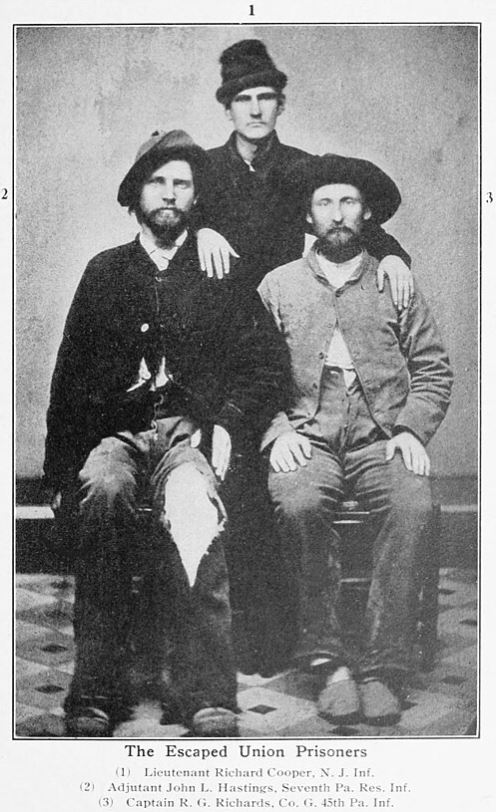
Captain Gregg also mentioned in his report that Capt. Rees G. Richards of Company G gallantly rallied his men, but “was fired at by a rebel and was seen to fall.” However, Richards was not killed or wounded. He literally dodged a bullet, but became a prisoner. Eventually incarcerated in South Carolina, Richards escaped in February 1865 and made his way to Union lines in Chattanooga the following month.[9]
Trapped in the Crater, Gregg, Bartlett and a few other officers attempted to maintain a fire on the enemy. Bartlett was successful in rallying “some twenty-five or thirty negroes, who behaved nobly, keeping up a continual fire of musketry, thereby holding the rebels on the right of the fort at bay and keeping them from entering it.” Then, the Confederate mortar batteries opened up. “They had perfect range of the crater; therefore almost every shell exploded in the midst of the dense mass of men, killing and wounding many of our brave soldiers at every explosion,” Gregg grieved.[10]
Suffering from excessive heat, thirst, and now short on ammunition, Gregg wrote that “We succeeded at last in getting several hundred rounds from the dead and wounded in the fort. The traverses around the fort were filled with the enemy, who attempted to charge into the crater, but were driven off at the point of the bayonet.” The men in his command continued to fall from shots fired through gaps in the fortifications, but “Our brave, heroic soldiers would fill them up as much as possible by putting in blouses, knapsacks, haversacks, and everything that could be got hold of.”[11]
“The suffering for want of water was terrible,” Gregg explained. Some of the USCTs volunteered to risk going for water, but “A great many of them were shot in the head while attempting to get over the works; a few, more fortunate than others, succeed in running the gauntlet and returned with water to the great relief of their suffering comrades.”[12]
Attempts to get some reinforcements, and also to cut a way through the works to get water brought in, were both unsuccessful. “At about 2 p.m. the loss of life was terrible. There was death below as well as above the ground in the crater. It seemed impossible to maintain life from the intense heat of the sun,” Gregg penned. Mercifully a message came from Gen. Griffin to abandon the crater and fall back. Gregg pointed out that “Many of the men were killed while falling back from the fort to our original position, others were wounded, and many who found it impossible to get back were captured by the enemy.” General Bartlett, who had a wooden leg from a wound that required amputation at Yorktown in 1862 was among those captured. Gregg made it out. Gregg noted that his intention was to bring back water for those caught in the crater, but “after running from the fort to our lines, under a terrible fire of musketry, I became completely exhausted and found it impossible to return.”[13]
Gregg reported that his command went in with 110 men. “Of that number 6 were killed, 22 wounded, and 39 missing,” a 60% causality rate. Of his men and his fellow officers, he stated that they were all “deserving great praise for their noble conduct and bearing.”[14]
About three weeks later, in another double move north of the James River and at Petersburg during Grant’s Fourth Offensive, the Fifth Corps, commanded by Maj. Gen. Gouverneur K. Warren, successfully cut the Weldon Railroad in three days of fierce fighting and Confederate counterattacks that resulted in hundreds of more prisoners of war on both sides.
Captain Gregg’s good luck ran out during Grant’s Fifth Offensive at the Battle of Peebles Farm on September 30, 1864. Captured in that fight, he was eventually exchanged and returned to the 45th Pennsylvania in February 1865. After the conflict Gregg, a veteran of the Seminole War, the Mexican American War, and the Civil War, returned to Center County, Pennsylvania, married and started a family. He died on July 4, 1878.[15]
[1] For an excellent treatment on Grant’s Second Offensive, see: John Horn, Lee Besieged: Grant’s Second Petersburg Offensive, June 18-July 1, 1864 (El Dorado Hills, CA: Savas Beatie, 2025).
[2] Horn, Lee Besieged.
[3] OR, Vol. 40, Part 1, 553.
[4] OR, Vol. 40, Part 1, 554.
[5] OR, Vol. 40, Part 1, 554.
[6] OR, Vol. 40, Part 1, 554.
[7] Allen D. Albert, ed., History of The Forty-Fifth Pennsylvania Veteran Volunteer Infantry, 1861-1865 (Williamsport, PA: Grit Publishing, 1912), 261.
[8] OR, Vol. 40, Part 1, 554-555.
[9] OR, Vol. 40, Part 1, 554.
[10] OR, Vol. 40, Part 1,555.
[11] OR, Vol. 40, Part 1, 555.
[12] OR, Vol. 40, Part 1, 555
[13] OR, Vol. 40, Part 1, 556.
[14] OR, Vol. 40, Part 1, 556.
[15] Allen D. Albert, ed., History of The Forty-Fifth Pennsylvania Veteran Volunteer Infantry, 1861-1865, 525; The Center Reporter, July 18, 1878.


A splendid recounting of the action, and what a quotable line!
Thanks you!
Great article! You describe the chaos so well.
Thanks, Bert!