The Death of Colonel John Wheeler
As Col. John Wheeler led the men of the 20th Indiana Volunteer Infantry Regiment into the battle of Gettysburg, a sense of foreboding settled over him. It was not for lack of courage; he had served with the regiment since its formation and risen from captain to colonel. Nor was it for lack of experience; he had commanded the regiment since February 11, 1863, and saw it through the brutal fighting of Chancellorsville.[1]
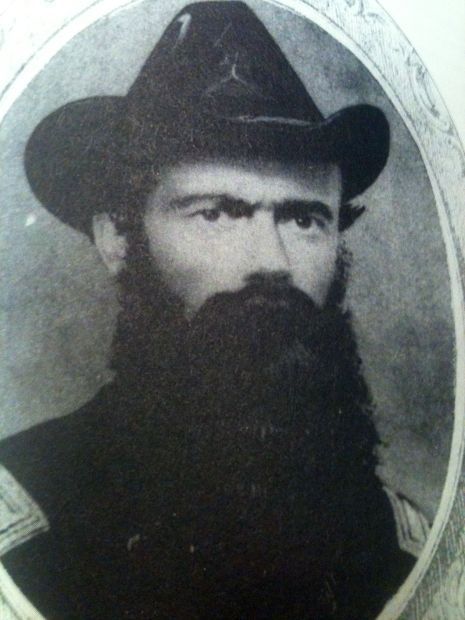
Rather, the sense of foreboding that gripped Wheeler that morning was a common occurrence on both sides of the war: a premonition of death. His regiment, serving in J. H. Hobart Ward’s brigade of David B. Birney’s III Corps division, had arrived on the battlefield at 9 p.m. on July 1, well after the first day’s major operations had concluded. He woke early the next morning to write a letter to his wife and children.
After briefly reviewing the first day of battle, Wheeler wrote, “I shall give this to someone who does not go into battle so that you will probably get it. It may be my last letter to you. If so believe that my last prayer for you is that God may bless you all. I believe we will whip them finely before the sun goes down.”[2]
In spite of this trepidation, Wheeler continued with his soldiers into the Rose Woods near what was already known as the Devil’s Den. For two hours, the regiment remained put as their superiors debated, but at 3:30 p.m. the lull dramatically ended with a half hour Confederate artillery bombardment. The wooded and rocky terrain afforded the Hoosiers some protection, while Wheeler rode his horse among the men to keep up their morale.[3] As he hoped, the men held steady.
A greater trial lay ahead. The 20th Indiana was about to face a two-division Confederate assault on the Union III Corps. Across the lines from them was the famous Texas Brigade, eager for a fight. Around 4:00 p.m., the Confederates began their advance. At this crucial juncture, Brig. Gen. Ward issued an order that would have dire consequences for the Hoosiers. Hoping to conserve their ammunition and maximize their volleys, he ordered the 20th not to fire until “they could plainly see the enemy.”[4]
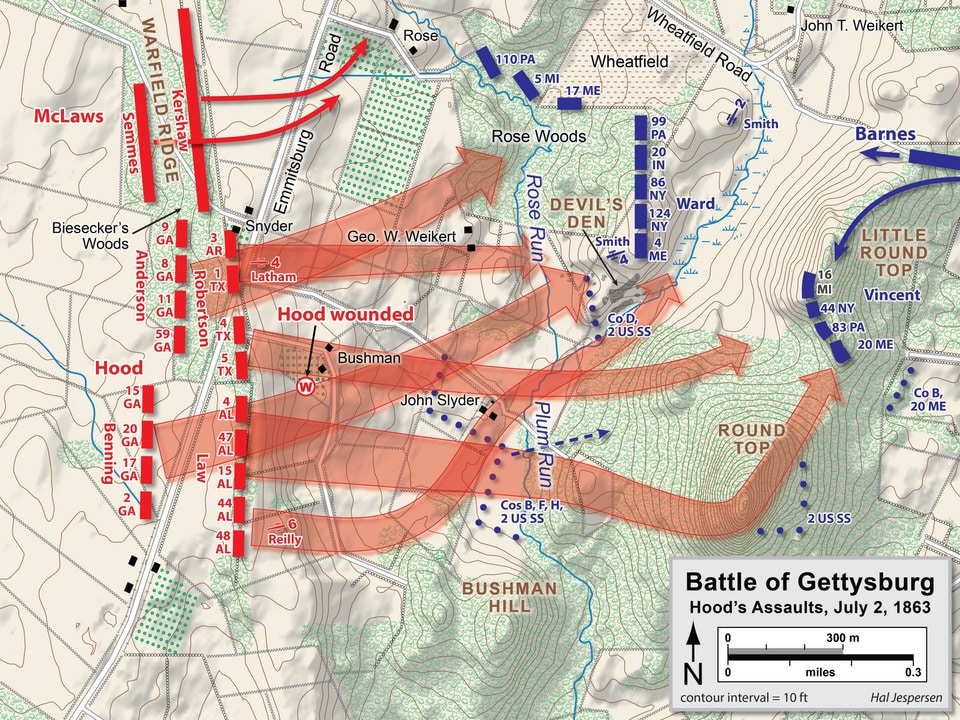
While seemingly a sensible order at first impression, the terrain and battlefield conditions rendered it catastrophic for Wheeler’s men. Besides the obstruction caused by the trees and rocks, the smoke of battle further hindered their ability to see the oncoming enemy. As the 3rd Arkansas drew closer and closer, the 20th Indiana continued to hold their fire. It was only when the Confederates drew especially close that the Hoosiers began firing their muskets. With so little distance between them, a chaotic melee ensued.[5] Over the course of twenty-five minutes of carnage and chaos, 146 of the regiment’s 268 men, fifty-five percent of their pre-battle roster, became casualties.
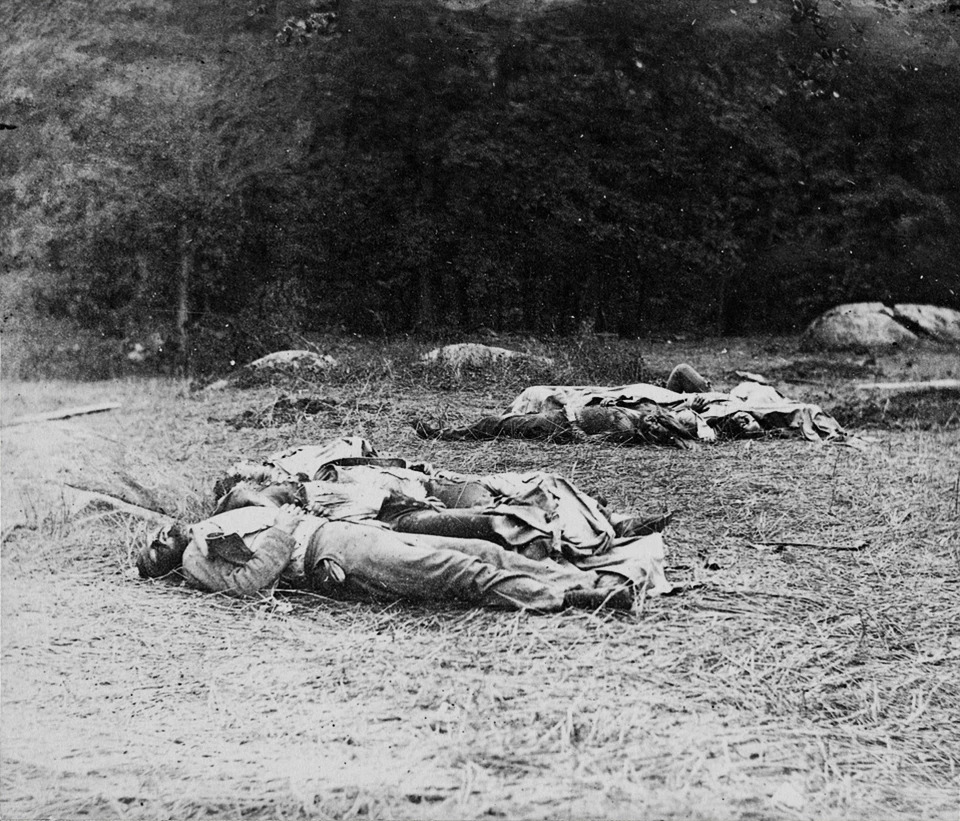
In the midst of it all, Wheeler remained mounted on his horse and encouraging his men. Unfortunately, this made him a clear target for the crack shots of the Confederates. In the first few minutes of the struggle, one of the Arkansans saw the mounted target and fired. The round pierced through Wheeler’s right temple, killing him instantly.[6]
In spite of his death, the 20th Indiana continued the struggle. This was aided by the focus of the 3rd Arkansas shifting from them to a nearby Union battery under Capt. James E. Smith. Adjutant John E. Luther hastened to recover Wheeler’s body and bring it safely to the rear.[7]
Command, meanwhile, passed to Lt. Col. William C.L. Taylor, who reorganized the men and led them in pouring an enfilading fire into their former Southern tormentors.[8] Their volleys proved so effective that it necessitated a temporary Confederate withdrawal, but not before the mounted Taylor fell under the aim of a Confederate musket like his former commander. His wound did not prove fatal, but it did force him to hand over command to Capt. Erasmus C. Gilbreath.
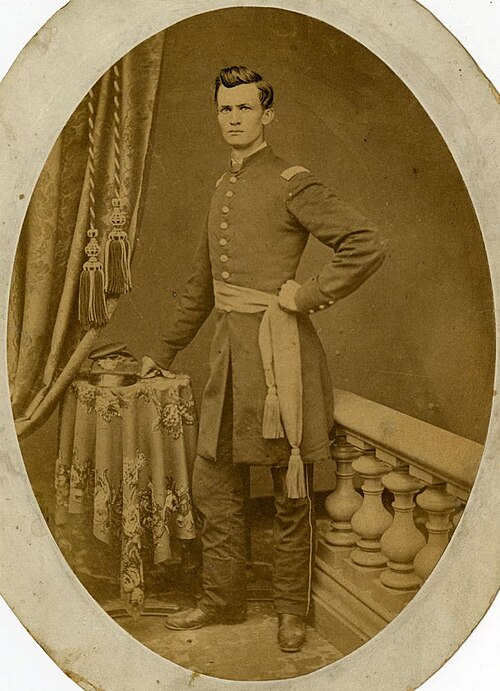
As a line officer without a horse, Gilbreath sought a steed now that he took regimental command. He tried Wheeler’s old mount, but the horse proved too restless under a new rider. From on foot, Gilbreath would direct the 20th’s operations for the rest of the day, leading them in several more defenses in the Rose Woods before leading a fighting withdrawal to Little Round Top.[9]
Command briefly passed to senior Capt. Charles Ball at the end of the battle, but the arrival of Gilbreath’s major commission from Governor Oliver P. Morton later that day restored his status. With this authority, he led the regiment in helping to sweep up Confederate prisoners in the aftermath of the Pickett-Pettigrew-Trimble Charge.[10]
The strength of Wheeler’s lasting memory proved mixed. For the public at large, Wheeler’s death went largely unnoticed. Understandably enough, the news of Union victory, Lee’s repulse, and the killing and wounding of dozens of senior Union officers overshadowed the passing of the 20th Indiana’s colonel. His footnote status continued with standard histories of the battle, where he might be afforded a few lines and an acknowledgment of his death under fire. His exclusion from popular culture’s two Gettysburg touchstones, The Killer Angels and Gettysburg (1993), further solidified his obscurity.
For those who knew him, however, it was and is different. In the midst of battle, Gen. Ward had sent word to Gilbreath that “I am sorry Wheeler is gone” as well as noting in his report a month later that “the Twentieth Indiana has lost its colonel … a more gallant soldier and efficient officer did not exist. The great state of Indiana may well feel proud of John Wheeler, the hero, the patriot, and the honest man. He was worthy to command the glorious Twentieth, and his command was proud of him.”[11] Ward’s praise of the 20th’s pride in their colonel rang true, and it ultimately proved lasting.
As the 20th came home on leave in the spring of 1864, they brought with them praiseful memories of their departed colonel. After the war ended and as the decades passed, he still did not fade from their memories. Veterans’ reunions kept the memory of Wheeler alive. Even over three decades later, Gilbreath still recalled his colonel as “a fine officer and a brave man.”[12]
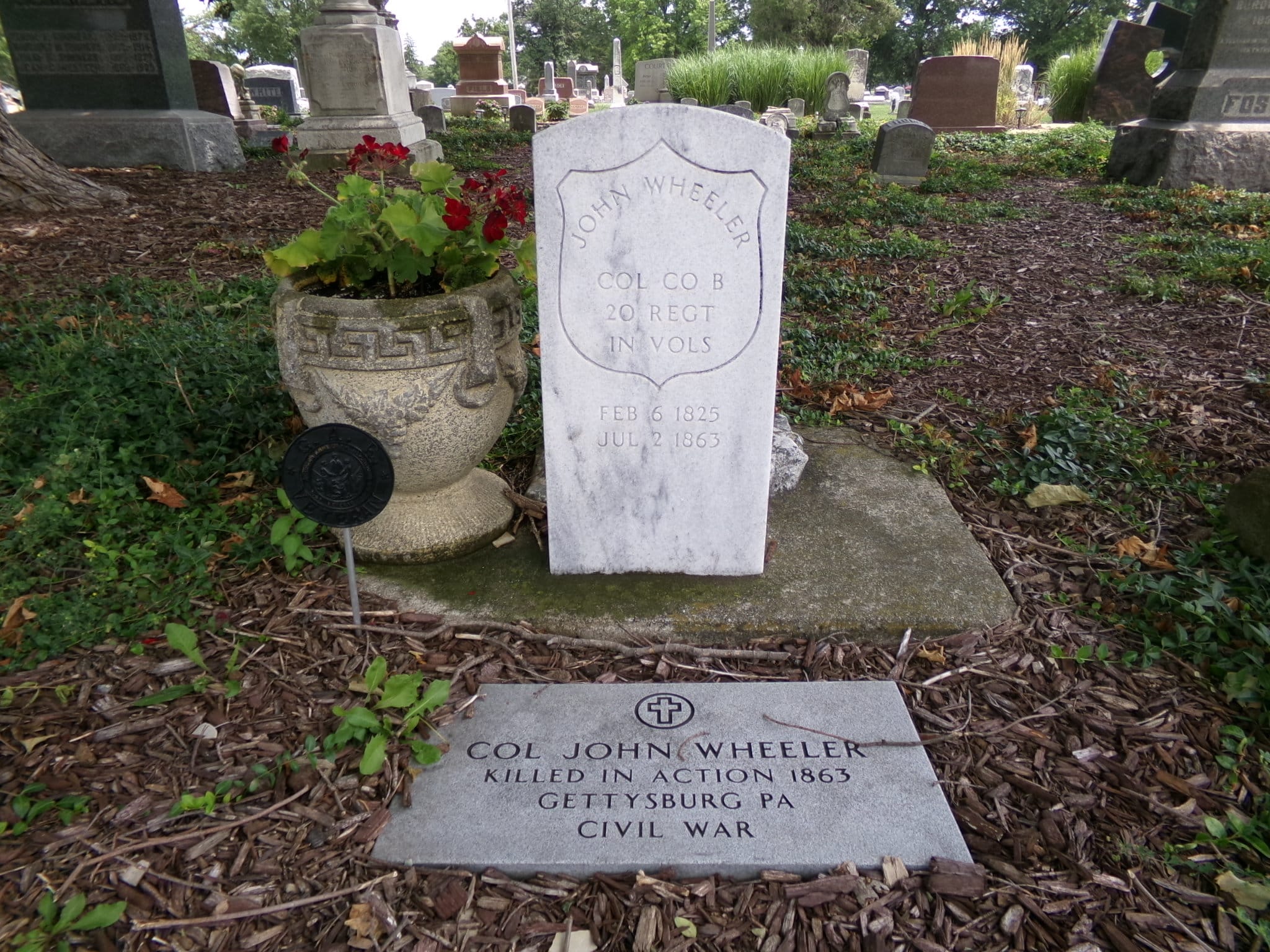
His memory continues even to the present day in his hometown of Crown Point. In it stands Colonel John Wheeler Middle School, established in 2007. It displays the coat he was wearing on July 2 along with other artifacts and murals of his service. A few minutes down the road at Maplewood Cemetery, the colonel’s tombstone stands in his perpetual memory. Despite the coming and going of over a century and a half, the words of Lincoln’s Gettysburg Address still ring true, as Indiana can still never forget what her sons did on those three fateful days.
Endnotes:
[1] William H.H. Terrell, Report of the Adjutant General of the State of Indiana, vol. 2 (Indianapolis: W.R. Holloway, State Printer, 1865), 178.
[2] John Wheeler to his family, July 2, 1863, quoted in C. Dunn, Harvestfields of Death: The Twentieth Indiana Volunteers of Gettysburg (Carmel: Guild Press of Indiana, 1999), 180.
[3] Erasmus C. Gilbreath, The Personal History of 20th Indiana Volunteer Infantry, 1898, National Automotive History Collection, Detroit Public Library, 72.; Harry W. Pfanz, Gettysburg: The Second Day (Chapel Hill: The University of North Carolina Press, 1987), 178-179.
[4] U.S. War Department, The War of the Rebellion: A Compilation of the Official Records of the Union and Confederate Armies, Series 1, 53 vols. (Washington D.C.: Government Printing Office, 1889), Series 1, vol. 27, part 1, 493.
[5] Dunn, Harvestfields of Death, 182-183.
[6] Gilbreath, Personal History, 72.
[7] Ibid
[8] Dunn, Harvestfields of Death, 183.
[9] Gilbreath, Personal History, 72-73.; Dunn, Harvestfields of Death, 183-184.
[10] Gilbreath, Personal History, 72-75.
[11] Gilbreath, Personal History, 72.; U.S. War Department, The War of the Rebellion, 493.
[12] Francis A. Osbourne, One of the Fighting Three Hundred: The Twentieth Indiana Infantry, Local & Family History Services Archival Collection, St. Joseph County Public Library.; Fifth Reunion of the 20th Indiana Veteran Volunteers, Local & Family History Services Archival Collection, St. Joseph County Public Library.; Gilbreath, Personal History, 72.


Stopped at the 20th Indiana monument and Wheeler rock on Saturday to pay my respects. Col Wheeler is not forgotten!
The Wheeler Rock, one of the Gettysburg battlefield’s earliest monuments, is another way that the Hoosier’s legacy continues down to the present. I am glad to hear that you gave it a visit!
I appreciate the important insight on Ward’s order to delay firing. thanks