A Prophet Without Honor: George H. Thomas and the Lost Cause
The Lost Cause is perhaps the most analyzed strand of Civil War memory, leading to many of its portrayals becoming common knowledge among those interested in the era. The deification of Lee and Jackson, the deprecation of Longstreet, and the demonization of Grant and Sherman are all well-known. Their view on George H. Thomas, the Virginian who stayed loyal to the Union, has surprisingly been the subject of much less analysis and discussion. At the Lost Cause’s height in the turn of the century, the portrayal of Thomas as a perfidious opportunist pervaded one of the movement’s main expressions: Confederate Veteran magazine.
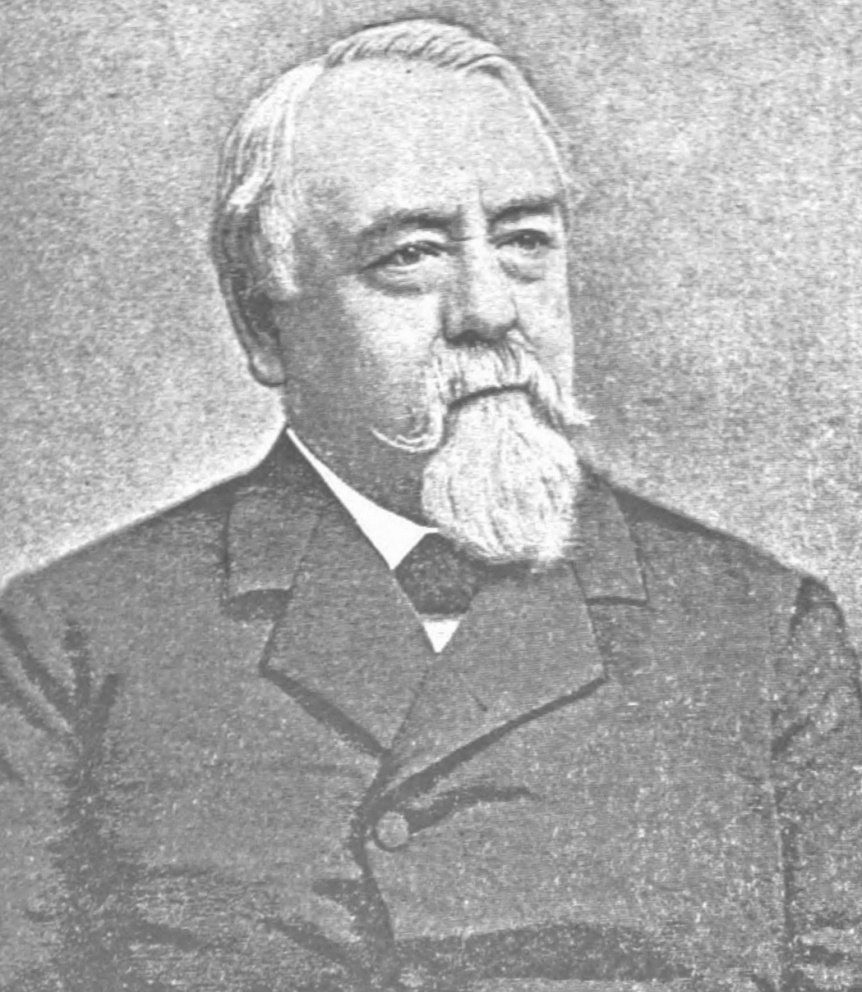
In their efforts to portray Thomas as a man who pledged loyalty to his state before betraying it at the moment of crisis, Confederate Veteran partly relied on accounts given from various Southerners. Most prominent and ferocious among these was a piece entitled, “Thomas and Lee – Historical Facts” by the noted Lost Cause advocate J. William Jones. Beginning with a bold assertion, Jones declared, “the proof is overwhelming that Maj. Gen Geo. H. Thomas, U.S.A., was a strong secessionist.” From there, Jones’s polemic quickly dived into an assault upon Thomas’s character and conduct based upon the assertions of others.[1]
He quoted Fitzhugh Lee and Dabney Maury, both fierce advocates of the Lost Cause in their own right, in their claims that Thomas was always an arch-secessionist until he was henpecked by his wife into fighting for the Union. Jones adds that Robert E. Lee viewed Thomas as such a Fire-Eater that Lee asked for Thomas to tone down his rhetoric for the sake of his messmates, although Jones provides no source for when or how he obtained this information. In another unsourced claim, and certainly his sharpest jab, he claims that Thomas had hoped to receive command of Virginia’s state troops following secession, which instead went to Robert E. Lee. He snidely adds, “how far this action of the convention decided the course of Thomas need not be discussed.”[2]
Written volleys such as Jones’s struck forcefully if not decisively against Thomas’s character in the eyes of the Lost Cause. In pursuit of the smoking gun of Thomas’s duplicity, a pair of letters became the subject of vigorous debate. The first gauntlet was thrown down by the Confederate Veteran in 1903.
The magazine’s April edition published a March 12, 1861 letter from George H. Thomas to Virginia Governor John Letcher. Responding to an inquiry about whether he would be willing to resign from the U.S. Army to serve as Virginia’s Chief of Ordnance, Thomas wrote, “I have the honor to state . . . that it is not my wish to leave the service of the United States as long as it is honorable for me to remain in it, and therefore as long as my native State (Virginia) remains in the Union, it is my purpose to remain in the army, unless required to perform duties alike repulsive to honor and humanity.”[3]
Thomas’s comments about Virginia led many white Southerners to hoist the letter as conclusive proof that the general had originally understood his home state as his primary loyalty. In the years to come, the letter was repeatedly printed in the magazine whenever someone doubted if Thomas had originally harbored secessionist sympathies.
Kate Mason Rowland, a Southern woman, included the letter in her public response to a Union soldier questioning the Lost Cause’s narrative concerning Thomas, noting, “the following letter of Gen. Thomas shows conclusively that he thought his allegiance was to his native state . . . and that it would be dishonorable to remain in the service of the Union.”[4] Another Southern writer in 1908 wrote that the letter led to the Lost Cause’s account of Thomas being the “usually accepted statement” among Southerners, while another Southerner in 1914 wrote that if the letter wasn’t proof of Thomas’s original secessionist intent, “then it is clear that the human language is worthless to express human purpose.”[5]
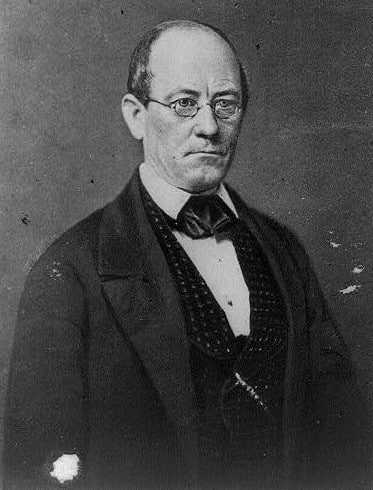
While the Letcher letter already secured the Lost Cause’s vision of Thomas as a turncoat, an even more explosive missive promised to not only solidify Thomas’s image, but also expose two more of the Union’s premier commanders as well. In the October 1907 edition of the magazine, Armand Lamar DeRosset, formerly a captain in the 2nd North Carolina Battalion, claimed that he had learned of the existence of letters from Ulysses S. Grant, David G. Farragut, and George H. Thomas to Jefferson Davis asking for commissions in the Confederate Army.[6]
These provocative claims sparked a fierce reaction among those interested in the conflict’s memory, even coming to the attention of Grant’s son Frederick. In light of this, the December 1907 issue of Confederate Veteran doubled down on the claim. The magazine’s editor wrote that he “personally knew both the gentlemen [DeRosset and his source] . . . and ever had such implicit faith in their integrity that he could not but accept the account.”[7] Thus, the fighting over their existence continued.
In the March 1908 edition, a defender of Thomas challenged DeRosset to show proof of the three Davis letters, as well as a letter DeRosset claimed to be in J. William Jones’ possession that showed further proof of Thomas applying to Davis.[8] In response, DeRosset admitted that his source only claimed the Davis letters likely rather than definitively existed. He stood by, however, the existence of Jones’s letter.[9] With this admission, the dispute dissipated into silence. None of the three Davis letters emerged in the decades since the allegation, and tellingly DeRosset did not ever mention them again in Confederate Veteran. Similarly, the Jones letter has not since emerged. Considering Jones, with his vocal interest in discrediting Thomas, never published it in any of his writing, it seems likely that letter did not exist either.

Although the DeRosset letters have been discredited, what about the Letcher letter? Does it show definitive proof of an originally secessionist Thomas, as the Lost Cause alleged? Placed in the context of both the state of Virginia and Thomas’s life at the time, it reveals another Lost Cause fabrication of the past. On his way home for a leave of absence in November 1860, Thomas fell off a train station and severely injured his back. Fearful that it might mark the end of his ability to actively serve with the United States Army, he began exploring other means of supporting his family. One such option was taking up a position in Virginia, where he was widely respected and which was still loyal to the Union.[10]
To that end, one of the positions he considered was the one offered to him in the Letcher letter, Virginia’s Chief of Ordnance. It should be noted that at the time Thomas was considering taking a military role in Virginia, the state had not seceded and still had a strong unionist sentiment. Indeed, its secession convention even voted against seceding on April 4, several weeks after the Letcher letter.[11]
Rather than it being an attempt to secure a place for himself in the secession movement, the letter represented an example of Thomas trying to afford time for himself as he carefully deliberated the events in a country that was rapidly changing around him. Never one to act rashly, Thomas sought to balance his loyalty to the Union, the dynamics of the ongoing secession crisis, and his fear of the end of his military career against each other as he considered his way forward. In line with this, the letter shows Thomas declining to immediately give up his army commission while all three factors played out. Once the stakes of the conflict became clear with Fort Sumter, Thomas resolved to stay the course with the Union Army, even when Virginia seceded.[12]
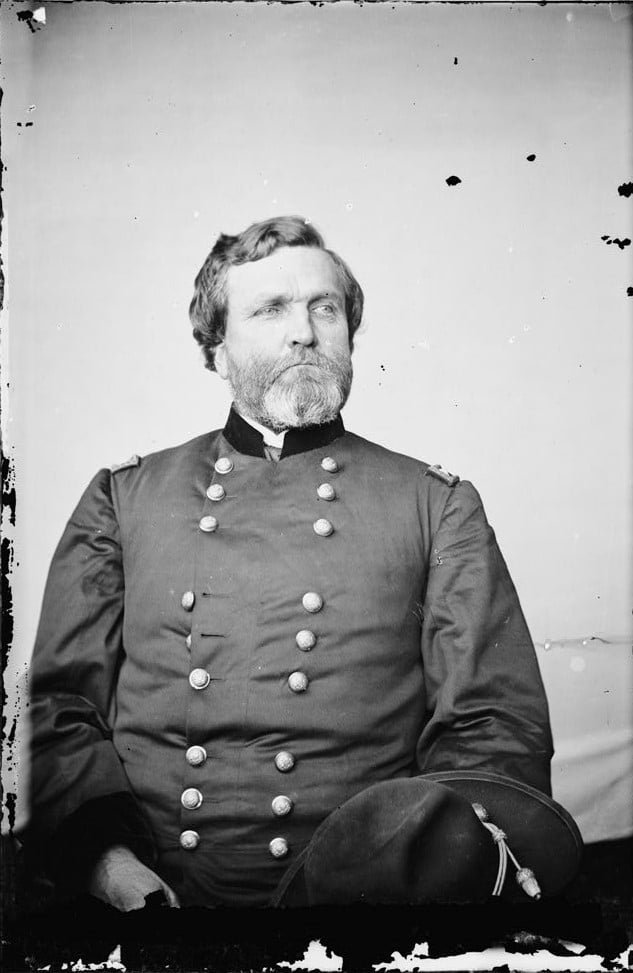
In the eyes of the Lost Cause, George H. Thomas was simply a scheming traitor who deserted his home due to the siren song of his wife and his own ambition. For those who knew him then and the historians who study him now, however, the general emerges as someone loyally devoted to his country and its cause.
Endnotes
[1] J. William Jones Jones, “Thomas and Lee – Historical Facts,” in Confederate Veteran, ed. by S.A. Cunningham (Nashville, 1903), 11:559.
[2] Ibid, 11:559.
[3] “Gen. George H. Thomas’s Relations to the South,” in Confederate Veteran, ed. by S.A. Cunningham (Nashville, 1901), 9:172.
[4] Kate Mason Rowland, “Gen. George H. Thomas,” in Confederate Veteran, ed. by S.A. Cunningham (Nashville, 1904), 12:487.
[5] B.F. Grady, “What Gen. Thomas Wrote Gov. Letcher,” in Confederate Veteran, ed. by S.A. Cunningham (Nashville, 1908), 16:22.; W. Gordon McCabe, “Gen. George H. Thomas’s Record in the War,” in Confederate Veteran, ed. by S.A. Cunningham (Nashville, 1914), 22:17.
[6] Armand Lamar DeRosset, “Interesting Statement by Judge Robt. Ould,” in Confederate Veteran, ed. by S.A. Cunningham (Nashville, 1907), 15:456.
[7] “That De Rosset Correspondence,” in Confederate Veteran, ed. by S.A. Cunningham (Nashville, 1907), 9:538.
[8] William E. Reppert, “About Gen. G.H. Thomas’s Side in the War,” in Confederate Veteran, ed. by S.A. Cunningham (Nashville, 1908), 16:126.
[9] Armand Lamar DeRosset, “The DeRossett Letter – Explanatory,” in Confederate Veteran, ed. by S.A. Cunningham (Nashville, 1908), 16:xii.
[10] Brian Steel Wills, George H. Thomas: As True As Steel (Lawrence: University of Kansas Press, 2012), 92-93.
[11] William W. Freehling and Craig M. Simpson, eds., Showdown in Virginia: The 1861 Convention and the Fate of the Union (Charlottesville: University of Virginia Press, 2010).
[12] Wills, George H. Thomas, 93-99.


Actually the main historical problem today, ironically, is not the Lost Cause narratives, but the deification of Grant and Sherman, and the overblown rehabilitation of Longstreet “the Man” because of his postwar job choices. During the war itself there was at times no fiercer assaulter of Union forces, or his own subordinates, than Lee’s Old Warhorse. Luckily for the Union, Thomas stayed with the Old Flag, and probably saved Chattanooga. Again, ironically, this enabled two tactically less adept generals, Grant and Sherman, to eventually reap the major rewards of the ensuing campaign.
John,
George Thomas was a great general. Full stop. Trying to make the claim he superseded Grant or Sherman as a tactician goes beyond the mark. We begin wading into the waters of conspiracy with such claims. No matter what anyone thinks happened at Missionary Ridge, Grant acted, Thomas did not. Any general would have been stunted by the terrain. There was no way to coordinate a simultaneous assault.
Getting back to the article at hand. It is a great piece that indicates loyalty that some southerners felt toward the Union. Thomas was one of them and deserves credit for his dedication to the Union cause.
It’s not a matter of conspiratorial thinking to consider Thomas a more skillful commander than Grant and Sherman. Albert Castel commented that had Thomas -rather than Sherman – been in command of the Atlanta Campaign, the Union success would have been more complete. For further consideration. read “General Grant and the Verdict of History,” by Frank Varney.
A fine article! Thanks for disentangling the postwar accusations and distortions surrounding the letter to Letcher and for clarifying Thomas’ own intentions and his admirable loyalty to the Union.
I have read Frank Varney and do not find his work compelling. Could Grant hold a grudge, sure. However, that does not downplay his generalship nor does it Sherman’s. I find it concerning that they only way for historians to try and prop up Thomas’s legacy is through admonishing Grant and Sherman. This argument and disagreement goes back to the rivalry between the the Army of the Cumberland and the Army of the Tennessee. I find this rivalry juvenile, and the fact that you have ideologues on both sides is greatly concerning to me. Brian Steel Wills biography on Thomas is the best biography on the subject. When we start going from Thomas, good to Grant bad is poor interpretation. The fact that Grant and Thomas can both be good generals with the reality of Grant rising through the ranks can coexist through sound evidence.
One final note, I do not know what is more “final” than capturing three armies…
Just a note to say I disagree with your analysis entirely. Grant did far more than “hold a grudge.” His numerous misrepresentations of fellow officers betray a serious character flaw, not to be taken lightly. I’ve never seen evidence that Thomas sought to unjustly diminish others. And Thomas’ legacy certainly doesn’t require diminishing Grant and Sherman; it stands on its own.
I agree completely on Varney’s works … fun reads, but not very good history … his attempted rehabilitation of Rosecrans is a laundry list of excuses where everyone else, and Grant specifically, was at fault for Rosey’s battlefield failures … the problem with this sort of revisionism is his record as an army commander – a win at Corinth, a draw at Stones River, and a beating Chickamauga – is his record, and he owns it … and no amount of 21st century second guessing will change that.
In the second book, the big argument seems to be that Grant was mean to Thomas and Warren, and that wasn’t very nice … that may be, but we’re not canonizing Grant … we’re talking performance … I will take Grant’s record all day … in fact, I will take Grant’s team all day – Sherman, Thomas, Sheridan, and Halleck (that’s right Old Brains as his mostly stellar chief of staff).
This was a very interesting article. I wish that we had George Thomas’ correspondence and that it hadn’t been destroyed. It looks like other people determined what his motivations had been.
I wish we had his letters as well. As it is, much great work diving into Thomas’s motivations and personal feelings has been done, but one can only imagine what insights could be found from a more complete set of his writings.
Excellent article, showing the lengths to which proponents of the Lost Cause would go to fabricate motivations of why figures like Thomas would act the way they did during the secession crisis. Benson Bobrick’s Master of War: The Life of General George H. Thomas, covers this as well.
Thank you! The relationship between the Lost Cause and George Thomas truly is fascinating, so it was really interesting to dive in and analyze it. It certainly stuck out to me that many tried to prove Thomas felt the same way as they did, only for Thomas to switch sides at the last moment and under dishonorable circumstances. Perhaps the Lost Cause writers were trying to better validate their own actions while also denigrating those of one of the Union’s heroes.
thanks Arie, great piece … and you have struck a gold with Confederate Veteran — the “Facebook” of the Lost Cause … published for over 40 years, it is credited (or blamed) for cementing the Lost Cause narrative as it standardized the southern story of the war, ensuring the “War of Northern Aggression” viewpoint outlived the soldiers themselves …. reading it today, you would almost never know the south lost the war!
You certainly got that right. Confederate Veteran is a treasure trove of resources for a historian, especially one analyzing the postbellum Confederate South’s mindset.
Arie, excellent article and fascinating topic.
This article epitomizes Emerging Civil War: bringing to light a new (or understudied) yet important subject, backed by solid research & good writing. The result not only increases the knowledge of the readers but – as shown above – sparks spirited debate. Bravo, Arie.
Thank you, I really appreciate it! I love shedding a little light on an obscure topic and sparking discussion about this fascinating era.
Great article and analysis. I simply wish it would have made clearer to me, the average reader, in reading it that Thomas died in 1870. Great article on a man deserving of his stars.
You make a good point. Unlike many other prominent figures woven into the Lost Cause narrative, Thomas did not live long enough to see it advance beyond its seedling stages. One can only imagine Thomas’s response to his portrayal by them. He certainly had some choice words for beginnings of the Lost Cause after the war: “The greatest efforts made by the defeated insurgents since the close of the war have been to promulgate the idea that the cause of liberty, justice, humanity, equality, and all the calendar of the virtues of freedom, suffered violence and wrong when the effort for southern independence failed. This is, of course, intended as a species of political cant, whereby the crime of treason might be covered with a counterfeit varnish of patriotism, so that the precipitators of the rebellion might go down in history hand in hand with the defenders of the government, thus wiping out with their own hands their own stains.”