Remember Fort Pillow!: A Precedent and Retaliations – Part I
The “Remember!” battle cry has echoed across generations of American history. The Revolutionary War had its “Remember Fort Griswold!” In the Texas Revolution and Mexican-American War it was “Remember the Alamo!” For the Spanish-American War it was “Remember the Maine!” During World War I it was “Remember the Lusitania!” World War II’s version was, of course, “Remember Pearl Harbor!” And, in our most recent conflicts, it was “Remember 9/11!” These phrases helped both soldiers and civilians recall what they often rightly perceived as infamous acts by enemies, and by remembering, it also inspired steadfast determination and direct action to avenge such wrongs.
Particularly for United States Colored Troops (USCT) soldiers serving during the Civil War, “Remember Fort Pillow!” became a common refrain heard on numerous battlefields. Fort Pillow, a Confederate installation named for Gen. Gideon Pillow and sitting on the West Tennessee bank of the Mississippi River, became the scene of one of the most notorious atrocities of the Civil War.
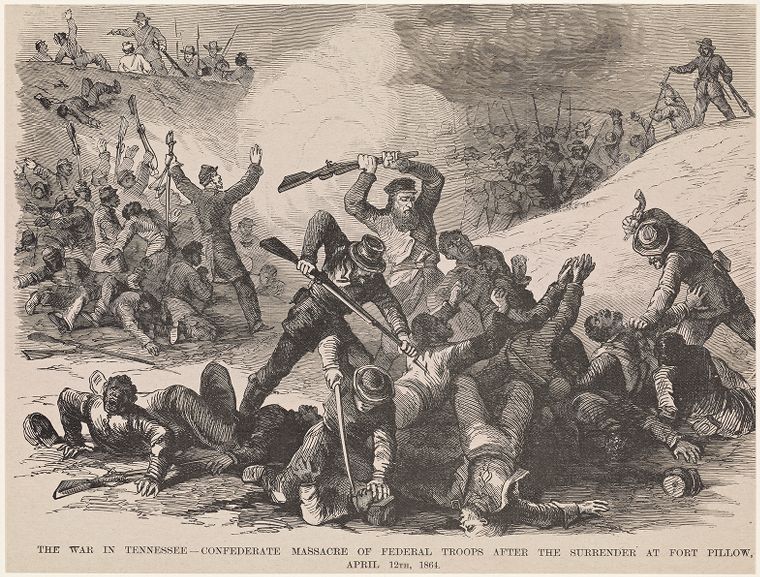
When Confederates evacuated Fort Pillow in the summer of 1862, Federals subsequently occupied it. Almost two years later, on April 12, 1864, a force of about 600 white Unionist Tennessee soldiers and Black artillery troops were defending the position when Gen. Nathan Bedford Forrest’s cavalry command attacked the fort. Early in the battle, and unbeknownst to the Confederates, they killed the fort’s commander, Maj. Lionel Booth. Unable to initially capture the fort, Forrest demanded its unconditional surrender. Assuming command, Maj. William Bradford refused the ultimatum. Forrest’s men furiously stormed the position. Some of the Union soldiers fought for a short time before breaking, many ran toward the river. Forrest’s men shot down numerous soldiers as they fled, while they shot and bayonetted many others after they attempted to surrender. Still others, trying to escape, ran into the river and drowned. In a congressional investigation held later about the action, and in which survivors provided testimony, an enormous amount of evidence showed that Forrest’s soldiers wantonly killed scores of Union soldiers, the majority being USCTs.[1]
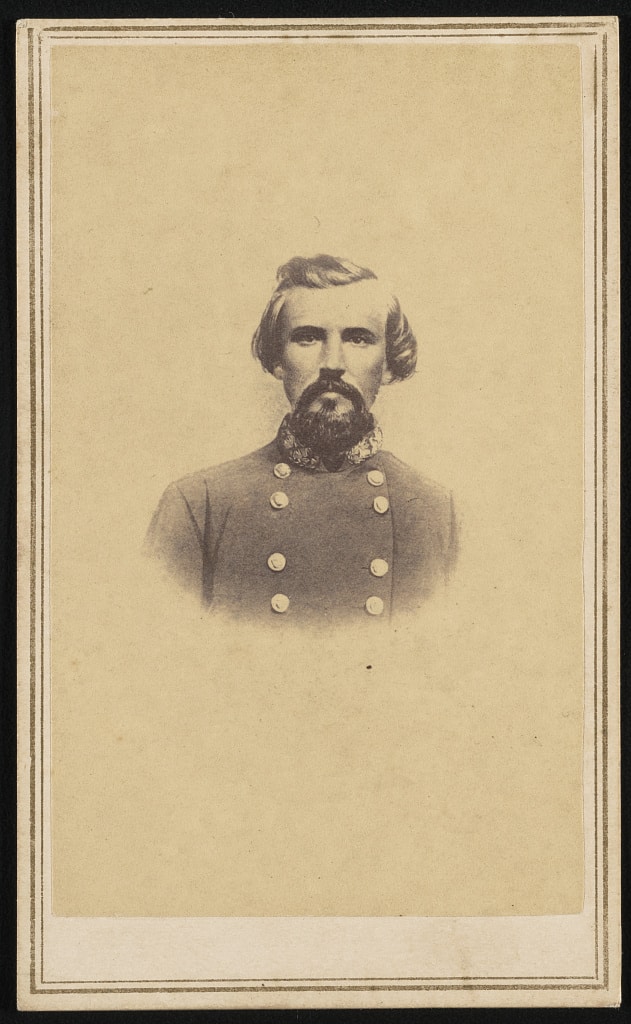
Evidence of the massacre also comes from Forrest’s own men. One, Sgt. Achilles V. Clark of the 20th Tennessee Cavalry, wrote to his sisters two days after the battle describing the terrible scene: “Our men were so exasperated by the Yankee’s threats of no quarter that they gave but little. The slaughter was awful. Words cannot describe the scene. The poor deluded negros would run up to our men fall on their knees and with uplifted hands scream for mercy but they were ordered to their feet and then shot down. The whitte [Union] men fared but little better. The fort turned out to be a great slaughter pen. Blood, human blood stood about in pools and brains could have been gathered up in any quantity. I with several others tried to stop the butchery and at one time had partially succeeded but Gen. Forrest ordered them shot down like dogs and the carnage continued. Finally our men became sick of blood and the firing ceased.”[3]
Although other outrages had occurred before Fort Pillow, word spread far and wide and rapidly about its atrocities. Newspapers, both North and South, shared numerous articles describing the battle and its tragic results, and some calling vehemently for revenge. An example comes from the Toledo Iowa Transcript published exactly a month after Fort Pillow. The author felt that “Our government should deal out retributive justice,” and hoped that in a future fight “that some of our Western troops will soon be victorious in an engagement, and then instead of taking five or six hundred prisoners, wade into them a la Fort Pillow, with the significant watchword ‘Remember Fort Pillow!’” Continuing, the article advised, “Let them t[h]rust home the steel to the inspiration of ‘Remember Fort Pillow.’ Let the last earthly sound that fills a rebels ear be ‘Remember Fort Pillow.’ Let the red glare of vengeance, be heightened, with the cry ‘Remember Fort Pillow.’ Let the dying demons be solaced with ‘Remember Fort Pillow[’] and then let them be honored with a burial and headboard upon which shall read ‘In memory of Fort Pillow.’”[4]
For some Federal soldiers, both white and Black, the Fort Pillow incident brewed retaliation. After the desperate fighting that occurred at the Battle of Resaca, Georgia, in mid-May 1864, a white Wisconsin soldier wrote home to his sweetheart that after assaulting a Confederate artillery position, “twenty-three of the rebs surrendered but our boys asked if they remembered Fort Pillow and killed all of them. Where there is no officer with us we take no prisoners . . . . We want revenge for our brother soldiers and will have it.”[5]
However, Fort Pillow’s tragic legacy resonated with particular strength among the rapidly expanding USCT regiments in the spring and summer of 1864 for good reason. While not garnering the publicity of Fort Pillow, incidents had occurred involving USCTs previously at Milliken’s Bend, Louisiana in June 1863, and at Olustee, Florida in February, 1864. Other accounts of prisoner killings, happened at Poison Spring, Arkansas, and Plymouth, North Carolina, only a week after Fort Pillow. In many cases, instead of discouraging enlistments and dampening the morale of those already in service, Fort Pillow, its antecedents and similar future cases, spurred many Black men to join up and served as additional motivation to face the difficult tasks of soldering ahead.
In some cases, even before USCT units saw combat, Fort Pillow was on their minds. White officer Lt. John Owen of the 36th USCI, then serving on the York/James peninsula, wrote on May 6, 1864, “We hear fearful accounts of the barbarity of the rebels at Plymouth [North Carolina] and Fort Pillow towards the colored troops. I think our boys will either come off successful or fight to the death—Better to be killed fighting to the last than tortured to death after surrendering.”[6]
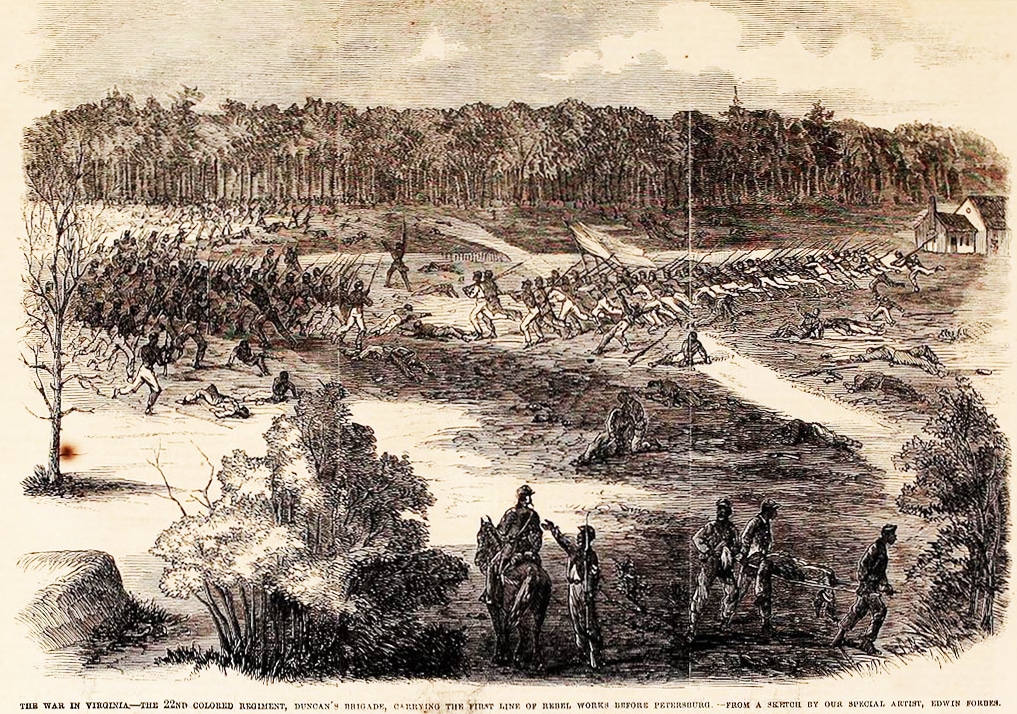
Only two months after Fort Pillow, USCTs in the Eighteenth Corps invoked the memory of that battle and its resulting atrocity as they attacked on June 15, 1864, at Baylor’s Farm outside of Petersburg and along the city’s main earthworks, the Dimmock Line. Pvt. Charles Torrey Beman of the 5th Massachusetts Colored Cavalry wrote to a newspaper explaining the June 15 fighting that he saw. “The colored troops here have received a great deal of praise. The sensations I had in the battle were coolness and interest in the boys’ fighting. They shouted ‘Remember Fort Pillow,’ and the rebs were shown no mercy,” Pvt. Beman penned.[7] Beman and his USCT division comrades were successful in capturing artillery pieces and a number of forts along the Dimmock Line, forcing the defenders to fall back and establish a new earthwork line. Beman’s comment that the enemy was “shown no mercy” in retaliation for Fort Pillow is supported by other accounts.
Pvt. Nicholas Gross of the 4th USCI, a free man of color before the war, who also fought at Petersburg, wrote his brother five days after the battle explaining, “We had a hard battle at Petersburg. . . . We took no prisoner[s.] We don them as they did our troops at fort piller.”[8]
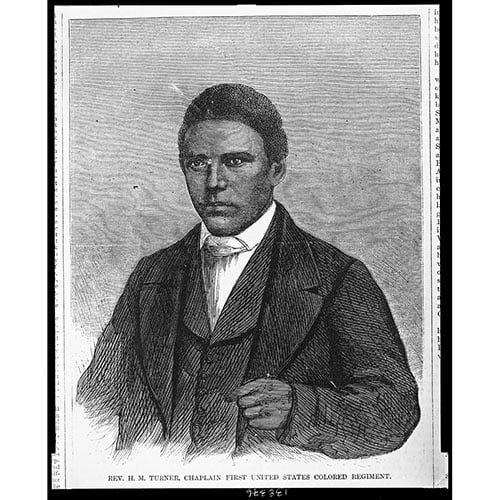
The Black chaplain for the 1st USCI, Rev. Henry McNeal Turner, wrote to the Christian Recorder newspaper two weeks following the opening fight at Petersburg. In his letter he also discussed the inspiration of Fort Pillow and the retribution they exacted: “The rebel balls would tear up the ground at times and create such a heavy dust in front of our charging army that they could scarcely see the forts for which they were making. But onward they went, through dust and every impediment, while they and the rebels were both crying out—‘Fort Pillow.’ This seems to be the battle-cry on both sides. But onward they went, waxing stronger and mightier every time Fort Pillow was mentioned,” Rev. Turner explained. Turner also mentioned the vengence sought for Fort Pillow’s precedent: “The next place we saw the rebels was going out the rear of the forts with their coattails sticking straight out behind. Some few held up their hands and pleaded for mercy, but our boys thought that over Jordan would be the best place for them, and sent them there, with few exceptions.”
A white hospital steward for the 126th Ohio Infantry, William Foster, had an opportunity to chat with a Black sergeant after the June 15 fighting at Petersburg, asking why they had taken so many prisoners. The sergeant stated, “our officers were all with us and General Grant and [Gen. William F.] Smith were on the field . . . and we had to do a nice thing.” Foster continued, “You need not ask them of Fort Pillow . . . They swear by its sad memory.”[9]
In explaining why the Confederates ran as the USCTs attacked at Petersburg, an officer in the 22nd USCT explained, “The real fact is, the rebels will not stand against our colored soldiers when there is any chance of their being taken prisoners, for they are conscious of what they justly deserve. Our men went into those works after they were taken, yelling ‘Fort Pillow!’ The enemy well knows what that means, and I will venture the assertion that that infernal piece of brutality enforced by them there has cost the enemy already two men for every one they so inhumanely murdered.”[10]
In the June 21, 1864, edition of the New York Tribune, the reporter, “Our Special Correspondent,” only identified by the initials “W. H. K,” either heard the referenced conversation first hand, or had it relayed to him, that Maj. Gen. Benjamin Butler’s chief of staff, Col. John W. Shaffer, shared a brief conversation with a USCT sergeant. The unnamed sergeant from a regiment that goes unmentioned stated that the USCTs lost a good number of officers and men in the attack. Shaffer then asked how many prisoners they captured. The sergeant responded, “Not any alive, Sir.” The correspondent then mentioned that Maj. Gen. William F. “Baldy” Smith, commander of the Army of the James’ Eighteenth Corps added: “They [USCTs] don’t give my Provost-Marshal [in charge of captured prisoners] the least trouble, and I don’t believe they contribute toward filling and of the hospitals with Rebel wounded;” implying the USCTs offered no quarter to wounded enemies. It is difficult to tell if Smith’s comments came at the time of the conversation between Shaffer and the USCT sergeant or at another time.[11]
Similarly, Lt. Col. Richard S. Thompson of the 12th New Jersey Infantry in writing to his sister Hannah Leaming on June 20, 1864, explained: “The colored troops have been doing very fine fighting lately, and the Rebs are awakening to the fact that they will meet a brave enemy in ye [Negro] in blue clothing.” Thompson added that “The Rebel prisoners are very fearful of being left to the charge of the colored troops as they fear their own acts of inhumanity will be repaid. The [USCTs] are all anxious to kill but not take prisoners, and their cry is Ft. Pillow, etc. when they are ordered to charge.”[12]
[1] Andrew Ward, River Run Red: The Fort Pillow Massacre in the American Civil War, Viking, 2005; Brian Steel Wills, The River was Dyed with Blood: Nathan Bedford Forrest and Fort Pillow, University of Oklahoma Press, 2014.
[2] OR 32, Part 1, 610.
[3] Richard L. Fuchs, An Unerring Fire: The Massacre at Fort Pillow, Stackpole, 2002, 124.
[4] Iowa Transcript, May 12, 1664.
[5] James M. McPherson, The War that Forged a Nation: Why the Civil War Still Matters, Oxford University Press, 2015, 50-51.
[6] James K. Bryant, II, The 36th Infantry United States Colored Troops in the Civil War: A History and Roster, McFarland and Co., 2012, 100.
[7] Edwin S. Redkey, ed. A Grand Army of Black Men: Letters from African-American Soldiers in the Union Army, 1861-1865, Cambridge University Press, 1992, 99.
[8] Warren Eugene Milteer, Jr., Beyond Slavery’s Shadow: Free People of Color in the South, University of North Carolina Press, 2021, 240
[9] A. Wilson Greene, A Campaign of Giants: The Battle for Petersburg, Volume 1, From the Crossing of the James to the Crater, University of North Carolina Press, 2018, 111.
[10] Ibid, 111.
[11] New York Tribune, June 21, 1864.
[12] Gerry Harder Poriss and Ralph G. Poriss, eds., While My Country is in Danger: The Life and Letters of Lieutenant Colonel Richard S. Thompson, Twelfth New Jersey Volunteers, Edmonston Publishing, 1994, 108-109.


