Carl Schurz: The Quintessential German American?
Few individuals are more emblematic of the ethnic experience of the Civil War than Carl Schurz. Though not a household name among Union generals, Schurz has grown to represent the American immigrant’s stake in the war. This was a role that was somewhat self-imposed. Throughout the war, Schurz advocated on behalf of his German American brethren in the face of flagrant nativism and rallied a key constituency of immigrants to Lincoln’s Republican Party in 1860.
This activism and leadership resulted in Schurz’s staunch support of the Union cause during the American Civil War. He drew upon his political and military experience as a Forty-Eighter—or refugee from the Revolution of 1848—to support Lincoln’s platform and the Union war effort. Of course, not all 19th century German Americans were émigrés, but Schurz’s political identity as a Forty-Eighter is as significant as his ethnic identity as a German immigrant.
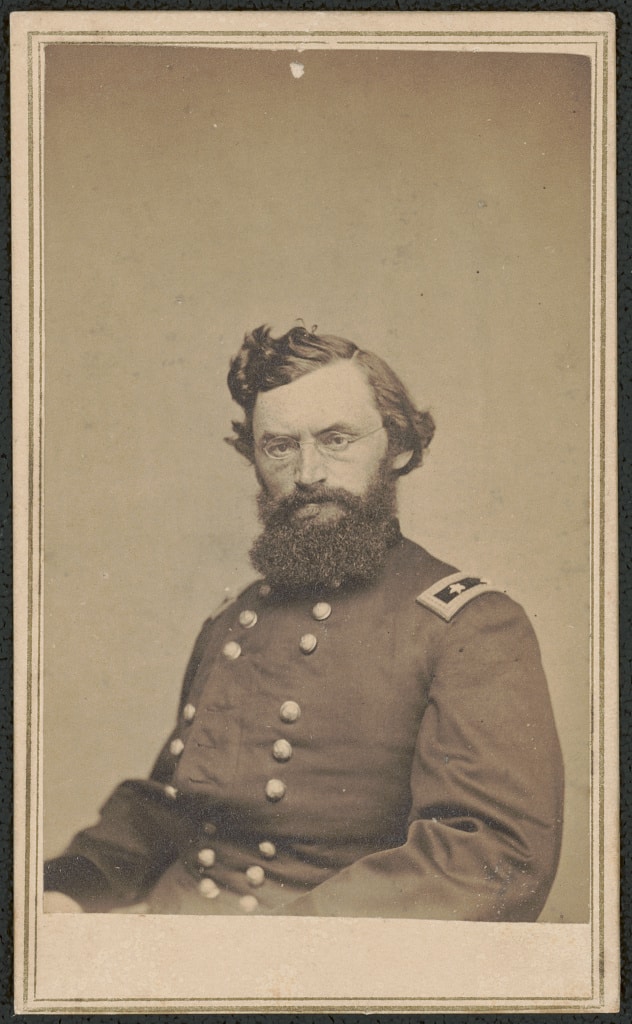
The young refugee began his political career nearly immediately after reaching the United States. Schurz settled in Watertown, Wisconsin in the early 1850s. His arrival coincided with the establishment of the Republican Party in Ripon, not far from his adopted home in Watertown. Schurz wasted no time in integrating himself into the ranks of the fledgling party, which pledged itself to the prohibition of slavery in the western territories.
German Americans proved a decisive constituency to Lincoln’s election in 1860, and Schurz rallied many of his fellow Forty-Eighters, and German immigrants at large, to the Republican Party.[1] While not all German Americans rallied to the Republican banner in 1860, Schurz is emblematic of many immigrants that arrived in the United States and became politically active. He also represents the majority of German Americans in the North who, despite conflicting religious and political convictions, supported the Union war effort.
Leveraging his political connections and unwavering loyalty to Lincoln, the former revolutionary secured a commission as a brigadier general of volunteers in the Union army. German Americans across the North made the same decision as Schurz and enlisted in Union regiments. In fact, his division in the Union XI Corps was comprised of ethnic regiments, many of whom claimed German extraction.[2] As Schurz led his division through the battles of Second Bull Run and Chancellorsville, the XI Corps’ German identity became the target of Northern newspaper seeking a scapegoat for Union military failures.

Schurz ardently defended the German soldiers under his command against nativist attacks on their bravery. “We have borne as much as human nature can endure,” he recalled, proclaiming that “these men are not cowards.”[3] He lobbied Secretary of War Edwin Stanton on behalf of his men, even requesting that the War Department publish his official report of the battle so as to restore honor to his command.[4]
Throughout the remainder of the war, German American soldiers looked to Schurz as their advocate. He engaged in lengthy battles in the press, vindicating the performance of the XI Corps on the battlefields of Chancellorsville, Gettysburg, and Wauhatchie. Much as his men became the scapegoat for Union defeat at Chancellorsville, Schurz received blame for his division’s retreat at Chancellorsville.For this, the Forty-Eighter received prejudiced attacks in the Northern press.[5]
While most German American soldiers did not have the platform or notoriety that Schurz possessed, they were equally incensed at their reputation in the press and outraged at the blame they received for military mistakes at Second Bull Run, Chancellorsville, and Gettysburg. Schurz thus became the mouthpiece of German American discontent within the Union army.[6]
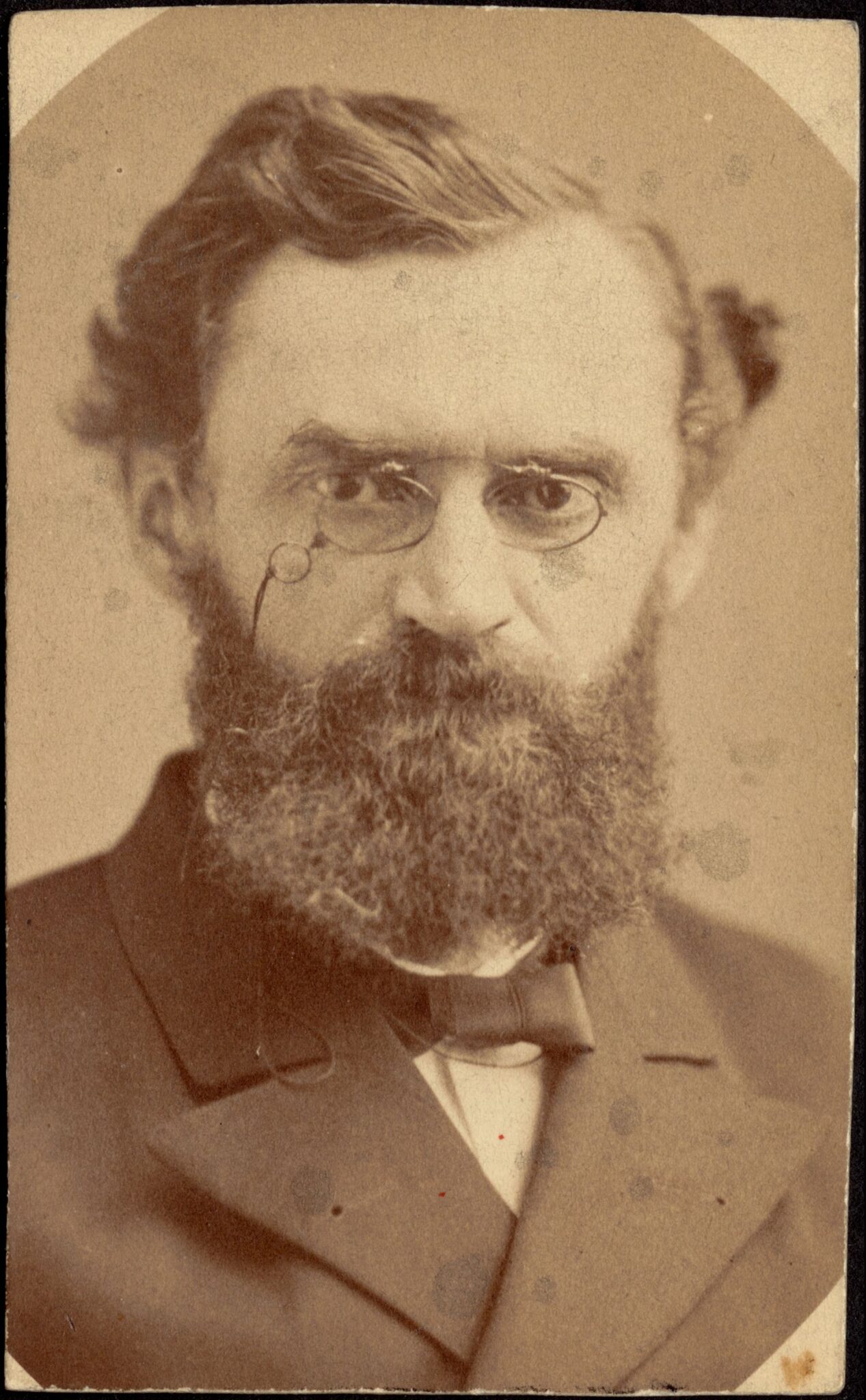
However, unlike most German Americans, the majority of whom were Catholic or Lutheran, Schurz was areligious. His suspicion of organized religion certainly aligned with his identity as a Forty-Eighter, whose campaign to install free elections did not accompany their desire for free religion.[7] The free-thinking Forty-Eighters, Schurz included, often clashed with the broader German American establishment over the issue of religion.[8] Biographer Joseph Schafer identifies this departure between the Forty-Eighters and mainstream German America, noting that Schurz alluded to “Catholicism as a religion whose principles may not, in all respects, harmonize with the doctrines of true democracy.”[9]
Schurz also separated himself from the broader German ethnic group by pledging his unwavering support to the fledgling Republican Party. With its conception in 1854, the party absorbed several other existing political organizations including the Know Nothing Party, whose primary aim was to limit immigration to the United States. Schurz was no friend of nativism, but he overlooked some of its enduring elements in the new Republican Party when other Germans did not.[10] Perhaps the Forty-Eighter’s shared suspicion of Catholicism with the Know-Nothings made this tenuous alliance under the Republican banner more tolerable for him.

Schurz also possessed several differences from the broader group of Forty-Eighters in the United States. Historian Carl Wittke argues that though Schurz has become emblematic of the Forty-Eighters, “he was hardly typical of the group.”[11] Schurz was younger than the average revolutionary and achieved a level of affluence and assimilation that few of his contemporaries did. Wittke credits Schurz’s marriage for helping him attain wealth and his youth for allowing him to become bilingual when some of his revolutionary comrades did (or could) not.[12]
Though Carl Schurz is often viewed as the quintessential German American—or ethnic—soldier of the Civil War, his complexities both support and depart from that legacy. Like many German Americans in the Union army, Schurz fiercely defended his own bravery and loyalty in the wake of nativism. His revolutionary politics, though not shared by the entire German American community, shaped his view of the Civil War as a liberal crusade to persevere democracy and grant universal human rights. Likewise, his advocacy for emancipation, equal rights, and political reform reflected a broader vision of the war’s purpose—one that linked the fate of the United States to the global cause of liberty.
Notes:
[1] Carl Wittke, Refugees of Revolution: The German Forty-Eighters in America (Philadelphia: University of Pennsylvania Press, 1952), 193, 216.
[2] William L. Burton, Melting Pot Soldiers: The Union’s Ethnic Regiments (Ames, IA: Iowa State University Press, 1988), 100.
[3] Carl Schurz, The Reminiscences of Carl Schurz, vol. 2, (New York: The McClure Company, 1907), 435.
[4] OR, ser. I, vol. 25, pt. 1, 659-660.
[5] Christian Keller, Chancellorsville and the Germans: Nativism, Ethnicity, and Civil War Memory (New York: Fordham University Press, 2007),130.
[6] Burton, Melting Pot Soldiers, 100; Keller, Chancellorsville and the Germans, 96.
[7] Wittke, Refugees of Revolution, 134.
[8] Carl Wittke, “The German Forty-Eighters in America: A Centennial Appraisal,” The American Historical Review, vol. 53, no. 4, (1948), 717.
[9] Joseph Schafer, Carl Schurz: Militant Liberal (Evansville, WI: The Antes Press, 1930), 125.
[10] Keller, Chancellorsville and the Germans, 14.
[11] Wittke, Refugees of Revolution, 4.
[12] Wittke, Refugees of Revolution, 4.


Schurz is the subject of a beautiful memorial in Morningside Park in Manhattan, the site of one of the most iconic photographs in rock ‘n’ roll history, when photographer Art Kane of LIFE Magazine draped the Who in a gigantic Union Jack and snapped them slumbering against each other. It adorns the cover of their live soundtrack album to their film ‘The Kids Are Alright.’ Many fans think the shot was made in London, but it’s New York City, when the Who were playing several shows at the Fillmore East in April 1968.
Franz Sigel was the quintessential hero of the German-American rank and file and their frontline identity. Carl Schurz, on the other hand, was the quintessential representative of German-American influence on mainstream American politics and history.
Fair enough!
Until the coming of Lincoln, the German American vote had usually been solidly in the Democratic camp.
Indeed
thanks Evan — a great piece about a great American … at Chancellorville Schurz was on his game — despite his warnings about a possible attack on their flanks being ignored by Howard, Schurz was the only division commander to proactively pivot two of his brigades to face Jackson’s massive flank attack … although vastly outnumbered and eventually routed, their delaying action disrupted Confederate momentum and bought the Union army critical time.
Totally agree!