Fr. Richard Christy – The Fighting Chaplain of the Army of the Cumberland
“The Fighting Chaplain of the Army of the Cumberland.” That’s what comrades of Fr. Richard Calixtus Christy called him.
Born on October 14, 1829, Christy grew up in Loretto, Pennsylvania, one of the early Catholic bastions west of the Allegheny Mountains. His grandfather, Archibald Christy, a veteran of the Revolutionary War, relocated the family from Adams County to the western part of the state on the advice of Fr. Demetrius Augustine Gallitzin, a Russian prince who had immigrated to American and became a Catholic priest.
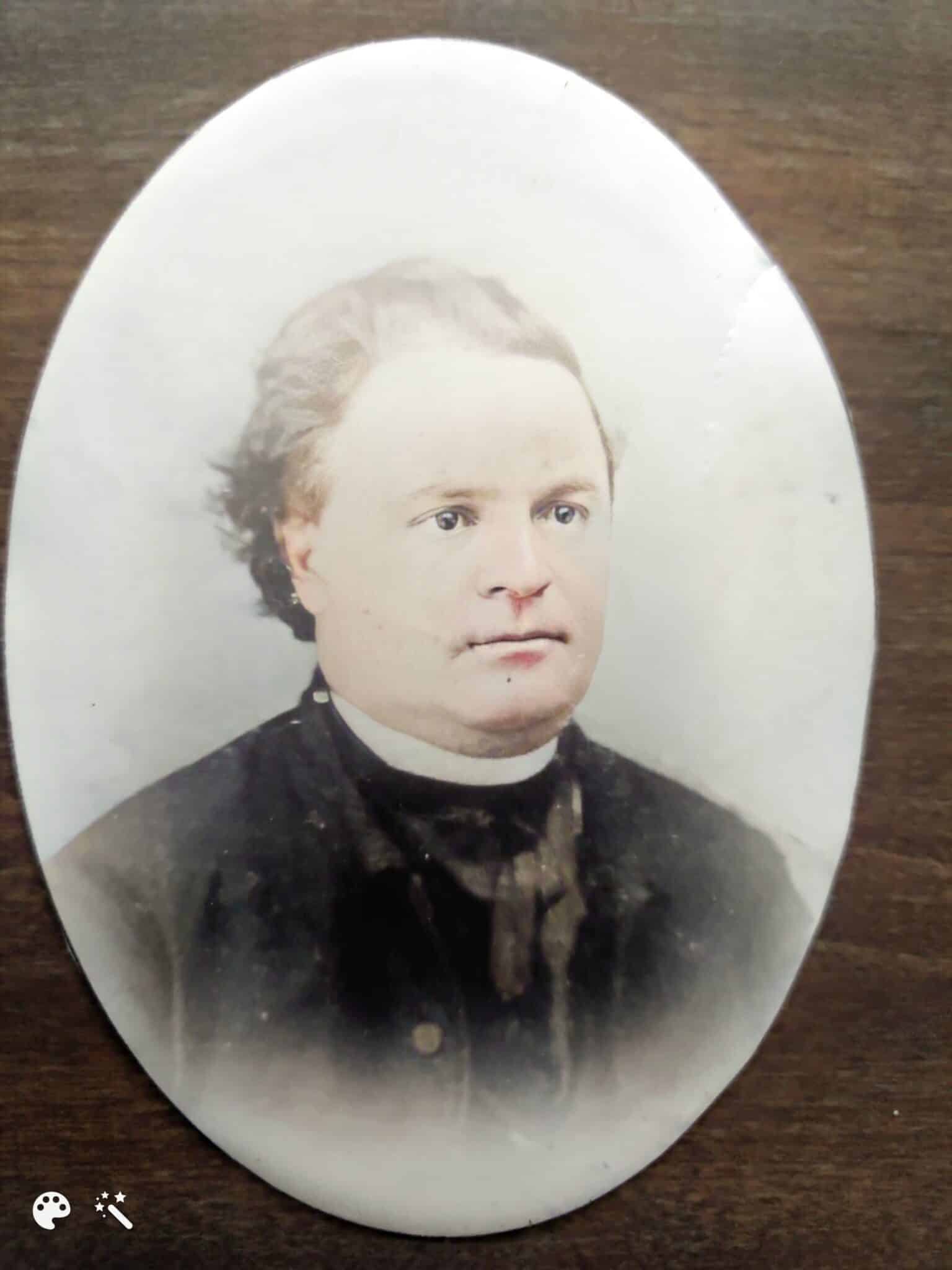
As a child, Richard spent considerable time with Fr. Gallitzin, his godfather, receiving religious education and serving as his altar boy. When Christy turned eighteen, he left Loretto for Pittsburgh, where he entered St. Michael’s Seminary. After his ordination, Christy was assigned to St. Mary Church in the river town of Freeport, Pennsylvania. However, his ministry also included monthly visits to a newly established parish, called St. John, in Coylesville, Butler County—about 14 miles north of Freeport.[1]
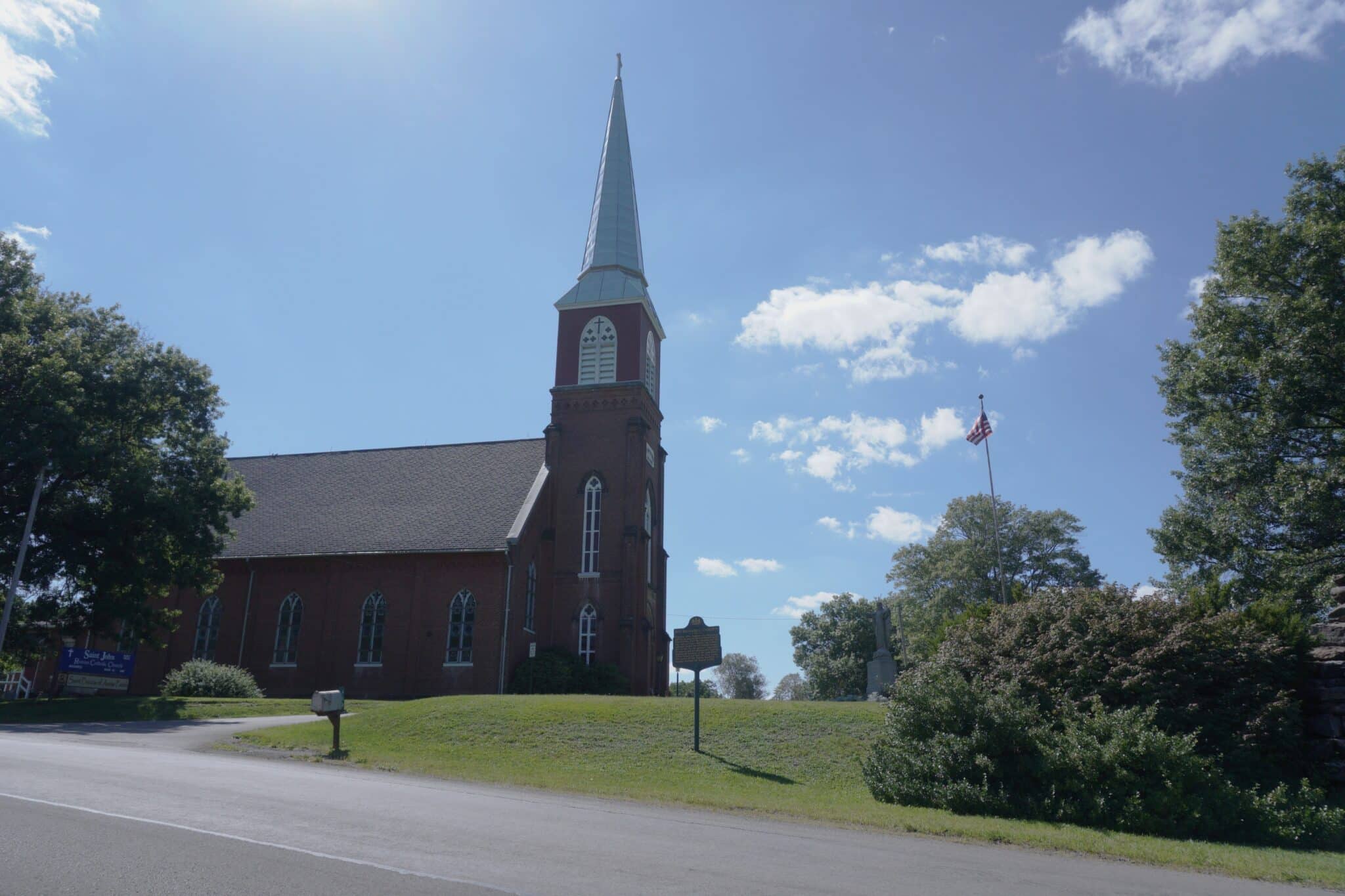
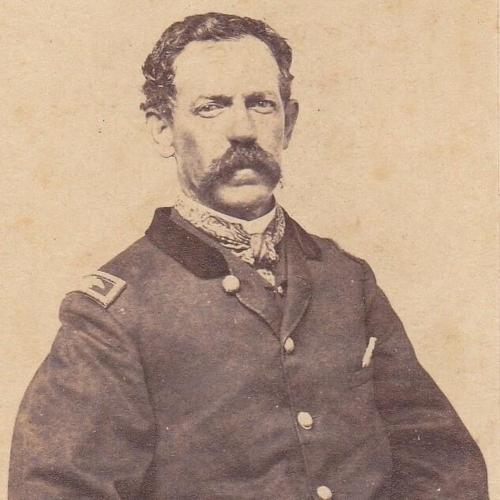
By spring 1861, war fervor was sweeping the towns of western Pennsylvania. In Kittanning, Col. William Graham Sirwell, a friend of Fr. Christy and a fellow Catholic, began recruiting for the 78th Pennsylvania Infantry Regiment.[2]
The regiment, which had been organized in Pittsburgh on October 15 under Col. Sirwell’s command, left for war just three days later. Before their departure, a group of Presbyterian ministers gathered in Kittanning to determine a suitable chaplain for the regiment, but none volunteered. Sirwell called upon Fr. Christy and invited him to serve as chaplain.
A Protestant majority in the ranks resulted in Fr. Christy’s chaplaincy being “seriously objected to by many.”[3] Yet, the priest quickly won the hearts and minds of even his most devout Protestant comrades. After Christy served as a guest preacher one Sunday, the regiment wholeheartedly supported him. “He had a kind and generous heart and entered into the fullest sympathy with the men with whom he was associated,” remembered the 78th Pennsylvania’s regimental historian. In fact, Father Christy grew to be so popular among his men that one source claimed he was “unanimously elected” to the chaplaincy of the 78th.[4]
After bidding farewell to friends and families, Fr. Christy and his regiment marched out of Kittanning to Pittsburgh, where they boarded a steamboat bound for Kentucky.[5] Somewhere on the Ohio River, the upper deck of the steamer collapsed, injuring a contingent of soldiers below. Christy immediately sprang to attend to them. On that occasion, “the Catholics were proud to know that the faithful priest was on hand to give spiritual consolation to the wounded and cheer the afflicted.”[6] If the soldiers of the 78th Pennsylvania had any doubts about their chaplain, they did not anymore.
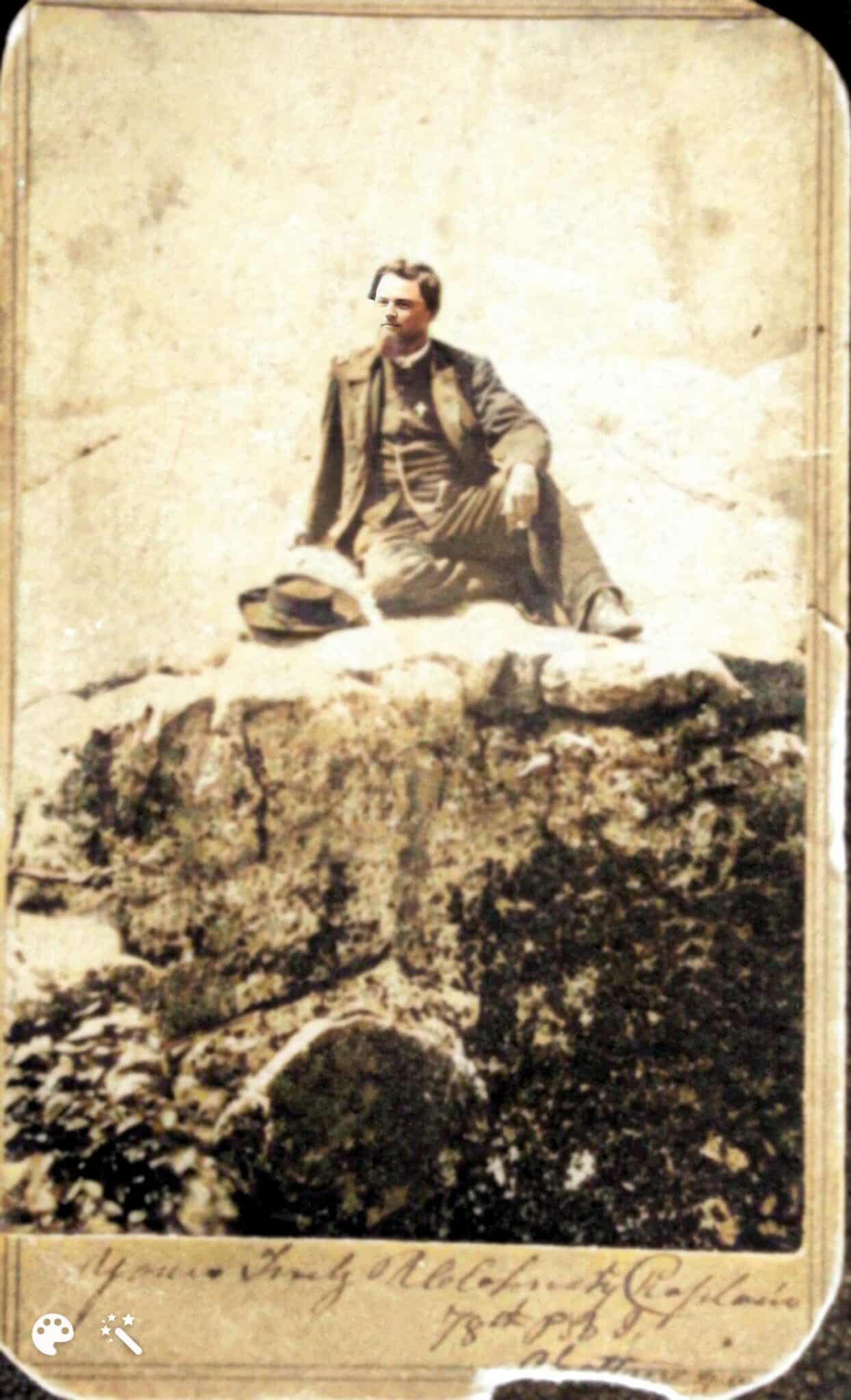
Christy and his regiment reached Kentucky in October 1861. There, they joined Gen. James S. Negley’s brigade of the Union Army of the Cumberland. Throughout the war, the chaplain remained a steadfast fixture of the regiment. One soldier wrote that “[Fr. Christy] endeared himself to all, officers and soldiers, by his pleasantry in camp, his heroism on many a battlefield, and always and above all, by the needed and gratefully appreciated ministration of his sacerdotal functions.” He also described the priest as “thoroughly imbued with the spirit of the Union cause, [and] every inch a soldier-Priest.”[7]
Others echoed this admiration. Another soldier recalled that Chaplain Christy “succeeded in securing the love and confidence of the soldiers and officers of the regiment without regard to denominational distinction.”[8] One postwar biographical sketch of Father Christy even credited him with shouldering a musket alongside his men, while another suggested that he buckled on a sword and led a wagon train himself when the supply officer failed to report for duty.[9]
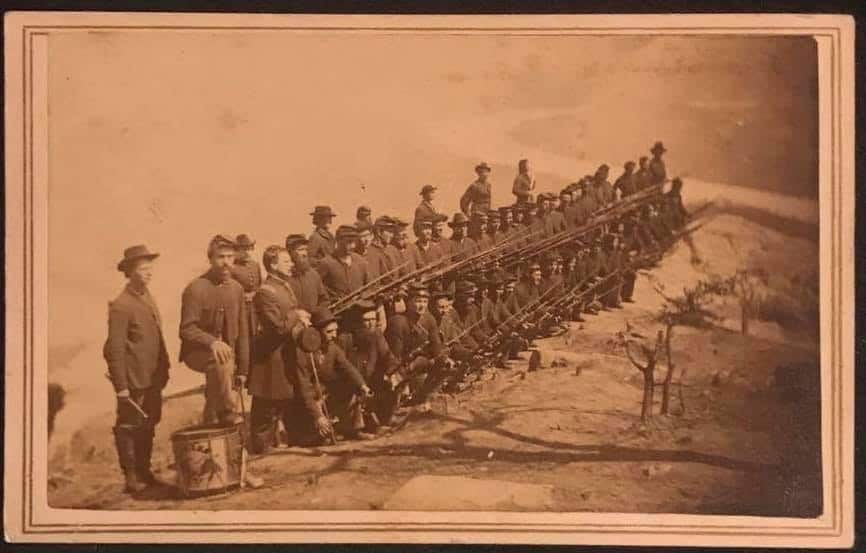
Throughout 1862, the 78th Pennsylvania was stationed primarily in Tennessee, though the regiment occasionally ventured across the state border into Alabama. On one such expedition, Christy followed two companies of the regiment, which had crossed the Tennessee River to disperse a faction of the Confederate cavalry under Gen. William Wirt Adams. Arriving after most of the men had crossed the river, the chaplain took it upon himself to cross in a small canoe.
A large man, weighing nearly two hundred pounds, Christy barely made it a few yards before the boat “began to turn to all points of the compass” and capsized. For all is zeal, the chaplain apparently lacked the ability to swim. His comrades watched as he violently thrashed in the water before realizing his feet could touch the bottom. After finding his footing, Fr. Christy trudged through the water to the opposite bank. From then on, the chaplain “had a perfect disgust for dugouts and a wholesome dread of the Tennessee [River].”[10]
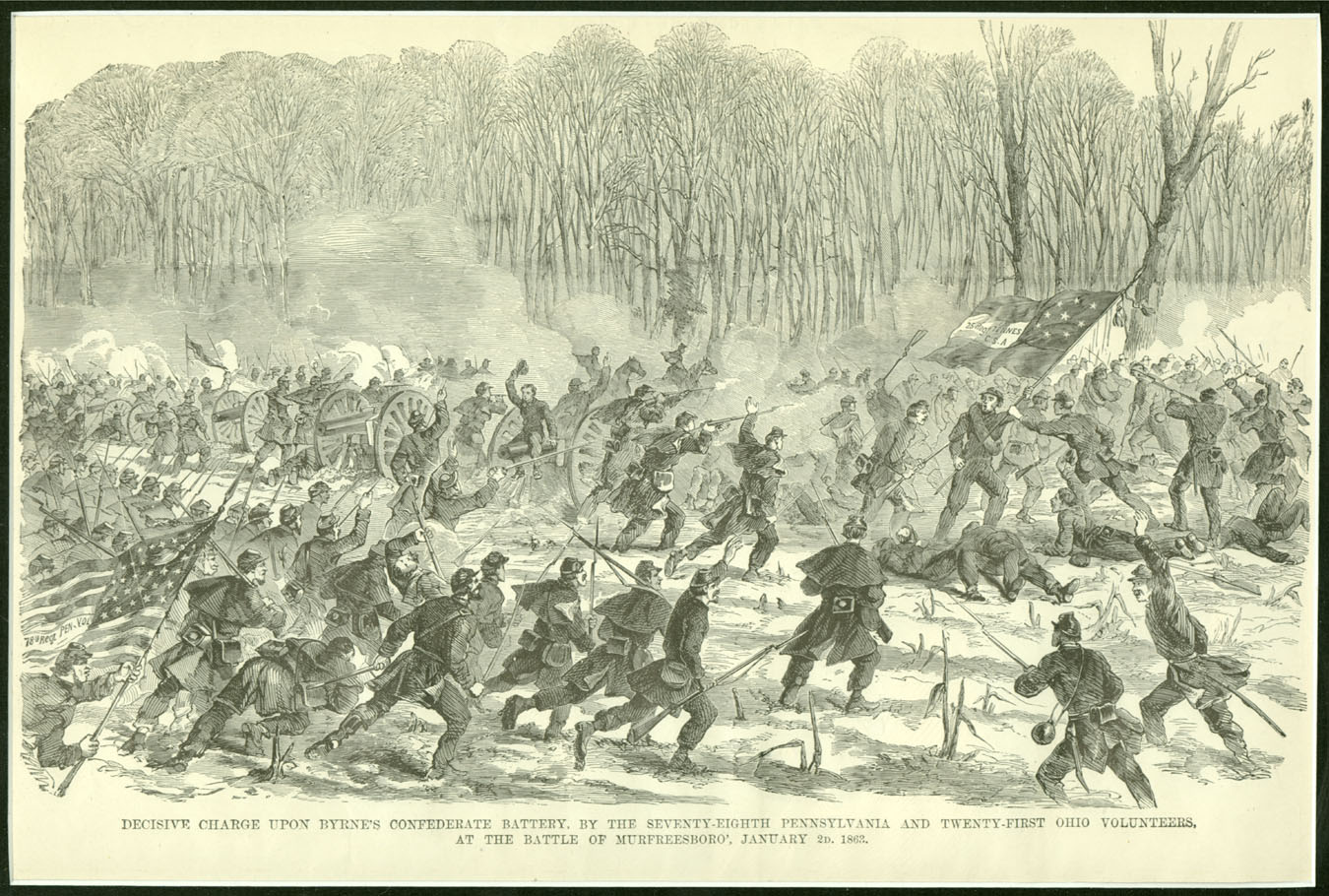
Later that year, Fr. Christy proved himself to be a worthy leader when the regiment saw its first action at the battle of Stones River in December 1862. As the Pennsylvanians poured a steady volley into the Confederates, Chaplain Christy “went back and forth over the blood-stained field, attending to the wounded, and in many instances carrying them away himself to the extemporized [sic] hospitals in the rear.”[11] Following the battle, in which the 78th Pennsylvania tenaciously captured a Rebel flag, members of the regiment huddled together in the cold December air while Christy “trudged away to the quartermaster’s wagons in the rear, and brought blankets and overcoats to the shivering soldiers.”[12] His bravery and compassion were evident to all. “What a pity,” one soldier said “[that] he is a priest. Wouldn’t he make a bully general?”[13]
Following the Army of the Cumberland’s defeat at the battle of Chickamauga in September 1863, the 78th Pennsylvania covered the army’s retreat through northern Georgia and back into Tennessee. The regiment established a skirmish line at Dug Gap along Pigeon Mountain to screen for the Confederate advance. One morning, Fr. Christy rode out to the skirmish line, only to catch the eye of a Confederate sharpshooter.
Mistaking him for a general, the soldiers opened fire on Fr. Christy who narrowly escaped death astride his horse. “I was among a group of officers on a little hill, in an open field, when the firing attracted our attention,” remembered Capt. Charles Gillespie. “The first thing we saw was our gallant chaplain on his black charger, dashing to the rear. The bullets were striking and kicking up a dust all around him.” Christy quickly dismounted and rushed back to the skirmish line to rescue his comrades who had been wounded, “tearing his handkerchief and underclothing into bandages.”[14]
Several days later, Fr. Christy stumbled upon a group of Confederate prisoners. One of them came forward and admitted to being the sharpshooter who had targeted the chaplain. The soldier was a fellow Irish Catholic. When he realized Christy was a priest, his “look of holy horror” caused Capt. Gillespie and his comrades to burst into laughter. “No one seemed to enjoy it more than Father Christy himself,” the captain recalled.[15]
On October 18, 1864, the original members of the 78th Pennsylvania had reached the end of their three-year term of enlistment and were ordered home. On November 4, 1864, the regiment – Fr. Christy included – was officially mustered out.
The “Fighting Chaplain” had doubtless made an indelible impact on the men of his regiment. Colonel Sirwell remembered Christy as “a brave and good man, always to be found (although in feeble health), in the middle of danger and where duty called him.”[16] On October 16, 1878, Fr. Richard Christy’s “feeble health” caught up to him. The priest died in Columbus, Ohio. He was only 49 years old, but a proud Union veteran. A large number of veterans attended the funeral, a testament to his unforgettable service in the Civil War.
For a full biographical sketch of Fr. Richard Christy, visit: The Fighting Chaplain of the Army of the Cumberland: The Life and Times of Father Richard Calixtus Christy (1829-1878)
Notes:
[1] Father Richard C. Christy file, Diocese of Pittsburgh Archives; “The Cathedral Priests,” St. Paul’s Cathedral Record: An Historical Sketch of St. Paul’s Cathedral from the Beginning of the First Parish in the City of Pittsburgh to May 10, Anno Domini: Nineteen Hundred and Three (Pittsburgh: Diocese of Pittsburgh, 1903), 20.
[2] Rev. Andrew Arnold Lambing, LL.D., Brief Biographical Sketches of the Deceased Bishops and Priests who Labored in the Diocese of Pittsburgh from the Earliest Times to the Present, with an Historical Introduction vol. 1, (Pittsburgh: Republic Bank Note Co., 1914), 283.
[3] Lambing, Brief Biographical Sketches, 283.
[4] J. T. Gibson, ed., History of the Seventy-Eighth Pennsylvania Volunteer Infantry (Pittsburgh: Pittsburgh Printing Co., 1905), 20.
[5] Gibson, History of the Seventy-Eighth Pennsylvania, 24.
[6] “The Fighting Chaplain: Death of Rev. Father Christy at Columbus,” Daily Post (Pittsburgh), October 17, 1878, 4; Robert J. Miller, Faith of the Fathers: The Comprehensive History of Catholic Chaplains in the Civil War, (Notre Dame, IN: Notre Dame University Press, 2025), 173.
[7] “Chaplain Richard C. Christy,” Society of the Army of the Cumberland Eleventh Reunion Washington City, D.C. 1879 (Cincinnati: Robert Clarke & Company, 1880), 260.
[8] Gibson, History, 20.
[9] Warren B. Armstrong, For Courageous Fighting and Confident Dying: Union Chaplains in the Civil War (Lawrence, KS: University Press of Kansas, 1998), 14; Miller, Faith of the Fathers, 80.
[10] David Power Conyngham, Soldiers of the Cross, the Authoritative Text: The Heroism of Catholic Chaplains and Sisters in the American Civil War, ed. David J. Endres and William B. Kurtz, (South Bend, IN: University of Notre Dame Press, 2019),127-128; Roy J. Honeywell, Chaplains of the United States Army, (Washington, DC: Office of the Chief of Chaplains, Department of the Army, 1958), 128.
[11] Conyngham, Soldiers of the Cross, 129; Gibson, History of the Seventy-Eighth Pennsylvania, 57.
[12] Conyngham, Soldiers of the Cross, 128-129.
[13] Conyngham, Soldiers of the Cross, 129.
[14] Conyngham, Soldiers of the Cross, 131-132.
[15] Conyngham, Soldiers of the Cross, 132.
[16] Gibson, History of the Seventy-Eighth Pennsylvania, 184. Excerpted from “Col. Sirwell’s Official Report of the Battle of Stone River,” issued on January 12, 1863.


Exciting to read. Thank you for your research.
Awesome story. Did you ever come across an origin for his incredible middle name “Calixtus”?
Not yet! But it is a pretty cool name!