“A Just Share of Reputation”: North Carolina Contests Gettysburg’s Memory
Twenty-five years after the guns fell silent at Gettysburg, a pseudonymous letter was printed in the Montgomery Advertiser. The writer, using the pen name “Ex-Infantryman”, reminded readers that “the Southern Confederacy gave no finer soldiers to the service,” than the North Carolinians that served with the Army of Northern Virginia. Humbly noting that his intent was to “merely drop you these lines for recalling a fact which seems to have escaped our people,” the correspondent advised that, “to North Carolina as much as to Virginia belongs the glory of ‘Pickett’s Charge at Gettysburg’.”[1]
The author’s identity was almost immediately known: Brig. Gen. James Lane, a long-serving brigade commander in the Army of Northern Virginia and a veteran from the Old North State.[2] His decision to enter this public debate reflected the intensity of the post-war rivalry between the two ex-Confederate states. The dispute spanned decades, carried on by veterans and their children. It not only included which state deserved the greater share of glory, but blame for the defeat; which state was at fault for losing the Lost Cause.[3]
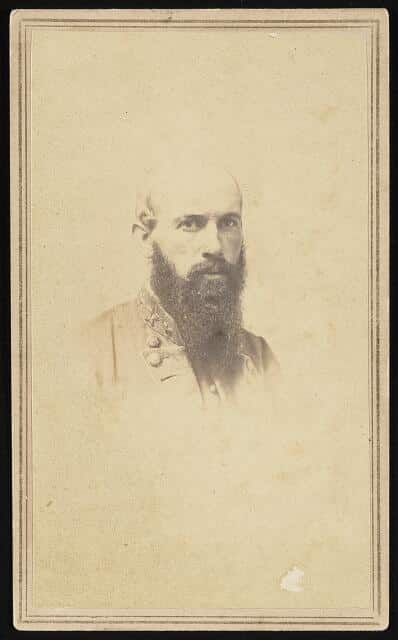
Lane’s rebuttal was one of many lodged by North Carolina veterans in the wake of early claims by leading Virginians. Particular ire was instigated by Walter Taylor, one of Robert E. Lee’s senior aides-de-camp, who blamed the predominantly North Carolina soldiers of Brig. Gen. Johnston Pettigrew and Isaac Trimble’s divisions and suggested they were responsible for the Gettysburg defeat.[4] This revived raw feelings among the Tar Heel contingent, both of underappreciated sacrifice and wartime questions about their loyalty to the dormant Confederacy.
Quantifying Gettysburg’s casualties reveals the severe losses suffered by North Carolinians in the battle. Despite having 5,000 fewer soldiers in the ranks of the Army of Northern Virginia during the battle, North Carolina suffered over 1,200 more casualties than did Virginia. In total, over 43 percent of North Carolina’s soldiers at Gettysburg became casualties, as compared to about 25 percent casualties among the Virginians.[5]
Among the 10 Confederates brigades with the greatest percentage of losses in the battle, four were North Carolinian – including the highest – as compared with 2 brigades of Virginians and one each from other states. No brigade entirely or predominantly made up of North Carolina troops emerged with less than 25 percent casualties.
34 regiments in the Army of Northern Virginia accrued more than 50% casualties; 11 were from North Carolina, including 4 of the 5 highest. Likewise, of the 20 Confederate regiments suffering the greatest total loss, exactly half were North Carolina troops, led by the near-unfathomable 687 casualties in the 26th North Carolina. The ratio was the same among regiments with the most killed.
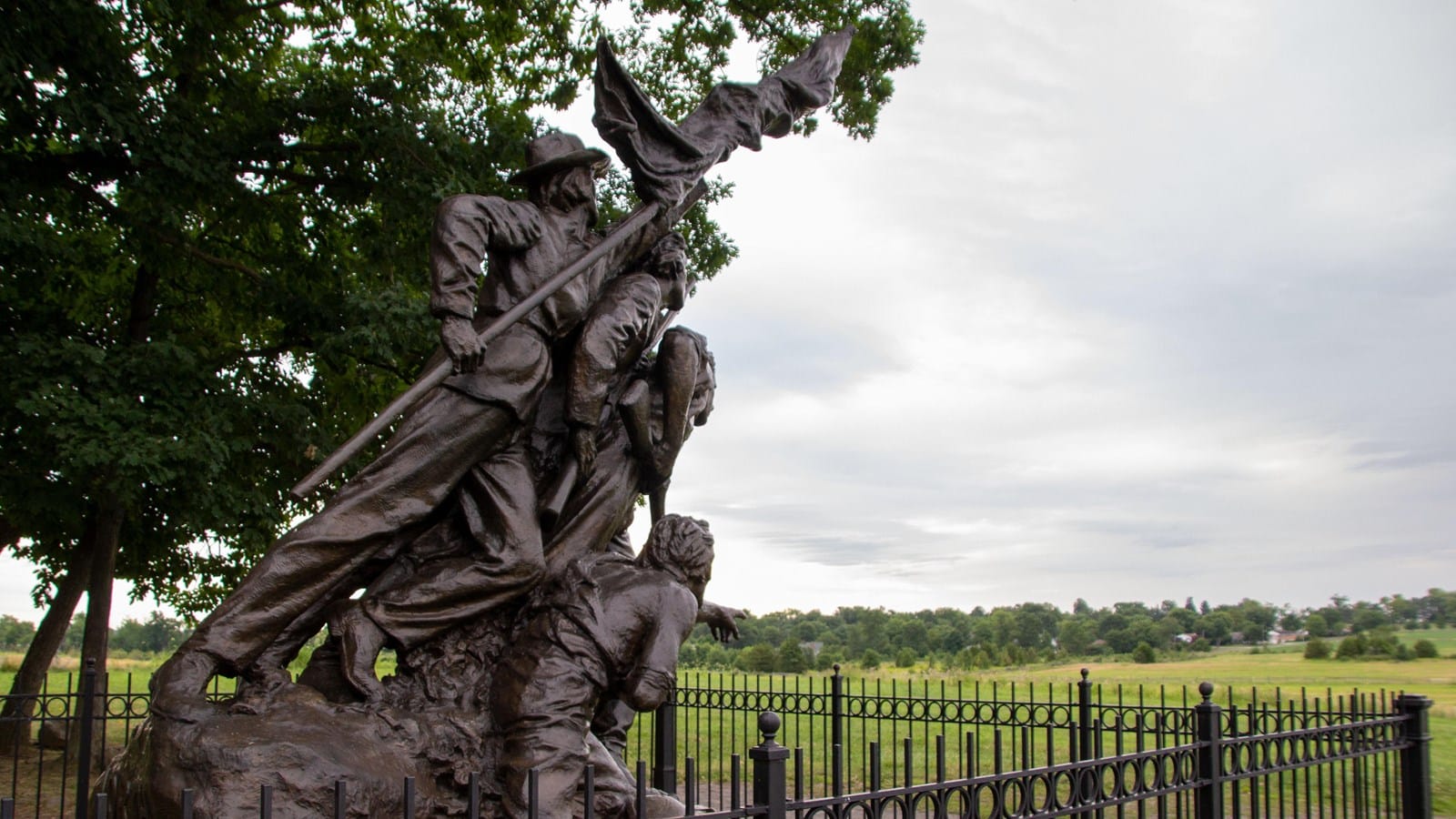
The scale of devastation and loss of life was stunning and disorienting. In the weeks following the battle, newspapers across the state shared early correspondence from the survivors. Sergeant A.H. Harris of the 47th North Carolina in Pettigrew’s Brigade, wounded in the leg on July 3, described the regiment as “all cut to pieces,” with his own company “completely annihilated.”[6] Nathaniel L. Brown, a soldier in the same regiment, sullenly told his parents that his “regiment was ruined forever, nearly all killed, wounded and missing.”[7]
Correspondents described being sent into action repeatedly despite devastating losses. Lieutenant Joseph J. Hoyle of the 55th North Carolina, serving in Davis’ Brigade, provided an early accounting of loss. Arriving at Gettysburg with 525 men, they were reduced to 123 by the end of July 1 – only to be ordered into the charge on Cemetery Ridge two days later and see the much-reduced regiment cut down to a mere 40 men.[8]
Despite this steep sacrifice, early reporting on the battle inflamed a political tempest. The Richmond press, widely reprinted throughout the South and which maintained correspondents embedded with Lee’s army, implied that cowardice by North Carolina troops was responsible for the defeat. Describing the charge of July 3, the Richmond Enquirer opined that the Tar Heel contingent “wanted the firmness of nerve and steadiness of tread which so characterized Pickett’s men,” and foretold that “these men would not, could not stand the tremendous ordeal.”[9] Without acknowledging the crippling casualties suffered by the North Carolina brigades either during the charge or in the days prior, the same author described their failure at the point of crisis: “While the victorious shout of the gallant Virginians is still ringing in my ears, I turn my eyes to the left, and there all over the plain in utmost confusion…they are flying, apparently panic stricken, to the rear.”[10]
The response from North Carolinians was immediate and indignant. It was widely felt that the state’s heavy losses were ignored after both the Seven Days and Chancellorsville; Gettysburg was the latest example of lionizing Virginian heroism at the cost of Tar Heel blood.[11] The rebuttal of the North Carolina press was venomous, decrying that the “solemnities of this funeral occasion to North Carolina are to be polluted by the baseness and slanders of this hireling of the Press.”[12]
Soldiers in the field responded in kind, writing to the state’s leading newspapers to share their fury. Captain Benjamin Robinson of the 5th North Carolina, a survivor of Iverson’s crippled brigade, offered an intensely first-hand rebuttal to the “the ungenerous aspersions” targeting both his command and his fellow Tar Heels: “the pale bloody corpses of its noble men who lie sleeping on the hill sides near Gettysburg; the shrieks of its wounded on that field, the mangled bodies of its officers and soldiers.”[13] An unnamed officer in the 6th North Carolina looked to the state’s political leadership and home front to rally to their defense, imploring his fellow citizens, “don’t let old North Carolina be derided while her sons do all the fighting.”[14]
North Carolina Governor Zebulon Vance took his cue from his constituents in uniform. Within a week, he wrote to Secretary of War James Seddon to bring attention to the censures made against his state in the Richmond press, describing them as “hard to bear if true, and if untrue, we are denied the right of having correspondents in the Army to correct them.”[15]
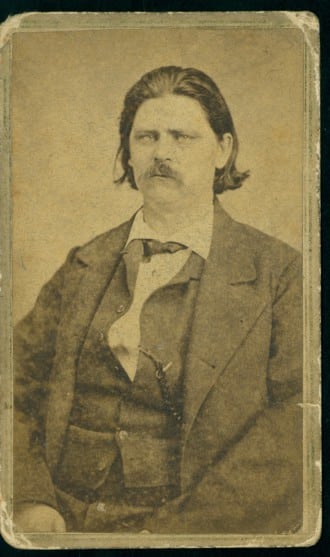
These concerns, and the intense dissatisfaction they generated within the North Carolinian ranks of the Army of Northern Virginia, came to the attention of the army’s commander. Robert E. Lee responded to Seddon in early September to re-assure the Governor and dismiss any accusation brought against the North Carolina regiments. “I will with pleasure aid Gov. Vance in removing every reasonable cause of complaint on the part of men who have fought so gallantly and done so much for the cause,” Lee informed Seddon, adding that he hoped Vance would “bring to punishment the disaffected who use these causes of discontent to further their treasonable designs.”[16]
Lee’s reference to treason was responding to a further fury that erupted in the Army of Northern Virginia over the balance of the summer. Following the overwhelming losses suffered at Gettysburg, William Holden, editor of the North Carolina Standard and a critic of the Davis administration, amplified his calls for a negotiated peace.[17] Excerpts from his paper were widely reported in the Richmond papers, with editors raising questions about North Carolina’s commitment to the Confederate war effort.
Soldiers in the Army of Northern Virginia mobilized in response to the stirrings in the press. North Carolina regiments convened meetings, electing representatives from each company, to draft resolutions condemning those advocating for peace negotiations and their commitment to a vigorous prosecution of the war. The resolutions expressed common sentiments. The 54th North Carolina rejected, “with scorn and indignation, and regard as dishonorable, any proposition from us to the Federal authorities, looking to peace or a cessation of hostilities.” The 15th North Carolina, which had suffered severely as part of Pettigrew’s command, described Holden as “the chief of sinners, our insidious enemy, traitorous in principle, a curse to us and our State.”[18]
These regimental meetings culminated with a general convention of the North Carolina contingent of the army, which convened on August 12, 1863 at Orange Court House. The summative address was reprinted in the press and took direct aim at perceived slights and their Virginian authors. The address reminded readers that there was “no Carlisle [sic]…to head a roll of infamy, within the whole of her wide extended borders,” a deliberate provocation towards Virginia invoking John S. Carlile, the anti-secessionist Virginian instrumental in the creation of the State of West Virginia and then serving as its Governor. Dismissing the accusations of the Richmond press as “ephemeral puffs of ignorant newspaper correspondents,” the authors reflected on the victories and sacrifices of the Army of Northern Virginia and queried, “whose sacrifices have tended more to produce these results than those of North Carolina?”[19]
As Lane’s anonymous remonstrance demonstrates, the debate persisted well into the postwar years. With the Confederacy defeated, there was plenty of time and ink to nurse old grievances and feed hubris. Historians continue to untangle these threads of disputed memory.
————
Endnotes
[1] Montgomery Advertiser, June 21, 1887.
[2] Raleigh News & Observer, June 24, 1887.
[3] For an excellent overview of efforts by North Carolina veterans to defend and promote the contribution of their state at Gettysburg, see Carol Reardon, Pickett’s Charge in History and Memory (Chapel Hill: University of North Carolina Press, 1997), 132-138.
[4] Reardon, 135.
[5] Casualty figures included in this post are derived from John W. Busey and David G. Martin. Regimental Strengths and Losses at Gettysburg. (Hightstown, NJ: Longstreet House, 1994), 279-311.
[6] The Daily Progress [Raleigh], July 14, 1863.
[7] Raleigh Semi-Weekly Standard, July 17, 1863.
[8] Hoyle, Joseph J. Letter of Joseph J. Hoyle to Sarah Hoyle, June 25-July 19, 1863. Civil War Era NC. Accessed August 23, 2025, https://cwnc.omeka.chass.ncsu.edu/items/show/816.
[9] Richmond Enquirer, July 24, 1863.
[10] Ibid.
[11] Reardon, 60.
[12] The Daily Progress [Raleigh], July 24, 1863.
[13] The Daily Progress [Raleigh], July 24, 1863.
[14] Ibid, 2.
[15] Zebulon Vance to James Seddon. The Papers of Zebulon Vance: Volume 2, 1863. Joe A. Mobley, ed. (Raleigh: North Carolina Division of Archives and History, 1995), 226.
[16] Robert E. Lee to James Seddon. Mobley, ed., 280.
[17] North Carolina Semi-Weekly Standard, July 17, 1863.
[18] The Daily Journal [Wilmington], August 25, 1863.
[19] The Daily Journal [Wilmington], September 3, 1863.


It would appear that the Confederate defeat at Gettysburg was more the result of the Army of the Potomac than from any failure of the North Carolina troops
Very interesting, it’s not often you read about the internal or inter-state rivalries in the ANV. One thing to note though – John S. Carlile never served as the governor of West Virginia. Its first and only wartime governor was Arthur I. Boreman.
A good catch (there’s always something)! It is correct that John S. Carlile was the wartime Senator (not Governor) for the Restored Government of Virginia in 1861-1863, and thereafter the State of West Virginia until 1865.
No worries, it’s an easy thing to mix up, especially since it was just an aside
To further clarify the role of John S. Carlile: a Member of the U.S. House of Representatives [11th District of VA] Carlile was selected as Delegate representing Harrison County Virginia and attended the April 1861 Secession Convention at Richmond [where he voted against Secession and was expelled.] Subsequently, John Carlile attempted to vacate the decision of Virginia’s Secession Convention; and when that was unsuccessful, Carlile pushed to declare: “ALL offices associated with the Commonwealth of Virginia had been vacated as result of the Secession Decision.” Carlile’s claim was accepted by President Abraham Lincoln. During May/June 1861 prominent Unionist residents of Virginia met and worked through a programme to establish an alternative government: The Restored Government of Virginia. Francis Harrison Pierpont was “elected” Governor [effective May 1861.] Five Members of the U.S. House of Representatives and two United States Senators representing Unionist Virginia were seated in Washington, D.C. beginning July 1861. Senator John S. Carlile took office 9 July 1861 and served until 4 March 1865.
In the fall of 1993- about the time the movie “Gettysburg” premiered in movie theaters, a group of reenactors in Washington State, including myself, formed the Washington Civil War Association, with the goal of promoting Civil War reenacting in Washington State. We already had a Union unit but needed to start a Confederate company from scratch. One of the organizers had a print of Kunstler’s “The High Water Mark”, which prominently featured the battle flag of the 26th North Carolina. “That’s the unit I want us to portray”, he stated. Not knowing the history, I contacted a group of reenactors in North Carolina whose impression was the 26th. I soon found out that the animosity between Virginia and North Carolina to still be active today, stemming from this controversy. The commander of these reenactors, when told at the 125th anniversary reenactment of Gettysburg in a last-minute change they would only be allowed to cross the Yankee line as Virginians, he replied “we agreed to a man to “die” in front of the wall rather than to assist the Virginians in perpetuating such a lie”. Source: Blue & Gray magazine, Oct. 1988, pg. 6.
Surprisingly, criticism of the North Carolina units and support for Pickett’s Virginians also came from historians and journalists in the North as well, such as historian William Swinton’s book Campaigns of the Army of the Potomac. Additionally, many North Carolina veterans also noted that an ignored fact is that the first brigade to break on the Confederate left was Brockenbrough’s brigade of Virginians.