The battle of Gettysburg, July 3,1863, Cemetery Ridge, Part IV: “We poured in a well-directed fire.”
Previous: Cemetery Ridge, Part III
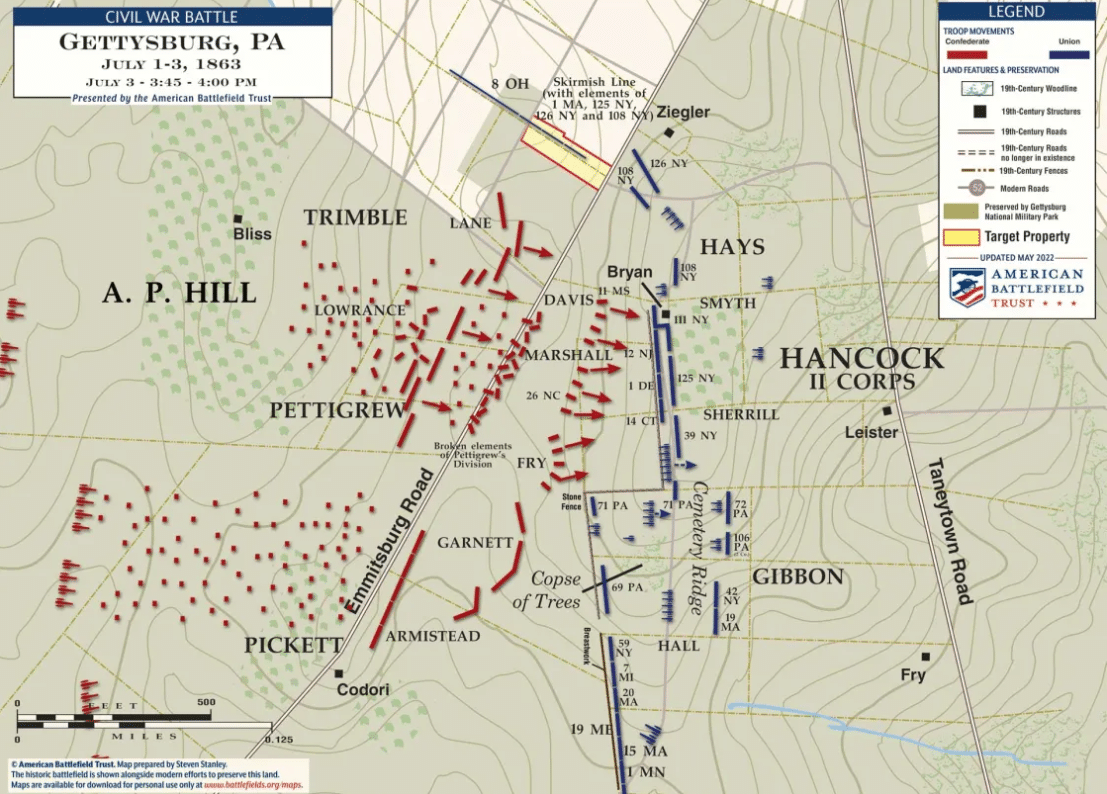
On the Confederate’s far left, Brig. Gen. James Pettigrew’s and Maj. Gen. Isaac Trimble’s divisions listed 7,300 – 5,600 men in their regiments. These units had had a rough time on July 1. The 26th North Carolina suffered 588 casualties on just the first day. This regiment and many others found themselves again in tough spot the entire 1,189 yards from Seminary Ridge to Cemetery Ridge and back on July 3. The majority withstood the hailstorm of fire but not all.
Colonel J. M. Brockenbrough’s brigade had a bad day to say the least. His Virginians advanced not more than 600 yards when his regiments came under artillery fire and ran headlong into 300 soldiers from the 8th Ohio regiment near the Bliss Farm and Long Lane. Colonel Franklin Sawyer, commander of the Buckeyes, recalled the encounter: “. . . we poured in a well-directed fire, which broke the rebel line, and it soon fled in the wildest confusion.” This left the advancing Confederate brigades exposed.
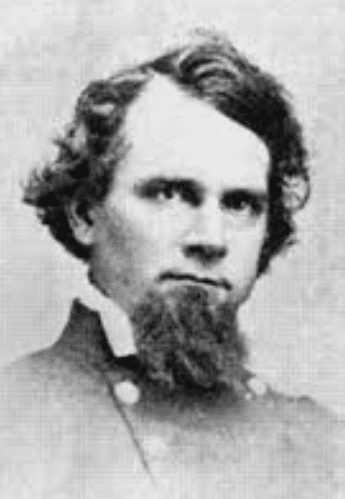
Joined by the 108th and 126th New York, 1st Massachusetts Sharpshooters, and two guns from 1st Lt. George Woodruff’s battery, the 8th Ohio wheeled left. The makeshift battalion sent a withering fire down Trimble’s and Pettigrew’s lines. Sawyer remembered that the “distinct graceful lines of the rebels underwent an instantaneous transformation . . . They were at once enveloped in a dense cloud of smoke and dust. Arms, heads, blankets, guns and knapsacks were thrown and tossed into the clear air. Their track, as they advanced, was strewn with dead and wounded.”
Brigadier General James H. Lane’s North Carolina brigade tried staying in the fight. Those able answered the fuselage with their own. Union artillery officer Lt. Woodruff went down, hit through the body, and mortally wounded. Lane’s Tarheels, however, couldn’t recover as hot lead came in from the front and side. Captain James Harris helped command the brigades’ 7th North Carolina regiment. “To remain and be captured or run the gauntlet of the enemy’s batteries and escape, was our only alternative and the latter, (the bravest act of the day), was resorted to, every man going to the rear as fast as his well-nigh exhausted nature would admit.”[1]
The fight on the left flank wasn’t over. Three Confederate brigades advanced over the Emmittsburg Road and toward Cemetery Ridge. The 14th Connecticut took aim: “The men mounted to cross [the fence] when the word fire! fire! along the Union line crack! crack! spoke out the musketry, and the men dropped . . . as if swept by a gigantic [swing] by some powerful force of nature. Great gaps formed in the line, the number of slain and wounded could be estimated by numbers, but must be measured by yards.”
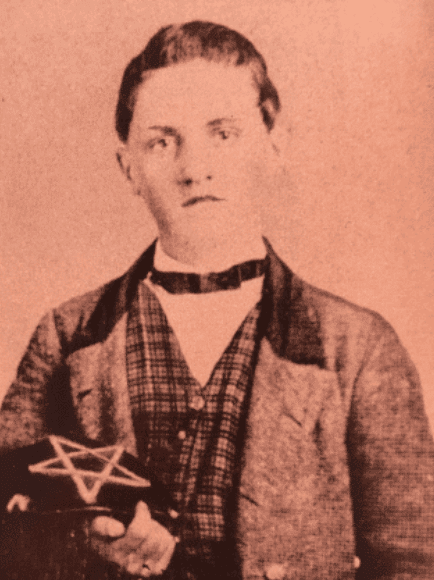
Artillery and rifle fire raked Brig. Gen. Joseph Davis’s Mississippi brigade from the left flank and front. Eighteen-year-old Pvt. Thomas McKie was a member of the “University Greys,” 11th Mississippi regiment. He fell struck in the gut and mortally wounded. Some of his comrades made it to the Bryan Farm only thirty yards from the Union infantry. A few continued to fight and fall; others surrendered; while the remaining withdrew to Seminary Ridge. Moans and screams could be heard above the “storm of battle.”
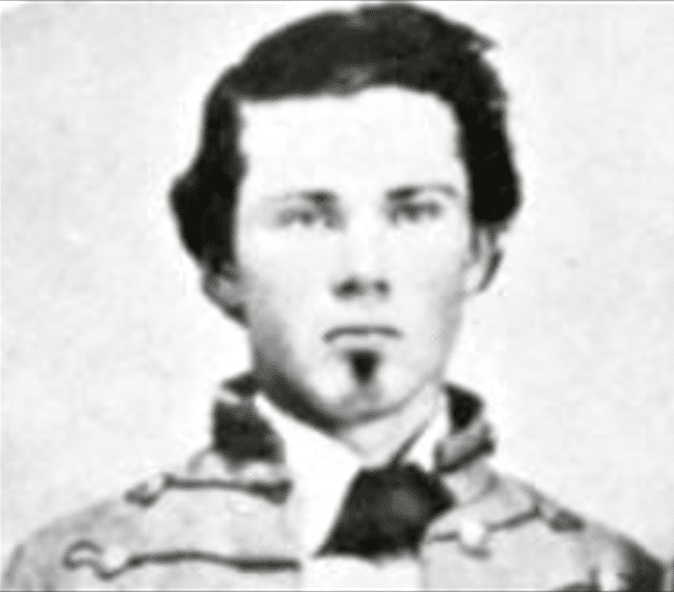
Union infantry watched, loaded, and aimed at a grey cloud of smoke and dust continuing forward. The mass of Confederates belonged to Col. J. K. Marshall’s North Carolina brigade and Col. Birkett Fry’s Tennessee and Alabama brigade. At the top of the ridge, the 12th New Jersey blazed away with their smoothbore buck-n-ball muskets. Members in the regiment remembered seeing a “smooth-cheeked lad . . . the leader of thousands, [run] forward through all that fire to fall dead . . . covered with wounds within twenty feet of [the Union] colors.” With one final blast, the charge was over. Those Confederates that somehow survived the gauntlet surrendered or retreated.
Thousands of young Southern men died on that hallowed ground. The Confederate brigades in this sector counted 3,358–4,854 casualties. Colonel Marshall fell, shot in the head, and all his regimental officers were killed or wounded. Captain S. P. Wagg, 26th North Carolina, was killed in action. Davis had all his regimental commanders fall. Pettigrew was wounded in the hand. He survived, but was mortally wounded in a rear-guard skirmish on July 14, 1863. Trimble was wounded in the left thigh. He survived and was captured. Brigade commander Col. W. Lee J. Lowrance was also hit, but survived.
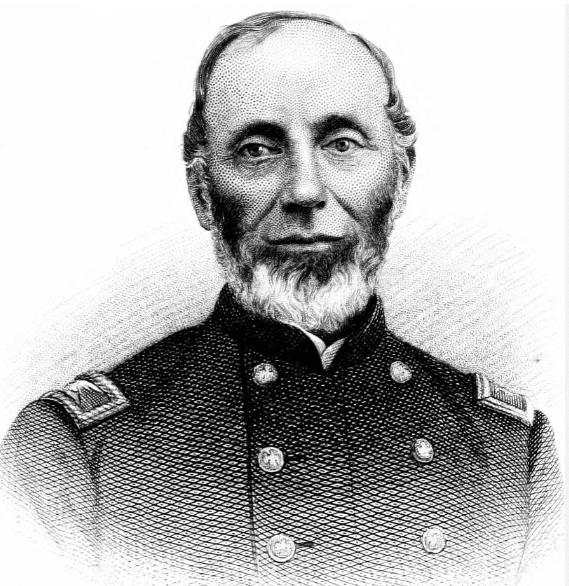
The Union brigades confronting them paid a price for their defense of Cemetery Ridge. Colonel Thomas Smyth’s brigade lost 360 killed, wounded, and missing. Smyth suffered a slight wound to the face. Colonel Eliakim Sherrill’s brigade tallied 714 casualties. This included Sherrill who was shot in the stomach and killed. The 8th Ohio had 110 down. Sawyer survived. The 1st Delaware regiment had a lieutenant commanding it at the end of the day.[2]
In the end, Lt. John T. James of Pickett’s division summed up the charge: “We gained nothing but glory, and lost our bravest men.” Do you think Gen. R. E. Lee’s final assault at Gettysburg achieved any operational or strategic success? Do you think the Confederates could have broken the Union line if they had followed up with reinforcements? If so, what then?
[1] Reminder: This was all happening about the same time Brig. Gen. George Stannard’s Vermonters enveloped Brig. Gen. James Kemper’s right flank.
[2] For photograph of Col. Marshall see https://emergingcivilwar.com/2020/07/22/with-that-cool-courage-the-death-of-colonel-james-k-marshall-at-gettysburg. JoAnna McDonald, A Walk in Time: Goodbye, Boys! Goodbye! A Walking Guide the High Water Mark, Gettysburg, July 2-3, 1863. Burd Street Press. 1999. James Hessler. and Wayne Motts, Pickett’s Charge at Gettysburg: A Guide to the Most Famous Attack in American History. Savas Beatie, 2015. Carol Reardon, Pickett’s Charge in History and Memory. The University of North Carolina Press, 2003. David Shultz, “Double Canister at Ten Yards”: The Federal Artillery and the Repulse of Pickett’s Charge, July 3, 1863. Reprint, Savas Beatie, 2017. Both paintings are by Don Troiani. Charles D. Page, History of the Fourteenth Regiment Connecticut Vol. Infantry, 1906. Franklin Sawyer, The 8th Ohio at Gettysburg, 1889.


