A Tale of Two Seconds
During the Civil War, the official position of second in command was exceedingly rare. As a de facto role, it was present in essentially every military command, most often being the senior-most officer in the field besides the commanding general. As an official title and position within an army, however, it was rarely used. From a military perspective, this makes sense. If an officer was made second in command, it not only relegated him to being a glorified supernumerary useful in only one particularly tragic circumstance, but it also left a presumably useful soldier unavailable to serve as a direct commander of any troops.
Consequently, the official position would only ever be used twice in any major Union command. What makes those two instances noteworthy, however, are the two men who occupied the position. They were none other than two of the Union’s foremost commanders: Ulysses S. Grant during the siege of Corinth and George H. Thomas during the Perryville campaign. The experiences of the two men in these commands further highlight why the position was so rarely utilized.
The first major example of the practice came in April 1862. Ulysses S. Grant had just won a victory for the Union at the battle of Shiloh, but the heavy cost had severely damaged his reputation in the eyes of many. One of those put off by the high casualties was Maj. Gen. Henry W. Halleck, who was Grant’s commanding officer in the Department of the Mississippi. Grant had enough supporters in the right places to prevent him from being cashiered from command, but Halleck’s authority to create a new command structure for the upcoming campaign against Corinth, Mississippi, provided an alternative method to handle the problem.
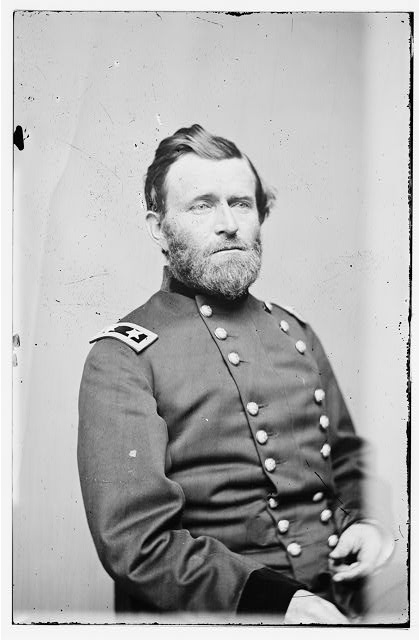
On April 30, 1862, Halleck’s headquarters released Special Field Orders No. 35, which outlined how his army would be organized for the march into Mississippi. Grant’s Army of the Tennessee was dismantled and distributed into the several wings of Halleck’s new command organization. Grant, meanwhile, was given the role of “second in command under the major-general commanding the department.” While he still was also commander of the District of West Tennessee, Grant was no longer formally attached to any actual soldiers.[1]
This promotion was widely viewed as a punishment, including by Grant himself. He consequently descended into an emotional slump. Major General John Pope, a senior commander in the Corinth campaign, recalled the distraught general after the war: “a more unhappy man I have seldom seen … He had his personal camp in a thick grove to the rear of the right of the line and lived there in perfect solitude, except for the companionship of his personal staff and a few friends who sought him out in his seclusion. His mortification was excessive.”[2] Grant’s close friend Maj. Gen. William T. Sherman recalled a similarly dour outlook from Grant, noting that “he felt deeply the indignity, if not insult, heaped upon him.”[3]
Both commanders identified the same cause as well. In Pope’s words, “he had absolutely nothing to do in the midst of a great army where he was second in rank; his advice neglected and sneered at by those in authority and it was made manifest to him in many ways that to the higher authorities his presence with the army was not welcome.” Sherman noted, “General Grant was substantially left out … with no clear, well-defined command or authority.”[4] Having no troops to command while still being technically attached to what was then the largest army on the North American continent left Grant deeply unsatisfied, restless, and even depressed.
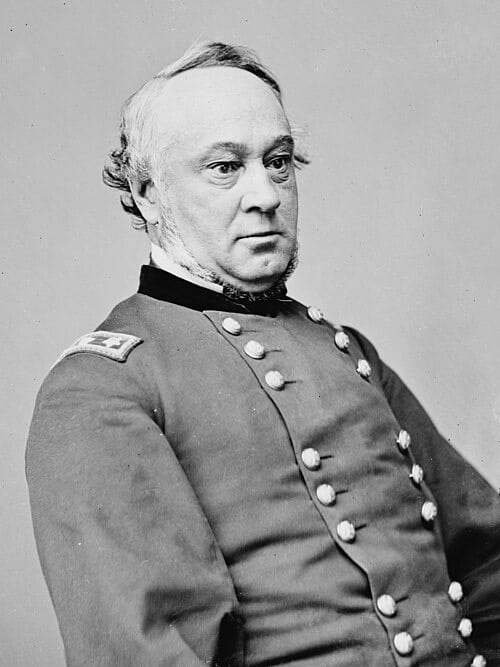
A mere month of the position was almost more than the famously determined general could bear. As the campaign closed, Grant received permission to be relieved from command in the Department of the Mississippi. Without another command looming, Grant stood poised to leave the war as a whole. Only the intervention of Sherman caused him to reconsider and agree to remain.[5] Fortunately for Grant, a field command arrived once more after the end of the siege of Corinth. Fortunately for the Union, Grant’s return to command reinvigorated the general into becoming the victor of Vicksburg and Appomattox.
While the end of the siege of Corinth concluded one instance of second in command for the Union armies, it also precipitated the other. Major General George H. Thomas had actually taken command of a large portion of the soldiers removed from Grant’s authority. As the siege of Corinth ended and the various Union armies were dispersed, however, Thomas was sent from army command back down to the sole division he had previously led in the Army of the Ohio. Accompanying his men north through Mississippi and Tennessee before reuniting with the army’s main force under Maj. Gen. Don Carlos Buell in Kentucky, the loyal Virginian seemed poised to receive pride of place in the army given his past record of service.[6]
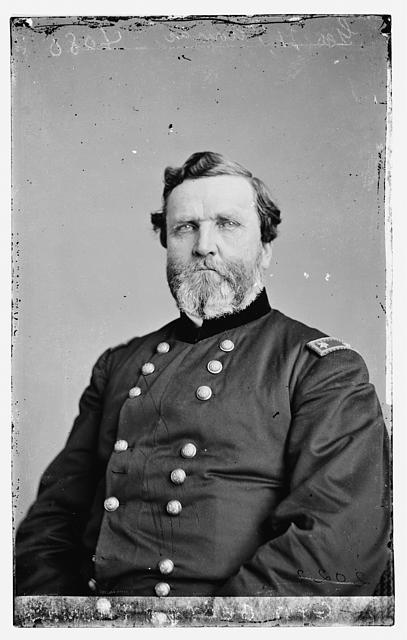
Little did Thomas know, he was actually going to be offered the most prestigious position in all the Army of the Ohio. On September 24, 1862, Halleck, from his new position as commander of all the Union’s armies, sent an order relieving Buell from command of the Army of the Ohio and installing Thomas in his place. What followed was a flurry of messages between Washington and Kentucky. To the surprise of almost everyone, Thomas requested that Buell be retained in command as the campaign was already underway. Perhaps unused to such self-effacery, Halleck granted the request.[7]
Despite Thomas’s refusal to supersede Buell, the incident added fuel to the flame of what was already a tense relationship between the two men. Deep disagreements about how to respond to the Confederate invasion of Kentucky, as well as a generally sulfurous atmosphere among the army’s officers, plagued the generals. According to one subordinate, in the days leading up to Halleck’s order, Buell and Thomas had engaged in such a fierce argument that Thomas called Buell a traitor and Buell threateningly drew his sword. Given Thomas’ famously cool and composed personality, it seems likely that camp gossip exaggerated their dispute.[8] The presence of a dispute itself, however, was well known, and the imbroglio over command only seemed to worsen it.
Their disagreement soon became formalized into the command structure. Following the murder of Maj. Gen. William “Bull” Nelson by his subordinate Brig. Gen. Jefferson C. Davis, another example of the army’s toxic officer disputes, Buell reorganized his army. On September 29, his headquarters issued Special Orders No. 158 and formed three new army corps.[9] As could be expected, I Corps and II Corps went to seasoned division commanders major generals Alexander M. McCook and Thomas L. Crittenden.
It seemed logical that Thomas, as Buell’s senior-most subordinate, would receive III Corps. Instead, Buell chose acting Maj. Gen. Charles C. Gilbert, who mere weeks earlier had been only an army captain. The surprising pick left little doubt as to Buell’s intentions. Gilbert was one of Buell’s few loyalists in the army, while Thomas and the other generals seen as contenders, such as Brig. Gen. Lovell H. Rousseau and Albin F. Schoepf, were among his opposition.[10]
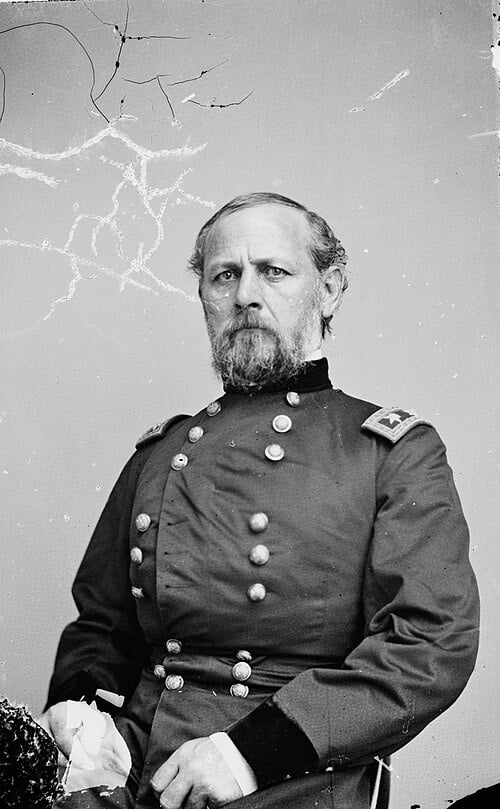
In spite of the corps command snub, it was well understood that Thomas needed some senior position in the army. He could hardly be expected to serve as a division commander under junior officers, nor did Buell have the political capital to have him transferred out of the army. Instead, Buell decided to sideline Thomas with the second in command role. Special Orders No. 159, published on September 30, tersely noted, “Maj. Gen. G. H. Thomas is announced as second in command in this army. He will be obeyed and respected accordingly.”[11]
As with Grant, Thomas was only briefly removed from direct command. The battle of Perryville was fought with little influence from Thomas. A few weeks later, the Army of the Ohio was assigned to the Department of the Cumberland, Maj. Gen. William S. Rosecrans replaced Buell in command, and Thomas was restored to commanding soldiers as the leader of the center of the Army of the Cumberland. During the whole affair, Thomas bore it with the stoicism that defined his personality, but there is little doubt that he objected to the change of command either.
Both major instances of the role of second in command in the Union Army point to why it was so rarely used. It took experienced soldiers out of command duties and assigned them a dreary and insignificant responsibility. When it was used, it was not to advance an army’s capabilities or strength, but rather as a method for a commander to dispose of a disprized subordinate who could not be removed outright. Given the rather unique circumstances that had to be present for such a situation to occur, it is little surprise that there were only ever two number twos in the Union army.

Endnotes:
[1] U.S. War Department, The War of the Rebellion: A Compilation of the Official Records of the Union and Confederate Armies, Series 1, 53 vols. (Washington D.C.: Government Printing Office, 1887), Series 1, vol. 10, part 2, 144.
[2] John Pope, The Military Memoirs of General John Pope, ed. Peter Cozzens and Robert I. Girardi (Chapel Hill: The University of North Carolina Press, 1998), 90-91.
[3] William T. Sherman, Memoirs of General William T. Sherman, vol. 1 (New York: D. Appleton and Company, 1875), 250.
[4] Pope, Military Memoirs, 91.; Sherman, Memoirs, 250.
[5] Sherman, Memoirs, 254-255.; Ulysses S. Grant, Personal Memoirs of U.S. Grant, ed. E.B. Long (De Capo Press, 1982), 200.
[6] John Fitch, Annals of the Army of the Cumberland (Philadelphia: J.B. Lippincott, 1864), 63-64.
[7] U.S. War Department, The War of the Rebellion: A Compilation of the Official Records of the Union and Confederate Armies, Series 1, 53 vols. (Washington D.C.: Government Printing Office, 1887), Series 1, vol. 16, part 2, 538-539, 549, 554-555.
[8] Stephen D. Engle, Don Carlos Buell: Most Promising of All (Chapel Hill: The University of North Carolina Press, 1999), 302.
[9] U.S. War Department, The War of the Rebellion, 558.
[10] Kenneth W. Noe, Perryville: This Grand Havoc of Battle (Lexington: The University of Kentucky Press, 2001), 94-97.
[11] U.S. War Department, The War of the Rebellion, 560.


It is refreshing to encounter such a well-written report concerning application of a little-known, infrequently used, widely misunderstood “position” during the Civil War: that of Second in Command. To Arie De Young… Well Done!
One more interesting coincidence to consider: during the Siege of Corinth [advance of 22 miles in 30 days] Halleck’s Army [Department of the Mississippi] was composed of four elements: Reserve Corps, commanded by MGen John McClernand; Left Wing, commanded by MGen John Pope; Right Wing, commanded by MGen George H. Thomas; and the Center Wing commanded by MGen Don Carlos Buell. Buell obviously witnessed “the punishment” of Second in Command bestowed upon Grant by Halleck… and thought it was “a discipline method” worth implementing. [Upon conclusion of the Civil War, the Grand Army of the Republic adopted Second in Command as a position within its official hierarchy.]
Interesting! I did not know that the Grand Army of the Republic incorporated a second in command position within their official organization. They did not inherit it from their old armies, so I am curious what brought it about.
Thanks for bringing this matter to my attention…
While the Grand Army of the Republic was in process of creation during 1866 the ROLE of second-in-command was deemed important and the office filled by any veteran elected to the position was known initially as Deputy Commander; then Vice President; followed by Assistant Commander of the Department; and finally Senior Vice-Commander-in-Chief. Unlike the “punishment” Second-in-Command seems to have been regarded by those awarded the role officially during the Civil War, the position of Senior Vice-Commander-in-Chief of the G.A.R. seems to have been more of a “load-sharing availability” [reducing the workload of the Commander-in-Chief] and mentoring opportunity… as many veterans holding the one-year term as Senior Vice-Commander-in-Chief sought, and were successfully elected to a one-year term as Commander-in-Chief of the G.A.R.
Although newspapers of the day sometimes referred to the Senior Vice-Commander-in-Chief as “second-in-command” of the Grand Army of the Republic, the G.A.R. never used “second-in-command” as an official title.
Humbly submitted
Mike Maxwell
If they had a general staff school, they may have been able to pull off having a second in command/chief of staff similar to what the Prussian military practiced. From what I’ve read the antebellum military culture wasn’t really there to make a second-in-command work. Such a culture or system would have been useful, I think.
It certainly could have been. My mind goes to the Union situation at Wilson’s Creek, where Lyon’s death left Union forces with no clear successor to command. I suspect you are also right on your point about antebellum command culture. In an army where the officers were constantly comparing their commission dates to ensure no junior officers got over them, the prospect of an official second in command position probably would have only added fuel to the fire.
Thomas hardly distinguished himself during the Perryville Campaign and after. He probably was operating under the “if Buell needs me, he knows where to find me” theory.
The command tension between Buell and Thomas certainly played a role in the latter’s performance at Perryville. Thomas was not the type of general to let personal rivalries impact professional performance, but I also do not think it is a coincidence that Thomas’s most strained superior relationship and his weakest battlefield performance coincided.
Interesting topic. Thank you.
Thanks for the compliment!
Great piece … i recall reading about Grant’s time as a number two, but didn’t know the background or the details … thanks for filling in the holes … i don’t think the army figured out the need for and the duties of a second in command until WWII.
I am always glad to learn I spread a little bit of knowledge about the Civil War. With WWII, I think you are right. In the little under a century that passed between the two conflicts, the skill and style of military command changed drastically in a way that minimized many of the challenges associated with the official role of second in command and accentuated many of its benefits. “The Mask of Command” by John Keegan is a great book on the topic.