Grief Visits the Hermitage: Andrew Jackson & the Battle of Chickamauga
Throughout his life, Andrew Jackson remained an implacable foe of Southern secession. He successfully resisted its emergence during his presidency and did not live to see the outbreak of civil war sixteen years after his death in 1845. In contrast to their patriarch, his descendants fought for the cause of disunion and Southern independence. A single day in September 1863, along the meandering banks of Chickamauga Creek, brought singular sorrow to the cedar-lined paths of the Hermitage.
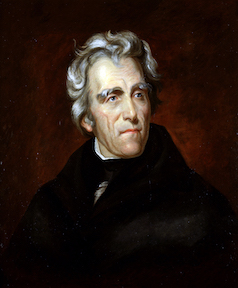
As president, Jackson confronted the 1832 Nullification Crisis, the first serious demonstration of emerging secessionist sentiment and a test of the limits of Federal authority over those of the states.
Although a Southerner and a significant slaveholder, Jackson forcefully rejected the dogma advanced by his former vice president and political arch-nemesis, John C. Calhoun, which held that individual states could reject or nullify the authority of the Federal government.[1] Jackson confronted the issue in characteristic fashion: he counterattacked. He not only asserted Federal supremacy, but declared his unmitigated rejection of the legality of secession. “The crisis must be now met with firmness,” he wrote to his succeeding vice president, Martin Van Buren, “[and] the modern doctrine of nullification & secession put down forever.”[2]
Jackson understood that without ceaseless attention, the embers of disunion would continue to flicker. He sensed their ominous future course. Despite his own deep investment in chattel slavery, Jackson correctly perceived the basis of growing sectional discord. “The tariff was only the pretext and disunion & a southern confederacy the real object,” he assured a correspondent in May 1833. “The next pretext will be the negro, or slavery question.”[3]
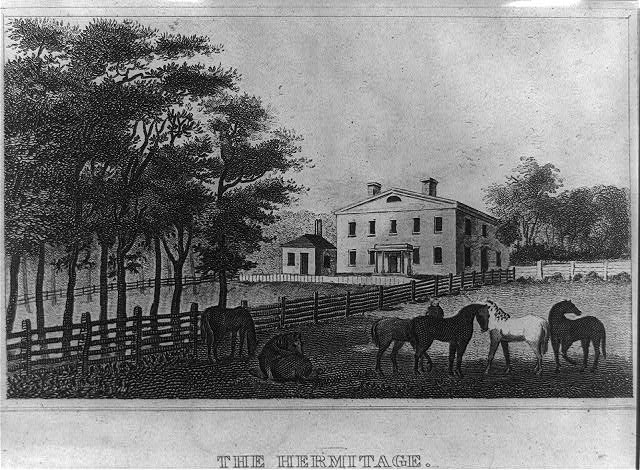
Jackson and his beloved wife, Rachel Donelson Jackson, were childless. Conscious of the need for an heir and desiring a family of their own, the Jacksons adopted one of the twin sons of Rachel’s brother, Severn Donelson, in 1808. Jackson raised the adopted boy, Andrew Jackson Jr., as his legally entitled son.
Jackson’s Nashville home was a lively place, with many young wards and relatives residing there. This included a young Andrew Jackson Donelson, namesake of the president and the nephew of Jackson’s wife Rachel. When his own father passed away, he and his brothers came to live at the Hermitage, Jackson’s iconic residence and slave plantation, as wards of their aunt.
The two boys would grow up as part of the large, extended family living at the Hermitage and go on to raise their own families. Jackson Jr. struggled to escape his father’s long shadow. Unlucky in business and agriculture, he accrued considerable debts that forced him to sell the Hermitage to the state of Tennessee in 1858. The the family remained as resident caretakers. Donelson earned considerably more success in his own right, serving as his namesake’s private secretary, diplomat and ultimately as the vice presidential nominee of the American (“Know-Nothing”) Party in 1856.
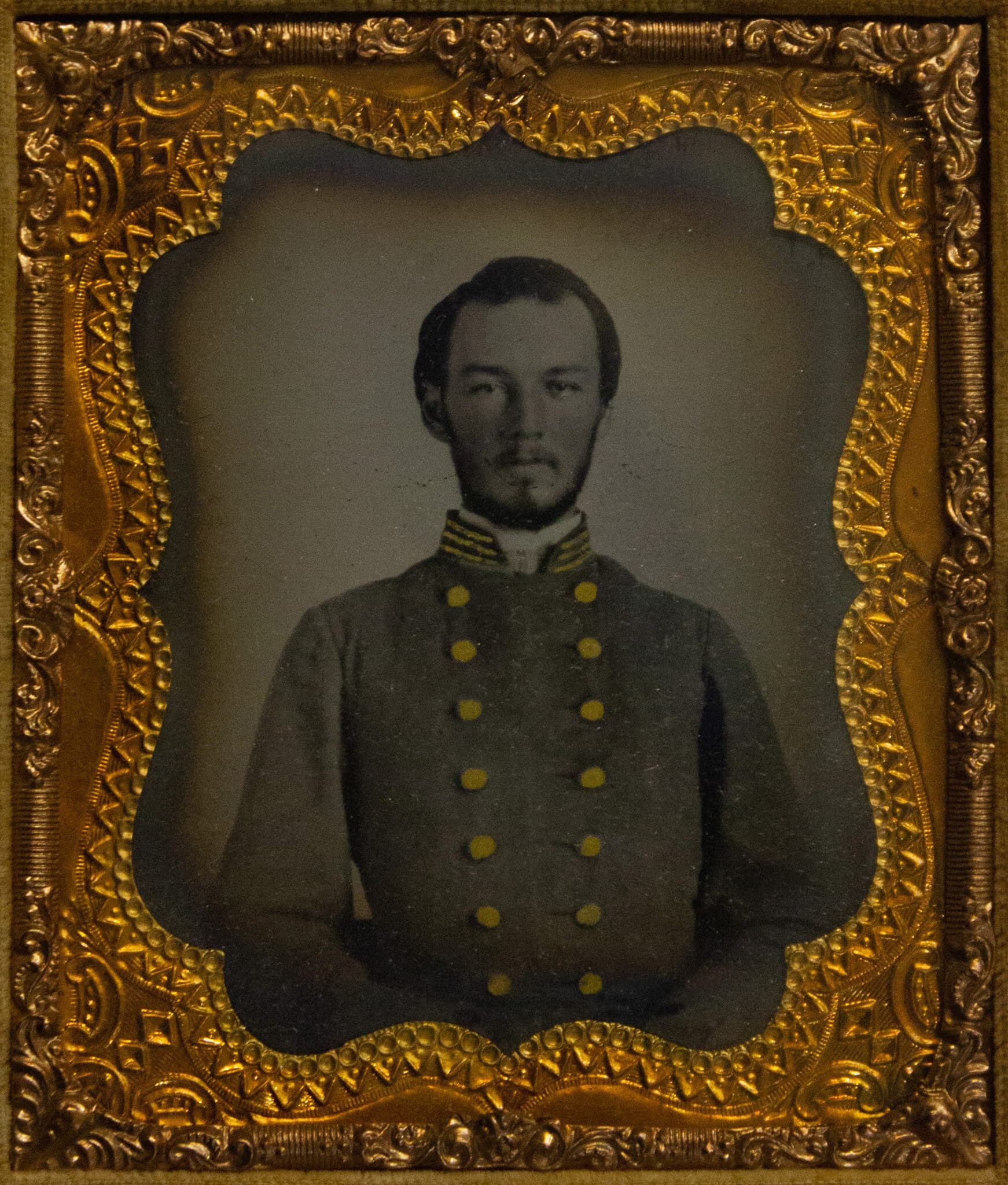
Their sons, like most of the young men of their social class in Middle Tennessee, strayed from Andrew Jackson’s arch-federalism and took up the Confederate cause. Andrew Jackson Jr.’s youngest surviving son, Samuel Jackson, would leave a young family and slave-tended farm to enlist as an officer in the 44th Tennessee Infantry Regiment in December 1861. He was preceded by his elder cousin, John Samuel Donelson, the younger son of Andrew Jackson Donelson. The younger Donelson was reputedly at the bedside of the former president when he died.[4] Donelson enlisted and led Company E of the 154th Tennessee Infantry Regiment (Senior); the company bore the ironic name of the Hickory Rifles, the allusion to Jackson likely emphasizing his military prowess rather than his vigorous defense of Federal authority.
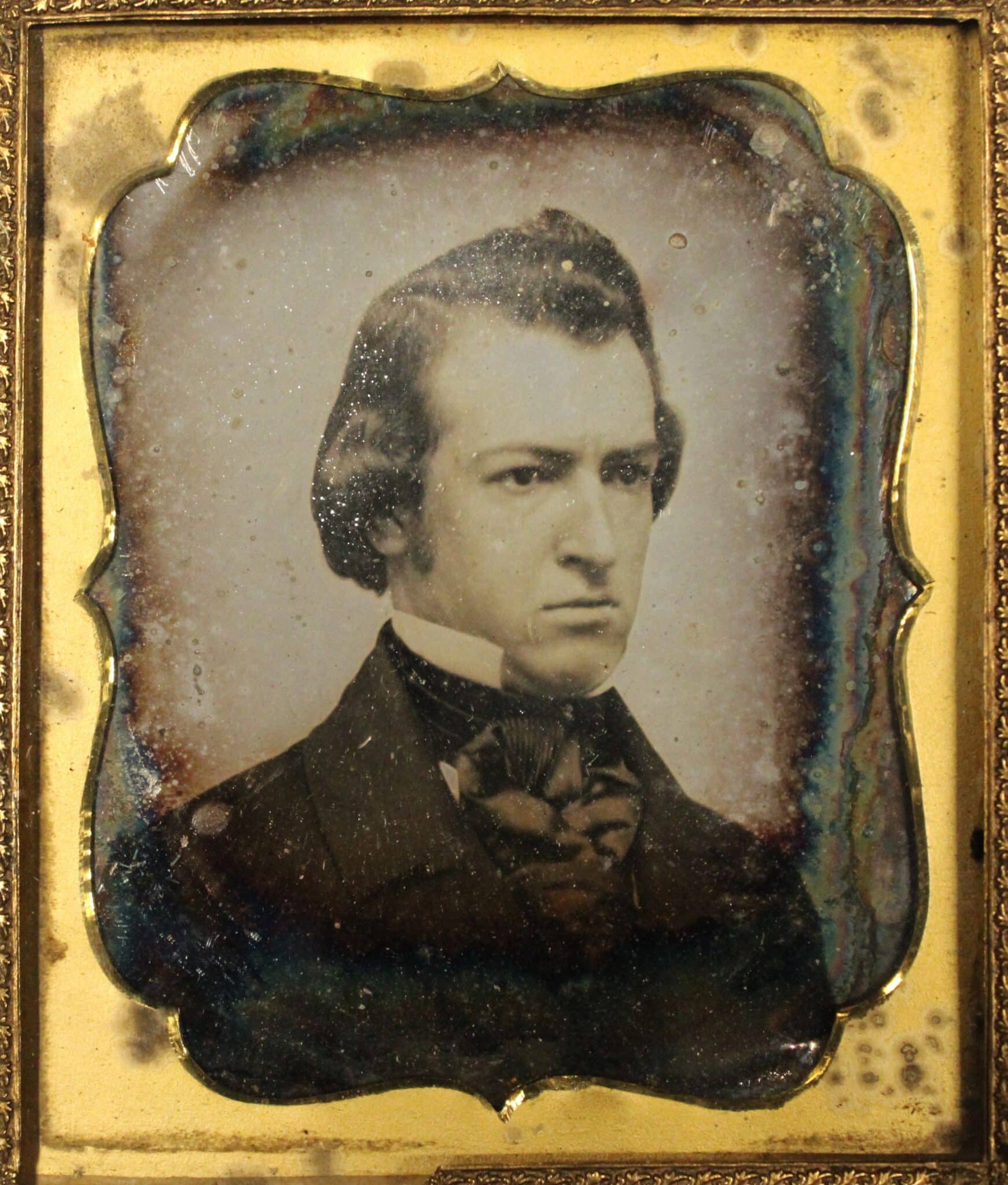
The campaigns of 1862 and early 1863 took a terrible toll on the Tennessee regiments. Severe casualties at Shiloh and Stones River, combined with the ever-present scourge of disease, depleted the ranks of both commands. Difficulties with recruiting and enforcing conscription were worsened by the steady loss of Confederate control in Tennessee. Both regiments would be affected by Maj. Gen. Braxton Bragg’s unpopular regimental consolidations in the Army of Tennessee. The depleted 44th Tennessee amalgamated with the 55th Tennessee soon after Shiloh, and the 154th Tennessee was consolidated with the 13th Tennessee in the spring of 1863.
At the same time, these experiences shaped and hardened the men in the ranks and provided ample opportunity for these Jacksonian heirs to demonstrate their credibility as leaders of men. They bore the scars to prove it. Jackson and Donelson, serving as captains and company commanders by mid-1862, were both wounded at Stones River in December 1862, a battle that was particularly devastating to the Tennessee regiments in Bragg’s army. Each was sufficiently recovered to rejoin their respective regiments by mid-1863, in time for the campaign that would claim their lives.[5]
Overshadowed by the notoriety of other battles in both the Eastern and Western Theaters, the battle of Chickamauga was a monumental struggle. The largest Confederate army assembled west of the Appalachians achieved a devastating, yet incomplete victory over the previously undefeated Army of the Cumberland. The toll of this unrealized success was steep. Chickamauga stands alone as the second-costliest battle of the war. Confederate losses were severe, with 18,450 casualties, likely an undercount of the true cost.

The fighting on the battle’s first day, September 19, 1863, devastated Jackson’s family. Captain Samuel Jackson, serving as commander of Company I in the 44th Tennessee, led his company as they went into action against the exposed flank of Brig. Gen. Horatio Van Cleve’s division of the Federal XIV Corps. The 44th Tennessee was part of Brig. Gen. Bushrod Johnson’s brigade, which was under the command of Col. John S. Fulton while Johnson commanded a provisional three-brigade division. Fulton’s command deployed in a single line of battle, with the 44th Tennessee taking up the right flank position. Shortly after 3 o’clock in the afternoon, the brigade crossed the Lafayette Road, the major north-south thoroughfare bisecting the battlefield, and into the woods.[6]
The Federals they confronted were the nearly isolated 68th Indiana of Col. Edward King’s brigade. The Federal defenders were assisted by the terrain, described as “dense underbrush,” which disguised them from the Confederates’ view. “Unconscious of our location,” the 68th Indiana allowed the Tennesseans to advance to as little as 50 yards from their position before discharging “a thunderous volley.” According to Col. Fulton, the fire from the Indianans was, “heavy, well-directed, and disastrous.”[7]
Fulton’s brigade and the Indiana soldiers engaged in a furious firefight that lasted for twenty minutes amid the smoke-shrouded forest. The Federal fire remained telling until growing pressure on both flanks unwound the 68th Indiana’s battle line and drove it back from its “hidden position” towards the south slopes of the Dyer House hill to the northwest.[8]
The 44th Tennessee fared worst in this engagement. The regiment “suffered heavily,” with a third of the regiment driven back beyond Lafayette Road.[9] Losses to the 44th Tennessee in this early phase of the brigade’s actions included its regimental commander, Lt. Col. John L. McEwen, Jr., fifty enlisted men and five company officers, with “Captain Jackson one of the number.”[10] Jackson was wounded in the torso while rallying his men, suggesting that his company was one of those that retreated under severe Federal fire.
Several hours later to the northeast, a series of sanguine blunders unfolded in the gathering dusk. In and near Winfrey Field, where the day’s earliest fighting commenced, a mixed force under Confederate Maj. Gen. Patrick Cleburne and Maj. Gen. Benjamin Cheatham attempted to assault five worn-out Federal brigades. What could have been a devastating blow in the late afternoon descended into a tragic twilight farce.
Captain Donelson, seconded from the 154th Tennessee, served as acting assistant adjutant general to Brig. Gen. Preston Smith, his former regimental commander.[11] Darkness made it hard to identify friend from foe. As disorganized troops retreated, Smith’s advance grew increasingly cautious, and he moved forward with his headquarters party to better identify the soldiers in their front.[12]
The party rode directly into the Federal soldiers of the 77th Pennsylvania, who fired on the Confederate officers at point blank range, killing Smith and his volunteer aide-de-camp, Capt. Thomas King.[13] Colonel Alfred J. Vaughn, commanding the 13th Tennessee of Smith’s Brigade, was likewise in front of his regiment and accompanied by Captain Donelson of Smith’s staff. Vaughn, “riding up to a soldier…asked him to what command he belonged.” The soldier, recognizing Vaughn as a Confederate officer, “fired at me, missing me, but killing Captain Donelson, who was by my side.”[14] The offending Federal was quickly shot in turn and nearly 300 of his bewildered comrades in the 77th Pennsylvania surrendered with their colors shortly thereafter.[15]
The fates of Donelson and Jackson at Chickamauga were notable among the more than 2,300 Confederate dead. Donelson’s remains were taken to Marietta, Georgia on September 21 alongside those of Gen. Preston Smith.[16] In his report of the battle, Maj. Gen. Benjamin Cheatham specifically referred to the fallen Capt. Donelson as an officer of “excellent merit.”[17] An obituary in the Memphis Daily Appeal, running alongside that of Gen. Smith, extolled him as a “true and gallant soldier, a warm-hearted friend, and an amiable gentleman,” who “left behind troops of his friends to mourn his loss.”[18] His body, originally buried in Marietta, was later relocated to Gallatin, Tennessee.
The mortally wounded Jackson was hurriedly taken to the Confederate hospital at Marietta, Georgia, but died of his wounds less than two weeks later. His death particularly affected his division commander, Brig. Gen. Bushrod Johnson. “Known to me long and familiarly in youth and manhood,” Johnson shared in his official report, “I feel unable to do justice to his many virtues, his pure and admirable character, or his merits as an officer and a soldier.”[19] This is remarkable praise from a division commander towards a captain commanding a company – albeit the grandson of an iconic former president. The family interred Jackson’s mortal remains in the family cemetery at the Hermitage, although they no longer resided in the house. His grave is a short stroll from those of his grandfather, the former President who’d tirelessly resisted the same cause for which his grandson and grandnephew perished in battle.

Decades before, Andrew Jackson shared his fear that the rise of sectionalism would bring about the “primeval curse on man for the shedding of a brother’s blood,” upon the United States.[20] He did not live to witness the realization of how this dread prophecy would afflict his own kin: the shock, grief and loss that visited his family in the span of a single day in the piney woods of north Georgia.
Endnotes
[1] Andrew Jackson, “Proclamation Regarding Nullification.” December 10, 1832. Accessed from https://loveman.sdsu.edu/docs/1832JacksononNullification.pdf.
[2] Andrew Jackson to Martin Van Buren, January 13, 1833. The Papers of Andrew Jackson, Volume IX. Edited by Daniel Feller, et al. (Knoxville, TN: University of Tennessee Press, 2019), 31.
[3] Andrew Jackson to Rev. Andrew Jackson Crawford, May 1, 1833. The Papers of Andrew Jackson, Volume IX. Edited by Daniel Feller, et al. (Knoxville, TN: University of Tennessee Press, 2019), 285.
[4] “Old Hickory’s Ties to Chickamauga,” Army of Tennessee – A Collaborative Investigation of the Civil War’s Western Theater. December 21, 2008. Accessed from http://https://bullyforbragg.blogspot.com/2008/12/old-hickorys-ties-to-chickamauga.html.
[5] Compiled Service Records, War Department Collection of Confederate Records, RG 109, National Archives; Memphis Daily Appeal, January 29, 1863, 1.
[6] The War of the Rebellion: The Official Records of the Union and Confederate Armies, Series 1, Vol. 30, Part 2, 472.
[7] OR, Series 1, Vol. 30, Part 2, 473; Edwin W. High. History of the Sixty-Eight Regiment of Indiana Volunteer Infantry, 1862-1865. (Indiana: Sixty-Eighth Indiana Regimental Association, 1902), 66.
[8] OR, Series 1, Vol. 30, Part 2, 492; High, 66.
[9] OR, Series 1, Vol. 30, Part 2, 473.
[10] OR, Series 1, Vol. 30, Part 2, 473.
[11] OR, Series 1, Vol. 30, Part 2, 79.
[12] David Powell. The Chickamauga Campaign – A Mad Irregular Battle: From the Crossing of the Tennessee River Through the Second Day, August 22-September 19, 1863. (El Dorado Hills, CA: Savas Beatie, 2014), 605.
[13] John W. Harris. “Dearest Ma,” September 25, 1863. Tennessee Civil War Sourcebook. Tennessee Department of State. Accessed from http://sharetngov.tnsosfiles.com/tsla/cwsb/1863-09-Article-323-Page412.pdf.
[14] OR, Series 1, Vol. 30, Part 2, 108.
[15] OR, Series 1, Vol. 30, Part 2, 108.
[16] Memphis Daily Appeal, September 22, 1863, 2.
[17] OR, Series 1, Vol. 30, Part 2, 79.
[18] Memphis Daily Appeal, September 23, 1863, 2.
[19] OR, Series 1, Vol. 30, Part 2, 456.
[20] Andrew Jackson. “Nullification”.


Thanks for presenting this poignant and thought-provoking tale.
Enlisting in fairly late in the war, in December, 1861 suggests young Samuel was *not* motivated by secession. The ardent secessionists generally enlisted early in the war. Too, that the Jackson clan enlisted at all – that fact alone – does not indicate they supported secession. Many anti-secessionists enlisted once it became clear war was certain.
Tom
In this instance, I would contend that whether they supported secession during the Ordinance debates in June, or enlisted to defend it as a political reality after the fact, is a distinction without a difference. As is well-documented, many Tennesseans took a very activist position in opposition to secession even after the fact. Moreover, December 1861 was in practical terms still well in advance of the introduction of Confederate conscription at its corresponding pressure.