“Ready to meet the rebels”: Illinois & the Response to Lincoln’s 1862 Call for Volunteers
The Federal war effort faced a crisis in the stifling summer heat of 1862. Federal victories earlier in the year, at Fort Donelson, Pea Ridge, Shiloh, New Orleans, and elsewhere, seemed a distant memory. These triumphs, in reflection, were steppingstones rather than decisive blows – and dearly bought with Union soldiers’ lives.
The nascent Confederate armies still had plenty of vigor. Moreover, they were striking back. The exploits of Maj. Gen. Thomas J. “Stonewall” Jackson that spring captivated readers on both sides of the conflict. More ominously, General Robert E. Lee’s week-long counterattack on the Virginia peninsula decisively disrupted the seemingly inexorable advance of Maj. Gen. George B. McClellan’s Army of the Potomac towards the Confederate capital at Richmond.
As the calendar turned to August, Rebel armies were marching north in Virginia, Tennessee and Kentucky. The Federal armies faced discouraging arithmetic to confront this change in the strategic situation. Having introduced conscription in April, the Confederate government had, alongside aggressive recruitment, mobilized 477,000 men by June 30, equal to 76 percent of the 624,000 soldiers in the Union army at that time. Northern states had made no equivalent effort. There was one Confederate soldier for slightly more than one (1.3) in the Federal service. Never again would Rebel armies enjoy such a favorable balance of forces.[1]
Action was needed. The day after the pyrrhic Federal victory at Malvern Hill, President Abraham Lincoln issued a call for 300,000 volunteers for 3 years’ service at the orchestrated urging of Northern governors.[2] A call for 300,000 additional nine-months’ volunteers followed on August 4.[3] According to Lincoln, this dramatic escalation was needed to, “bring this unnecessary and injurious civil war to a speedy and satisfactory conclusion.”[4]
Illinois Governor Richard Yates strongly supported Lincoln’s call. Many of the Illinois volunteers in the service adored the erstwhile Republican; he had witnessed firsthand their sacrifice and suffering after Fort Donelson and Shiloh.[5] Yates predicted that, when called, the men of Illinois would “leap like a flaming giant into the fight.”[6]
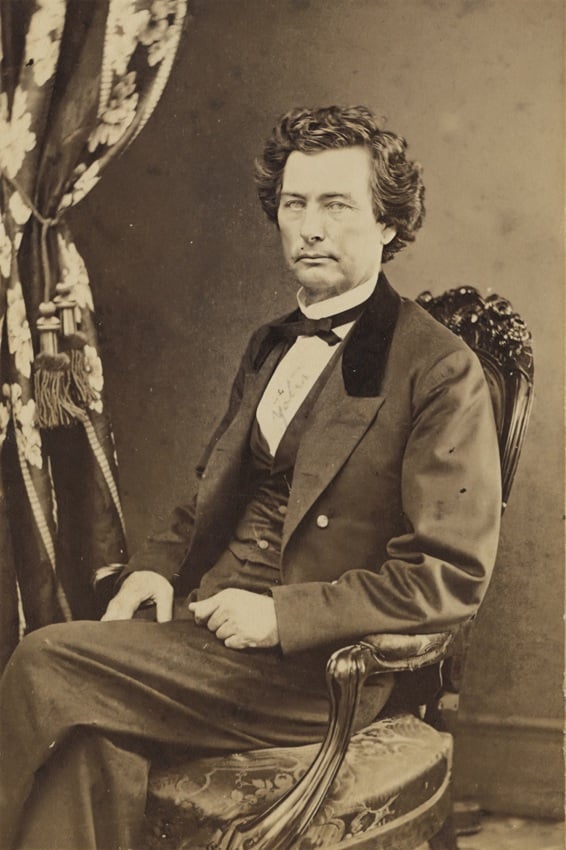
The governor faced an intimidating task. Under the pair of Presidential calls, the Secretary of War assigned population-based quotas for each state to fulfill. Illinois was expected to raise an aggregate of 52,296 men for war service in a matter of weeks.[7] A draft would be used to make up the difference if this threshold was not met.[8]
The immediate question was where and whether the volunteers would come. Illinois sent her unattached and adventurous men to the front in 1861. The President’s new call needed the breadth of the state’s military age manpower; the farmers, tradesmen and family men in small communities across the Illinois prairie.[9]
July recruiting was sluggish. Newspapers and official correspondence expressed concern that Illinois was far behind pace to meet its quota.[10] The fear was misplaced. As the calendar turned to August, an immense tidal wave of voluntary fervor rippled below the surface, springing forth in every tiny village and farmstead throughout the state. If 1861 was a burst of patriotic excitement, the summer of 1862 was the steely determination of the Northern people that the Union must be preserved, despite the cost.
More than ever before, the call to service was a community affair. “Every city, town and village was a scene of excitement, only equaled by that of the fall of Sumter,” recalled William Wirt Calkins of the soon-to-be organized 104th Illinois.[11] Communities held war meetings and convened committees of leading citizens to support local recruiting, collecting of bounty funds and levying taxes to provide for the dependents of the volunteers.
Throughout August, public meetings were organized to endorse the war effort and stimulate volunteering. Meetings were held weekly in larger cities and towns with a rotating panel of speakers. Gatherings organized in rural villages and hamlets were bursting at the seams. A meeting in the coal mining town of Caseyville, Illinois, near St. Louis, although “improvised…on Wednesday evening…at which notice was given to the people,” nevertheless managed to draw a crowd, “large beyond precedent.”[12]
People poured into war meetings from across rural Illinois, travelling in every mode of conveyance and on foot, even on sabbath Sundays.[13] The chairman of one meeting, held in Freeport, Illinois in mid-August, “said no apology for holding the meeting on a Sunday. The demands of our country were too great.”[14]
The proceedings of the Freeport war meeting were characteristic of those held throughout Illinois. Local elected officials and dignitaries spoke, serving veteran officers were honored, and members of the community provided suitably patriotic entertainment. “Music from our fine Union Cornet Band,” recounted the Freeport Weekly Bulletin, was accompanied by singing from several local men and women. Religious leaders from within the community led the de facto congregation in prayer, establishing a readily identifiable analogy between religious and patriotic duty. Rain did not dampen the fervor. The meeting moved indoors to a local hall and continued into a second day to complete the formation of a local company of volunteers.[15]
Recruitment was a distinctly community-centric affair. Local notables, including lawyers, sheriffs, judges, mayors and states attorneys, competed to raise companies for service. Even members of the clergy were infused by the martial spirit. In Monmouth, Illinois, Reverend H.H. Northrop was credited for, “showing his faith by his works,” by raising a company alongside two other esteemed citizens.[16] He was outpaced by Reverend Taylor of the village of Durand, Illinois, near the Wisconsin border, who through force of persuasion was credited with raising a company in less than 36 hours.[17]
Communities were immensely proud of “their boys” and local companies. “Let the men who go forth for the stars and stripes,” stated the Joliet Signal with pride, “realize that they are sustained by a grateful people at home.”[18] Residents and neighbours showered their volunteers with food and sundries.[19]
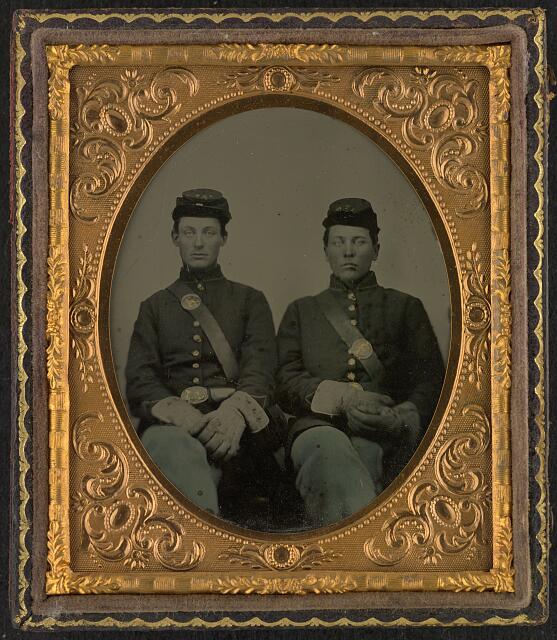
Before departing for muster, most local communities held ceremonies to honour their volunteers. These events served to solemnly bind the volunteers with the communities they were leaving behind. Having raised a company within the space of a week, the people of the small town of Mascoutah in southwestern Illinois gathered outside the schoolhouse to see them off. A communal prayer was held, followed by the singing of the “Star-Spangled Banner” and the presentation of a silk flag by leading ladies of the town. The entire company was invited into the schoolhouse to enjoy, “as nice a supper as a soldier might ever wish to have in his presence.”[20]
It was clear by the middle of August that recruitment was surging across Illinois. The Republican heartlands of Northern and Central Illinois were the most enthusiastic. Rural Knox County, between the Illinois and Mississippi Rivers, was said to be “fairly alive with volunteers – more than her quota…plenty more can be had if needed.”[21] Neighbouring Warren County had filled two-thirds of its anticipated quota by the end of the first week of August.[22] A week later, St. Clair County near St. Louis had already filled six companies of volunteers, with three more and a battery of artillery in formation.[23]
Many more populous counties quickly exceeded their entire prior recruitment. Will County and the town of Joliet had raised eight companies during the first year of the war, slightly less than the complement of a full regiment. In a matter of weeks in the summer of 1862, they had recruited the entirety of the 100th Illinois and contributed an additional two companies of Irish American volunteers for the 90th Illinois forming in Chicago. The per capita outcomes in the countryside were even more remarkable. The small villages of Lena and Winslow, in Stephenson County, together raised a full company; their neighbours in Cedarville and Oneco did likewise.[24] It was indeed a community affair.
Companies were forming in a matter of days and hours. Men described being caught up in the passion of the moment. Public meetings were a common theater of these public testimonials. In Sullivan, Illinois, an unprepossessing Central Illinois farming village of less than 600 inhabitants in 1860, fifty men enlisted at the end of a war meeting that summer.[25]
James A. Connolly, a young law student living in Eastern Illinois, informed his fiancée that earlier that month, he “had no more idea of doing [enlisting] than you have tonight,” but after he was approached by representatives of the citizen’s committee, “dropped my law books on the 9th of August and on the 15th had a company organized and was elected captain.” A deep sense of duty drove him. “I struggled long against leaving my business,” he shared, but concluded that, “I couldn’t decently stay home when all other boys and young men were going out.”[26]
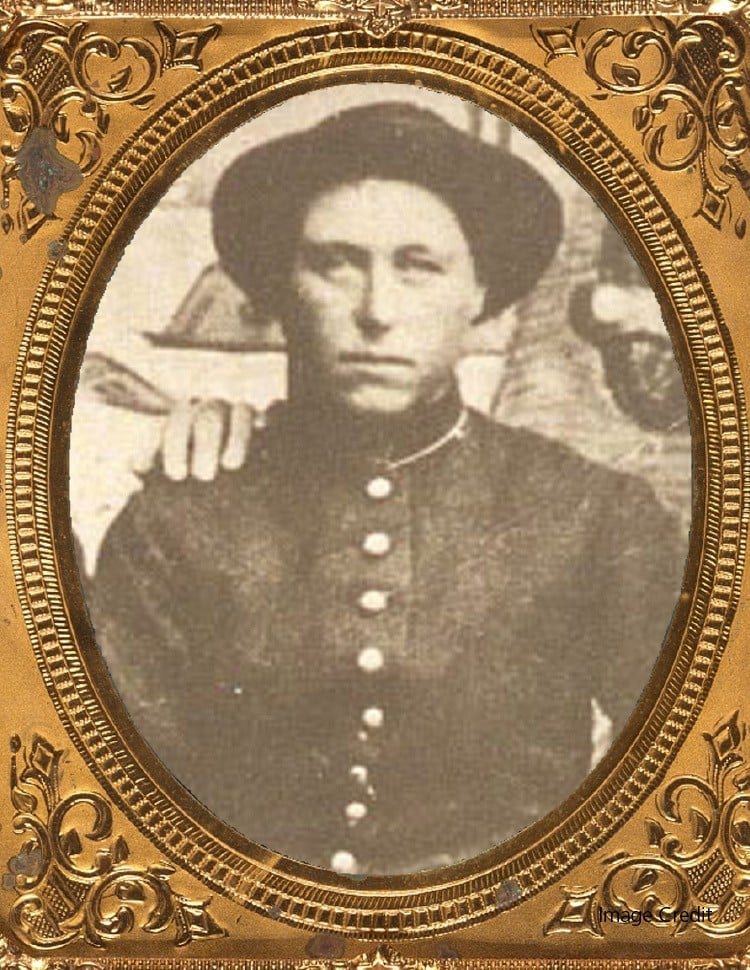
Illinoisans volunteered for many reasons. Several reasons predominated among those joining the war effort that summer. A compelling sense of duty was one; avoiding the stigma of the threatened draft was equally persuasive.[27] A higher proportion of the 1862 volunteers were married or men with dependents. Federal, state and county bounties offered to induce enlistment were not to overcome insufficient patriotism. They provided otherwise duty-bound or eager men the funds needed to support their wives, children and relatives left at home.[28]
The surge of volunteers overwhelmed the state authorities. Governor Yates informed the President on August 8 that “troops are coming in most rapidly.”[29] Desperate state officials wired the War Department seeking the immediate dispatch of large amounts of camp equipment, clothing and weapons to provide for, “thousands who are sleeping on the ground without any covering”.[30] They had also run out of funds to pay out Federal bounties.[31] Brig. Gen. C. P. Buckingham, Assistant Adjutant-General to the Secretary of War, could merely respond that, “the prompt and patriotic response of your State to the calls of the President have far exceeded the calculations of this Department.”[32]
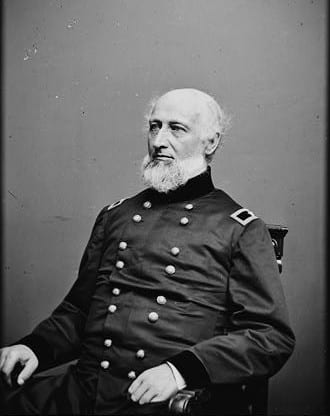
Between July and September 1862, 58,689 men from across Illinois volunteered for the Union Army.[33] Most did so in the heady month of August. The economies of local communities and entire industries were transformed. “There are many sections of this county in which the hands cannot be found to attend to finishing up the wheat and hay harvests now,” a concerned Illinois newspaper editor expressed.[34] William Osborn, President of the Illinois Central Railroad, fretted about the impact on his ability to operate after 250 skilled railroad employees had volunteered in the first week of August.[35] Even newspapers felt the strain of patriotic duty. “We are left very shorthanded,” bemoaned an editor after having lost most of his employees to the President’s call, “and beg the indulgence of our patrons until more help can be procured.”[36]
Fifty-nine new regiments for the Federal Army were the practical result of the patriotic euphoria. The entirety of the state was now deeply woven into the conflict and seeing it through. Together, the communities of the Sucker State demonstrated that, as the Joliet Signal contended, they were, “ready to meet the rebels.”[37]
Endnotes
[1] Joseph L. Harsh. Confederate Tide Rising: Robert E. Lee and the Making of Southern Strategy, 1861-1862. (Kent, OH: Kent State University Press, 1998), 13.
[2] The War of the Rebellion: The Official Records of the Union and Confederate Armies, Series 3, Vol. 2, 180; 187-188.
[3] OR, Series 3, Vol. 2, 295.
[4] OR, Series 3, Vol. 2, 188.
[5] Stephen D. Engle. Gathering to Save a Nation: Lincoln & the Union’s War Governors. (Chapel Hill, NC: The University of North Carolina Press, 2016), 167.
[6] OR, Series 3, Vol. 2, 218.
[7] OR, Series 3, Vol. 2, 647.
[8] OR, Series 3, Vol. 2, 296.
[9] OR, Series 3, Vol. 2, 647.
[10] Joliet Signal, August 5, 1862; OR, Series 3, Vol. 2, 289.
[11] William Wirt Calkins. The History of the 104th Regiment Illinois Volunteer Infantry (Chicago: Donohue & Henneberry, 1895), 5.
[12] Belleville Semi-Weekly Advocate, August 8, 1862
[13] Freeport Weekly Bulletin, August 14, 1862
[14] Ibid, August 14, 1862.
[15] Ibid, August 14, 1862.
[16] Monmouth Atlas, August 8, 1862.
[17] Freeport Weekly Bulletin, August 14, 1862.
[18] Joliet Signal, August 5, 1862.
[19] Monmouth Atlas, September 5, 1862.
[20] Belleville Semi-Weekly Advocate, August 21, 1862.
[21] Oquakwa Spectator, August 14, 1862.
[22] Monmouth Atlas, August 8, 1862.
[23] Belleville Semi-Weekly Advocate, August 15, 1862
[24] Freeport Weekly Bulletin, August 21, 1862.
[25] Mattoon Gazette, August 2, 1862.
[26] James A. Connolly. Three Years in the Army of the Cumberland (Bloomington, IN: Indiana University Press, 1996), 14-16.
[27] OR, Series 3, Vol. 2, 316; Mattoon Gazette August 9, 1862.
[28] Macomb Journal, August 29, 1862. Joliet Signal, August 5, 1862
[29] OR, Series 3, Vol. 2, 338.
[30] OR, Series 3, Vol. 2, 360; 427.
[31] OR, Series 3, Vol. 2, 495.
[32] OR, Series 3, Vol. 2, 429.
[33] OR, Series 3, Vol. 5, 648.
[34] Monmouth Atlas, August 15, 1862.
[35] OR, Series 3, Vol. 2, 324.
[36] Monmouth Atlas, August 8, 1862.
[37] Joliet Signal, August 26, 1862.


Love to see Illinois represented at ECW