Longstreet and Chamberlain: After the War
James Longstreet had few admirers after the war. But aside from his friend and President of the United States, Ulysses S. Grant, he could count another Union veteran among his fans. That was Joshua Lawrence Chamberlain, the former colonel of the 20th Maine. Chamberlain faced Longstreet’s men on several battlefields, including his famed defense of Little Round Top at Gettysburg.
In 1896, Longstreet published his controversial account of the war, From Manassas To Appomattox. Much to the chagrin of his former comrades, Longstreet defended his affiliation with the Republican Party and criticized Robert E. Lee.

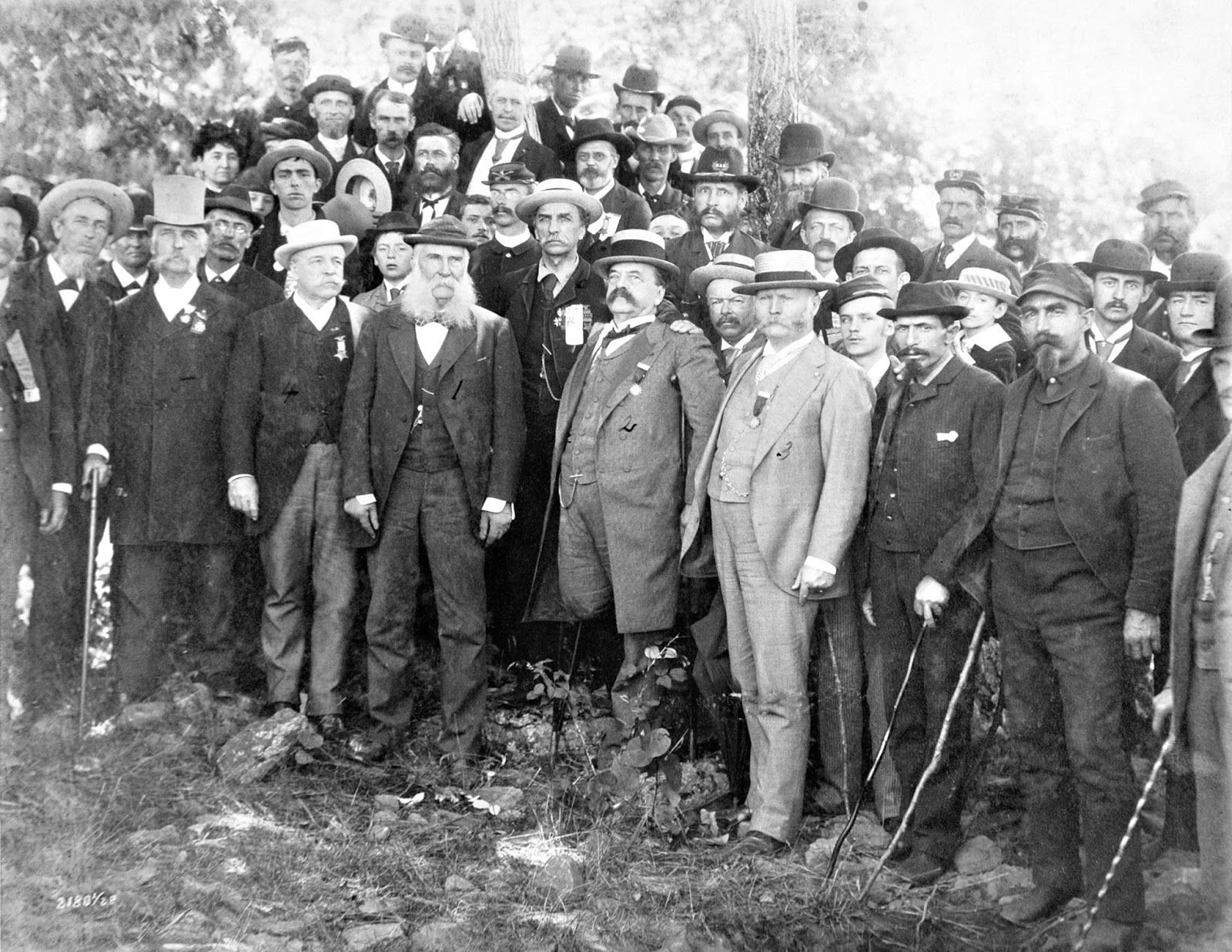
In a 1900 letter, Chamberlain confessed his interest in acquiring a copy of Longstreet’s memoir. “I wish I had while in Washington bought one of Genl Longstreets [sic] ‘Manassas to Appomattox,’ and got you to ask him to give me his autograph on the fly leaf,” he wrote to fellow Maine Civil War veteran Aurestus S. Perham. “I have not met him since ‘Appomattox Court House,’” Chamberlain said, “but I have a high regard for him, and his book is written with a spirit of truth & candor that enhances its value as the work of an eminent solder.”[1] (Evidently, Chamberlain did not recall that he had posed for a photograph with Longstreet at a Gettysburg reunion in 1888 in a large group of veterans of the battle.)
Ellis Spear, the 20th Maine’s longest serving commander, lived in Washington, D.C. for most of his postwar career in the patent office; Chamberlain admitted that Spear could acquire a copy of Longstreet’s book in the Federal City.
“I will see if Spear will not help me get the book & then you might ask the General if he will write in it for me,” he politely requested of Perham. “Longstreet will not remember me, but as I was a Division Commander he will not hesitate to do me this honor,” Chamberlain predicted.[2]
As a student of literature and history, it’s no surprise Chamberlain wanted to get his hands on a copy of From Manassas To Appomattox. His interest in collecting and reconciling accounts of the war, from both Union and Confederate soldiers, probably also made Longstreet’s memoir a “must-have.”
His desire to obtain an autographed copy of the book offers a small but revealing glimpse into how Chamberlain sought to understand both sides of the conflict through the words of those who had fought against him.
[1] Joshua L. Chamberlain to Aurestes Perham, January 26, 1900, The Grand Old Man of Maine: Selected Letters of Josua Chamberlain, 1965-1914, ed. Jeremiah E. Goulka, (Chapel Hill: University of North Carolina Press, 2004), 180.
[2] Chamberlain to Perham, The Grand old Man of Maine, 180.


What an interesting story. I guess that is something Chamberlain and I have in common, as I would quite like to get a signed copy of Longstreet’s memoirs as well!