A Memorial Service Happened on the Way to Gettysburg
When researching the Third North Carolina Infantry Regiment, I came across an account of something I hadn’t seen in any other unit. In the summer of 1863, as the Army of Northern Virginia began what would become known as the Gettysburg Campaign, the regiment camped in a patch of woods near the Dunker Church in Sharpsburg, Maryland. According to a regimental history written by two veterans, the day went something like this:
“While here and in the quietude of twilight, when all nature seemed to be in repose, and so emblematic of those weary souls, which slept peacefully under the sod of this spot, made so memorable by the heroism displayed by them scarcely a twelve months ago, the First and Third North Carolina Regiments assembled, and with arms reversed and to the roll of the muffled drum marched to the battlefield, where the Rev. George Patterson, Chaplain of the 3rd, read the burial services. A detail of men under the command of Lt. James I. Metts…had previously during the day fired a military salute over the spot where their bodies were buried. Upon this solemn occasion, many tears stole down the bronzed cheeks of the old veterans, and all heads were bowed in grief.”[1]
For context, less than a year earlier, the regiment was engaged in the fighting there, which started with the burning of the Mumma residence and barn, and continued into Miller’s Cornfield. According to an officer from the regiment, many soldiers carried smoothbore muskets, which were only effective at close range.[2] This meant the Third North Carolina had to get close enough to Federal forces for their weapons to deal a significant blow. That, plus a moment in the Cornfield when the regiment was ordered to charge, carried its own set of consequences. Of the 547 soldiers who fought at Antietam, 330 were killed, wounded, or captured.[3]
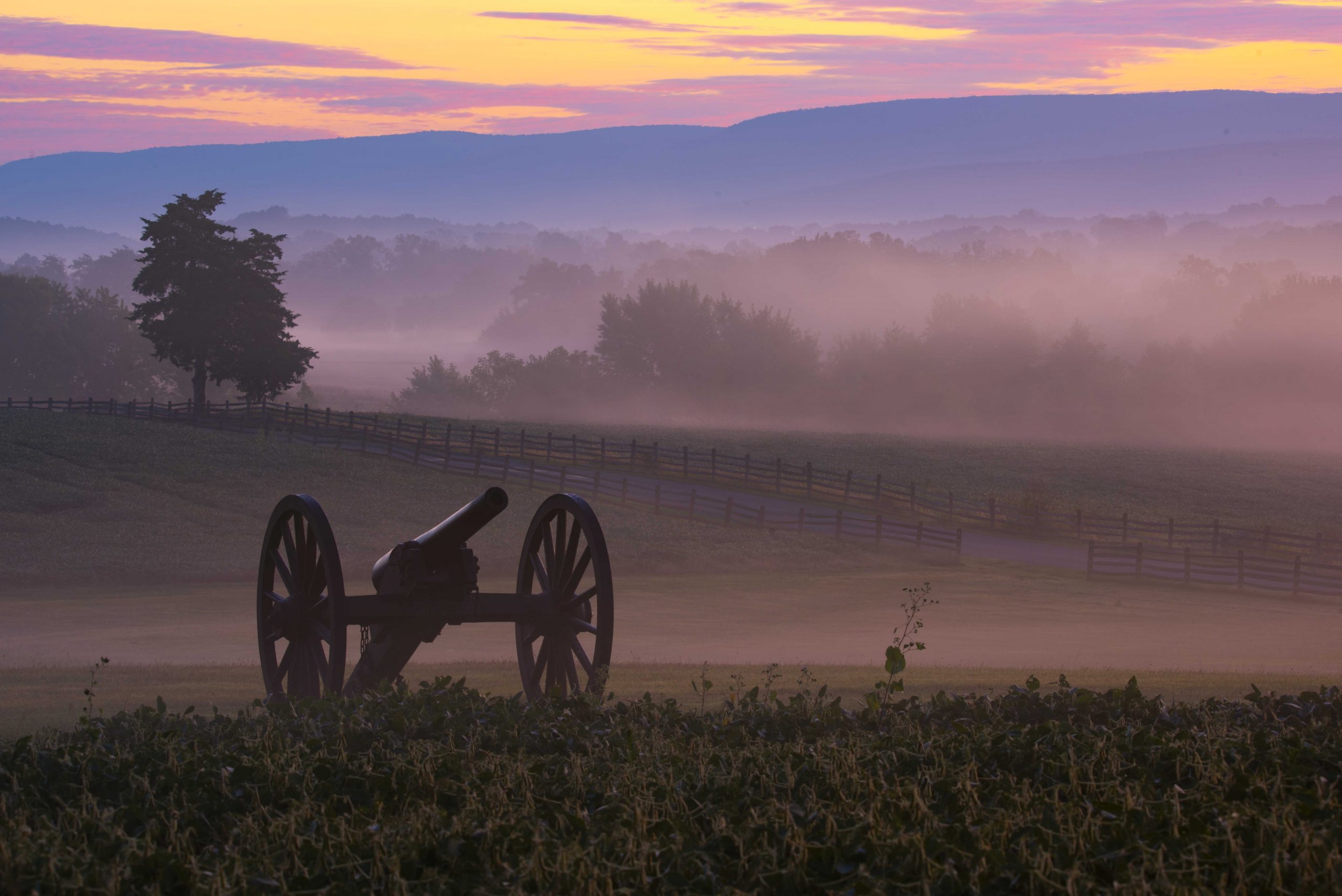
For some surviving officers in the regiment, that battle defined both their military careers and personal lives. Two detailed supplemental accounts of Antietam appear in the regimental history, likely to show how devastated the regiment was at such a prominent and infamous portion of the battlefield. It is safe to say that the memory of what happened there was seared into those soldiers, which could have inclined veterans on the march to hold an impromptu memorial ceremony when they returned there in June 1863.
While one could possibly look at a regimental account of a memorial service and conclude that there was some embellishment, some letters have survived the years to confirm what the original authors had said. Captain Edward “Ned” Armstrong of Company G wrote home to his father about visiting the grave of a fellow comrade and friend who fell during the fighting. Armstrong’s friend was one of the few fortunate ones to have a marked grave near the town’s cemetery, but the whole service moved him as he wrote home to his family. Filled with regret and sadness over the results of the Confederate invasion of Maryland a year earlier, there was a sense of foreboding for the current campaign, as “many of our best men” now lay in unmarked graves with no sense of who they were or where their final resting place was.[4]

Even members of the regiment who did not participate in Antietam visited the site with a somber attitude. Assistant Surgeon Thomas Fanning Wood wrote that he was able to explore parts of the battlefield where the regiment lost “twenty-three out of twenty-seven” officers.[5] While writing about the battlefield, Wood recalled that one theory of the previous Maryland campaign was to influence the border state to join the Confederacy. Given the regiments near destruction and the Union victory at Antietam, Wood admitted that this idea “was no longer indulged in” by June 1863.[6] Another soldier, John Futch of Company K, wrote home to his wife that he hated being in Maryland. Although John was not present at Antietam, he more than likely heard of the horrific accounts of battle from either his brother Charley or other members of his company who also lost their Company commander on that very field. John and Charley camped there for the night with the rest of the regiment, but all John could think about was going home to see his wife.[7]
A memorial service at a recently fought battlefield is not uncommon, but this particular one is interesting when examined from multiple sources. A regimental history of the event portrayed it as a somber reminder of heroism and Southern patriotism that was on full display in September 1862. But for some of the officers and common soldiers writing home to their families, their emotions were not grief mixed with a sense of honor. Some worried they had lost their best men and would never be the same going into the current campaign. For others, there were woeful reminders of previously optimistic plans now taken by time, and some were yearning for peace and family back home, as they were surrounded by death. And with the war not stopping for another two years, these will be the last memories some of the men will have the chance to make at Antietam. John and Charley Futch, a month after the memorial service, will be engaged at Culps Hill, where Charley will be killed. John will desert in an attempt to go home and escape the horrors of war, only to be captured and executed in September. Ned Armstrong will survive Gettysburg but will be shot and mortally wounded at Spotsylvania Courthouse and die of his wounds in June 1864.
At its core, this is the difference between the battle’s history and how some chose to remember it. While hindsight shows us a moving memorial service, letters home show it as both a break from the labor of war and a moment to reflect on what had happened up to that point and what lay ahead.
[1] Walter Clark, Histories of the Several Regiments and Battalions from North Carolina in the Great War 1861–’65, vol. 1 (Raleigh, North Carolina, 1901), 194.
[2] D. Scott Hartwig, I Dread the Thought of the Place: The Battle of Antietam and the End of the Maryland Campaign (Baltimore: Johns Hopkins University Press, 2023), 87. Hartwig’s book also includes vivid, detailed accounts of the Third North Carolina Regiment’s actions at Miller’s Cornfield.
[3] Ibid, 834.
[4] Letter from Edward Armstrong to Thomas Armstrong, June 19, 1863, UNCW.
[5] Thomas Fanning Wood and Donald B. Koonce, Doctor to the Front: The Recollections of Confederate Surgeon Thomas Fanning Wood, 1861-1865, 1st ed., Voices of the Civil War (Knoxville: University of Tennessee Press, 2000), 97.
[6] Ibid, 97.
[7] Letter from John Futch to Martha R. Futch, June 19, 1863, Private Voices: Corpus of American Civil War Letters.


Touching.