The battle of Gettysburg, July 3,1863, Cemetery Ridge, Part I: Green Mountain Boys! “Change front, forward on the first company.”
It was around 3:30 p..on July 3, 1863, when determined Confederate soldiers, covered in dirt, sweat, and blood, climbed over the Emmitsburg Road fence. After re-aligning their ranks, Confederate Brig. Gen. James Kemper’s Virginia brigade drifted to the left. The idea was to close the gap between his regiments and Brig. Gen. Richard Garnett’s brigade and concentrate on the Copse of Trees situated on Cemetery Ridge. On paper this made sense, but the movement exposed Kemper’s right flank.
Union soldiers poured volley after volley into the waves of gray clad troops. Captain John Dooley of the 1st Virginia remembered the “bravest of the brave” sank and rose no more. Virginians filled the gaps in their ranks only to be struck down. Within thirty yards of the Union line, Dooley fell, shot through both thighs. It was a cycle of death and destruction as Kemper’s boys pressed forward.
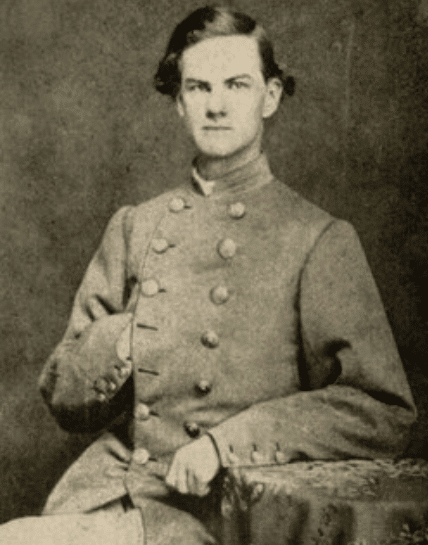
Brigadier General George Stannard’s Green Mountain Vermont brigade was stationed south of the Copse of Trees. These were the last regiments in line on Cemetery Ridge; to their left 59 guns were deployed. Stannard studied the field as his soldiers fired into the Rebel line. Through the smoke, he saw the opportunity to hit Kemper’s vulnerable right flank. Stannard ordered “Change front, forward on the first company.” The order spread down the line.
The 13th and 16th Vermont regiments stepped out with the 14th Vermont regiment in reserve. The Vermonters about-faced to the right and blasted the rear and right flank of Kemper’s brigade. Companies from the 11th and 24th Virginia regiments halted and defiantly kept the Vermonters at bay. Private Ralph O. Sturtevant of the 13th Vermont later recalled the clash.
“…some of the more revengeful and desperate [Confederates] continued to fire in our faces as we advanced. We opened fire again and then rushed up against them with bayonets pushed forward revengefully determined to slay the very last man unless they would heed their proffered offer of surrender. Bayonets crossed . . . desperate thrusts exchanged, and [a] hand to hand struggle followed. Many fell wounded and bleeding pierced with bayonet, sword, and pistol musket balls.”
The 16th Vermont captured or recovered the 11th Virginia’s flag.[1]
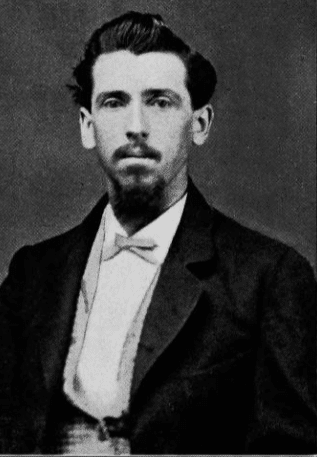
Stannard’s men grabbed Kemper after he fell from his horse, shot through the body. The bullet had entered his groin and ranged up into his body. The Virginians recaptured their general. Other exhausted Confederates soon began to surrender in greater numbers. To avoid more bloodshed, Colonel Francis Voltaire Randall, commander of the 13th Vermont, ran down the front of his regiment shouting: “Stop firing!”
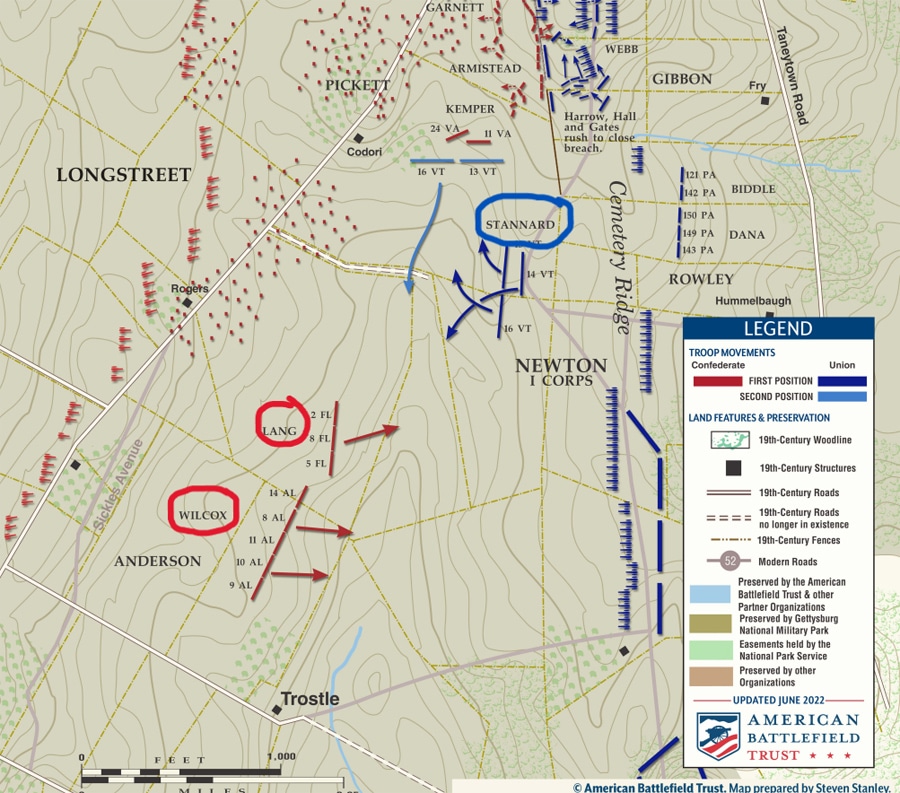 As the 13th Vermont rounded up prisoners, the 16th and part of the 14th faced about to their left. The Green Mountain boys fired and then charged into Brig. Gen. Cadmus Wilcox’s Alabama brigade and Col. David Lang’s Florida brigade. The Confederates simultaneously got hit by cannon fire from the 59 guns deployed on the reverse slope of Cemetery Ridge. The Alabama and Florida ranks disintegrated. Some men fell dead or wounded; while others barely escaped; many surrendered to the Vermont infantry. The Vermonters captured or recovered the 8th and 2nd Florida flags.
Casualties were high on both sides. Stannard’s brigade counted 351 killed, wounded, or missing. This included Stannard himself who was wounded in the right thigh by a piece of shrapnel. On the Confederate side, Kemper was seriously wounded. The 24th Virginia reported 179 casualties out of 365 men. Their senior officers, Col. William R. Terry and Maj. Joseph A. Hambrick, fell wounded. The 11th Virginia lost 146 out of 359. Their major was seriously wounded, and numerous captains were struck down. The Confederate reinforcements suffered extraordinary losses as well. Lang’s brigade listed 300 Florida boys as casualties. Wilcox tallied 577 killed, wounded, or missing.[2]
Next: Cemetery Ridge, Part II
————
[1] The use of the word “captured” is often misused by both sides. In many cases, the color guard was dead. The flag lay on top of the mangled bodies. The other side picked up the fallen flag. I would use the word “recovered” in those cases.
[2] JoAnna McDonald, A Walk in Time: Goodbye, Boys! Goodbye! A Walking Guide the High Water Mark, Gettysburg, July 2-3, 1863. Burd Street Press. 1999. James Hessler and Wayne Motts, Pickett’s Charge at Gettysburg: A Guide to the Most Famous Attack in American History. Savas Beatie, 2015. Carol Reardon, Pickett’s Charge in History and Memory. The University of North Carolina Press, 2003. David Shultz, “Double Canister at Ten Yards”: The Federal Artillery and the Repulse of Pickett’s Charge, July 3, 1863. Reprint Savas Beatie, 2017. Ralph O. Sturtevant, Pictorial History Thirteenth Regiment Vermont Volunteers War of 1861-1865. 1910. John Dooley, John Dooley, Confederate Soldier His War Journal. 1945. All maps are by Steven Stanley and taken from American Battlefield Trust. Painting by Michael J. Middleton.


